|
|
 As much as I agitate about book banning in the U.S., it would be utterly foolish not to recognize how fortunate we Americans are. It generally isn’t the government censoring books so that they never see the light of day. As we’ve seen, when efforts are made to ban or remove books, procedures are usually in place to help ensure the freedom to read is protected. Finally, the government doesn’t throw authors in jail just because of what they’ve written or said. As much as I agitate about book banning in the U.S., it would be utterly foolish not to recognize how fortunate we Americans are. It generally isn’t the government censoring books so that they never see the light of day. As we’ve seen, when efforts are made to ban or remove books, procedures are usually in place to help ensure the freedom to read is protected. Finally, the government doesn’t throw authors in jail just because of what they’ve written or said.
That isn’t the case everywhere. That’s why Amnesty International also takes note of Banned Books Week. It focuses, though, on individuals “who are persecuted because of the writings that they produce, circulate or read.” This year the organization is highlighting seven cases. And as Banned Books Week comes to a close, what is important to remember as that these problems “are not confined to a week.” In fact, many stretch out over months and years.
The cases:
- Liu Xiaobo, China — The 54-year-old scholar and activist was formally arrested on June 23 for “inciting subversion of state power.” He had been held under “residential surveillance” since Dec. 8, 2008, without due process or access to a lawyer. He is accused of such things as “spreading of rumors and defaming of the government, aimed at subversion of the state and overthrowing the socialism system [sic] in recent years.”
- Musaad Abu Fagr, Egypt — Fagr, a novelist, blogger and human rights activist is detained without charge or trial despite repeated court orders for his release.
- Mohammad Sadiq Kabudvand, Iran — A journalist, Kabudvand is also founder and chair of the Human Rights Organization of Kurdistan. He has been detained since his on July 1, 2007, accused of “acting against state security,” “propaganda against the system,” and “cooperating with groups opposed to the system.”
- Lydia Cacho Ribeiro, Mexico — The goal here is greater protection for this journalist, whose home and offices in Cancún have been photographed and watched by armed men frequently, while her life has been threatened in online messages. She has been harassed, threatened and detained by police over the years for her work exposing child pornography and prostitution.
- Vettivel Jasikaran, Sri Lanka — Jasikaran, writer, publisher, and manager of the news website OutreachSL, and Valarmathi Jasikaran, his wife, have been detained by Sri Lankan police since March 2008, allegedly for “terrorist related activities.”
- Hussein al-‘Agil and Salah Ahmed Yahya al-Shagladi, Yemen — al-Shagladi, chief editor of Aden Gulf Network news, and al-‘Agil, a lecturer at Aden University, are being held incommunicado. It is not clear exactly why the men were arrested in June, but they are said to have been targeted for their writing in support of a coalition of political groups, the Southern Movement, which the government sees as calling for the independence of the southern part of the country.
Amnesty International isn’t the only organization working on behalf of writers. For example, PEN American Center is one of 144 PEN centers in 101 countries that together compose International PEN. PEN American Center’s Freedom to Write Program works to defend writers and journalists both here and abroad who are imprisoned, threatened, persecuted, or attacked in the course of carrying out their professional work and has several ongoing campaigns.
So be thankful for our freedom to read and the ability to use civil means to maintain that right. Sadly, there are too many elsewhere who are deprived this fundamental right.
…every human being has … a right to hear what other wise human beings have spoken to him. It is one of the Rights of Men; a very cruel injustice if you deny it to a man!
Thomas Carlyle, New Letters of Thomas Carlyle, Vol. 1
My bibliolust list is shorter this month because it becomes more and more clear than there just ain’t enough time. September was a perfect example. Several of the books on my August and September list finally got to me on the library reserve list. There just wasn’t time to read two of them so I returned them within days so others could read them. But I still want to read them so have added myself back to the reserve list.
Recognizing that conundrum, I have lowered my sights a tad. Here’s what’s the current focus of lust:
Bright-sided: How the Relentless Promotion of Positive Thinking Has Undermined America, Barbara Ehrenreich — I’ve read a number of Ehrenreich’s books and figured my cheerful and optimistic outlook on life would enjoy her take on positive thinking in America.
Brodeck, Philippe Claudel — A review of this novel about dealing with collective guilt generated by World War II drew it to my attention.
Justice: What’s the Right Thing to Do?, Michael J. Sandel — There’s been enough buzz about this book based on the highly popular course at Harvard — lectures of which are now part of a WGBH series — that I got on the library reserve list.
The Skating Rink, Robert Bolaño — I can’t decide how much of Bolaño is hype, how much I’m too stupid to grasp and how much is genius. But I’ve got some willingness to keep trying to figure that out.
One other thing is probably cutting down on my bibliolust — hockey lust. The NHL kicks off tonight and the USHL tomorrow night, thereby significantly impacting the hours available for reading.
There are 10,000 books in my library, and it will keep growing until I die. …. If I had not picked up this habit in the library long ago, I would have more money in the bank today; I would not be richer.
Pete Hamill, “D’Artagnan on Ninth Street“
 More than any other institution, schools are the focus of challenges to books, whether because of required reading in a course or simply because a certain book is available in the library. The Sioux Falls School District has specific procedures in place to address challenges if they arise. While the procedures differ somewhat depending upon whether the objection is to something that is part of the approved curriculum or a library item, both the the policy and the regulation implementing it acknowledge both the parent-child relationship and the freedom to read and inquire. More than any other institution, schools are the focus of challenges to books, whether because of required reading in a course or simply because a certain book is available in the library. The Sioux Falls School District has specific procedures in place to address challenges if they arise. While the procedures differ somewhat depending upon whether the objection is to something that is part of the approved curriculum or a library item, both the the policy and the regulation implementing it acknowledge both the parent-child relationship and the freedom to read and inquire.
Both procedures start with the parent or guardian meeting with the teacher or librarian and the principal to discuss any concerns. For library items, the parent or guardian “may” be offered the ability to limit their child’s access to the material “without limiting the access of other students.” For curriculum items, an attempt is made to assess whether “alternative instructional materials” of “comparable instructional value” can be used. If no agreement is reached, a parent can appeal to the school board.
If, however, a parent believes that curricular or library material “is not appropriate for any student’s use,” they can file a reconsideration request. What happens in that situation depends on whether it is material from the curriculum or available to anyone in the library.
In the case of the former, within 10 days the available members of the original curriculum study committee that recommended adoption of the materials are to be convened. They “shall research and validate the facts of the complaint” and apply the following criteria:
a. Extent to which [the material] supports the curriculum.
b. Suitability of the subject matter, vocabulary, and presentation for the students’ experience and maturity and for the intended use of the material.
c. Content of the material in terms of currency, accuracy, and consistency with curriculum goals.
The group then files a fact-finding report, which must “include answers to [the] specific objections” to the material. The School Board must then hold a public hearing on the challenge, after which a curriculum council must make one of the following recommendations to the Board:
a. The materials will continue to be used without restriction.
b. The materials will continue to be used with restrictions.
c. The materials will be moved to another level for use without restrictions.
d. The materials will be moved to another level for use with restrictions.
e. The materials will be removed from the curriculum and replaced if necessary.
The School Board then makes its final decision. Although not referenced in the regulation, state law allows “any person aggrieved” by a school board decision to appeal to circuit court.
The procedure for library material is similar, but uses an “instructional review committee.” The committee is appointed by an assistant superintendent and must include a minimum of two teachers, a building principal and two parents/guardians. It may also include two students “if deemed appropriate.” The committee, chaired by the district’s Library Services Coordinator, is charged with weighing the “values and faults” of the material, “viewing [it] as a whole and not individual passages or images.” It must consider:
a. Extent to which [the material] supports the curriculum.
b. Qualifications of the author, artist, composer, producer, and/or publisher of the material.
c. Suitability of the subject matter, vocabulary, and presentation for the students’ experience and maturity and for the intended use of the material.
d. Content of the material in terms of currency, accuracy, and consistency with curriculum goals.
e. Literary and/or artistic merit.
The committee must deliver a written report with its “final decision” that includes “answers to [the] specific objections” to the material. If not satisfied, the complaining party may appeal the committee’s decision to the Superintendent, who, in turn, must submit the decision to the School Board “for action.”
Notably, whenever curricular or library material is challenged, the regulation provides that it “shall continue to be used during the reconsideration process unless the Superintendent or School Board suspends its use.” Additionally, the policy from which the regulations flow recognizes that not only that individuals have the freedom to read and explore diverse viewpoints but that the ability to do so is essential in developing critical thinking skills
One of the most important goals of education is to help young people understand the diversity of viewpoints, religions, and cultures in the world and learn to make informed choices.
Sioux Falls School District Policy KEC
Both houses of Congress are still considering legislation to create a federal “reporters privilege,” legislation that took different approaches for bloggers. At bottom, the difference was whether someone had to earn an income from blogging to be protected by the law. Now, an amendment in the Senate Judiciary Committee would not only abandon the Senate’s original position that deriving income from blogging didn’t matter, it would essentially exclude from protection any bloggers who aren’t working for the mainstream media.
A shield law basically protects reporters from having to disclose confidential or unpublished information in response to subpoenas or court orders unless certain conditions are met. The House version of the Free Flow of Information Act, which passed on a voice vote in March, requires that an individual’s work in journalism must account “for a substantial portion of the person’s livelihood or for substantial financial gain[.]” The Senate version, however, required only that the activities be regularly engaged in. Once the bill reached the Senate Judiciary Committee, Sen. Charles Schumer (D-NY), a co-sponsor of the Senate bill, offered an amendment that radically changes the definition of a journalist. Under the amendment, a “journalist” is someone who:
(iii) obtains the information sought while working as a salaried employee of, or independent contractor for, an entity—
(I) that disseminates information by print, broadcast, cable, satellite, mechanical, photographic, electronic, or other means; and
(II) that—
(aa) publishes a newspaper, book, magazine, or other periodical;
(bb) operates a radio or television broadcast station, network, cable system, or satellite carrier, or a channel or programming service for any such station, network, system, or carrier;
(cc) operates a programming service; or
(dd) operates a news agency or wire service . . .
Plainly, someone who blogs as an employee of the New York Times, Entertainment Tonight or a South Dakota media outlet would be protected. But the “and” at the end of paragraph (I) makes clear that someone like Cory at The Madville Times would not. Whether that is a legitimate distinction is something apparently reasonable persons can differ on and legitimately debate for hours.
If the amendment survives and the bill is approved by the Senate, that doesn’t mean it will become law as it would differ from the House version. Moreover, this law would apply only to federal authorities. Cory and others may need to see what a South Dakota shield law would say — that is if the news organizations in the state who support such a measure consider bloggers worthy of the same protection.
Where the Internet is about availability of information, blogging is about making information creation available to anyone.
George Siemens, “The Art of Blogging“
 Although South Dakota doesn’t appear to have faced any book challenges recently, the same source indicates 70 to 80 percent of challenges are never reported. As part of Banned Books Week, I think it’s important to know how the institutions in your community would deal with a challenge should it arise. Today, I’ll take a look at my local library, the Siouxland Libraries and tomorrow at the local school district. Although South Dakota doesn’t appear to have faced any book challenges recently, the same source indicates 70 to 80 percent of challenges are never reported. As part of Banned Books Week, I think it’s important to know how the institutions in your community would deal with a challenge should it arise. Today, I’ll take a look at my local library, the Siouxland Libraries and tomorrow at the local school district.
The library’s “Collection Development Policy” takes a strong stand on the freedom to read. A section called “Legal Responsibilities” closes with the following paragraph:
Siouxland Libraries affirms the ALA Library Bill of Rights, the Freedom to Read, the Freedom to View, the Policy on Confidentiality of Library Records and Free Access to Libraries for Minors, and complies with South Dakota state law. The Library does not employ censorship in selection of materials, nor in access to materials. The Library believes that reading, listening to, and viewing library materials are individual, private matters. While one is free to select or reject materials for oneself, one may not restrict the freedom of others to read, view, or inquire. Further, parents have the primary responsibility to guide and direct the reading and viewing of their own minor children.
The two sentences I emphasized are exactly the position one would hope their public library would take. In addition, it attaches to the policy each of the five ALA documents referenced in the first sentence.
If someone feels an item — whether book, DVD or what have you — isn’t proper, they can request “reconsideration” of the material by submitting a “statement of concern.” The statement requires the individual to provide the following information about the material they want reconsidered:
A. To what in this material do you object (Please cite pages or other specific location):
B. What do you feel might be the result of use of this material?
C. Did you read (view, listen to, etc.) this material in its entirety? If not, what parts?
D. What do you believe is the theme or purpose of this material?
E. Please comment on this material as a whole. Feel free to suggest other materials on the subject for our consideration.
The beginning of the statement of concern form reiterates the library’s position on support of the right to read and right of access to library materials and advises that the library Board of Trustees has formally adopted the ALA documents mentioned in the collection policy. “In practice,” the form says, “this means that the library will resist efforts to remove or censor materials, to label ‘controversial’ materials, or to distribute lists of ‘objectionable’ materials or authors.”
Once the statement of concern is submitted, it is evaluated by the Library Director with input from the development staff of the collection that holds the material. The director will give a written response to the statement and, if the patron is not satisfied, the request may be considered by the Board of Trustees.
The library places responsibility where it belongs — with the individual. Thus, part of the attachment for the reconsideration request notes that the library is not “free to forbid your children to read anything, but you are as their parent.” At the same time, it reinforces that, with the exception of the parent-child relationship, no one person can dictate what another person can or can’t read.
While the policy does not state — or specifically limit — the options available to the director or the board, it is nice to see the library already has a procedure in place to handle complaints about materials. It is even more inspiring to see that the library is taking a firm stand on intellectual freedom.
Since we cannot forbid some people to use some materials and since different people have different literary tastes and information needs, it is easy to see that someone will eventually be offended by something in the library. In this case, if you are the offended party, please remember that your standards may not be the same as someone else’s, and what is offensive to you may be appealing or educational to your neighbor.
Notes to Siouxland Libraries reconsideration request form (bold in original)
|
Disclaimer 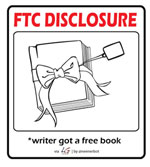
Additionally, some links on this blog go to Amazon.com. As an Amazon Associate I earn from qualifying purchases. There is no additional cost to you. Contact me You can e-mail me at prairieprogressive at gmaildotcom.
|