|
|

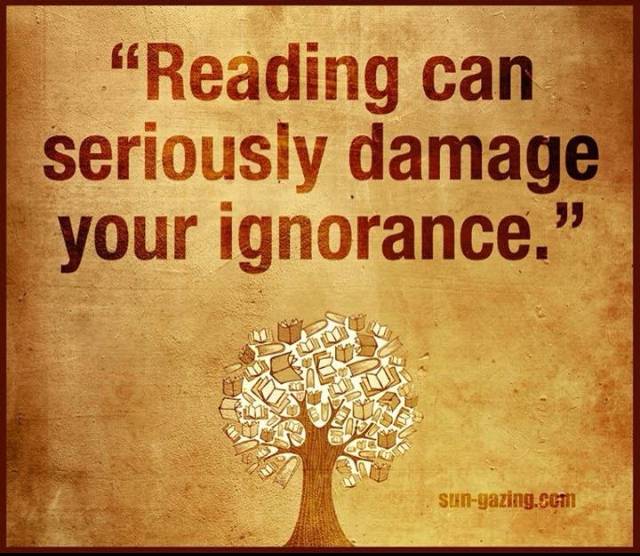
As the first in this week’s series of posts in honor of Banned Books Week, which runs today through October 3, I thought it appropriate to post the entirety of the manifesto written by Ellen Hopkins for the event. Ironically, as I noted a week ago, someone is trying to get one of her books banned from a Norman, Okla., middle school.
To you zealots and bigots and false
patriots who live in fear of discourse.
You screamers and banners and burners
who would force books
off shelves in your brand name
of greater good.
You say you’re afraid for children,
innocents ripe for corruption
by perversion or sorcery on the page.
But sticks and stones do break
bones, and ignorance is no armor.
You do not speak for me,
and will not deny my kids magic
in favor of miracles.
You say you’re afraid for America,
the red, white and blue corroded
by terrorists, socialists, the sexually
confused. But we are a vast quilt
of patchwork cultures and multi-gendered
identities. You cannot speak for those
whose ancestors braved
different seas.
You say you’re afraid for God,
the living word eroded by Muhammed
and Darwin and Magdalene.
But the omnipotent sculptor of heaven
and earth designed intelligence.
Surely you dare not speak
for the father, who opens
his arms to all.
A word to the unwise.
Torch every book.
Char every page.
Burn every word to ash.
Ideas are incombustible.
And therein lies your real fear.
To choose a good book, look in an inquisitor’s prohibited list.
John Aikin, Memoir of John Aikin
Bulletin Board
Today kicks off Banned Books Week, which runs through October 3. In recognition of it, I will have a post each day related to banned books. More important, as MobyLives says, make sure to “stop by your local bookstore and invest in a book that somebody out there is afraid that you’ll read.”
Today also happens to be the National Book Festival. It is being aired live on Book TV on C-Span 2.
And for me, today marks the return of hockey as I head off to watch a couple games at the USHL Fall Classic. Unlike the many scouts who will be there, this will be my first live hockey game in 174 days — but who’s counting?
Blog Headline of the Week
Environmental groups say you’re being too nice to your butt
Bookish Linkage
A panel at The Millions selects The Corrections topping the list. Readers picked Junot Díaz’s The Brief Wondrous Life of Oscar Wao. I was pleasantly surprised to see that David Mitchell’s Cloud Atlas was in the top five on both lists.
Blogger Andrew Seal, though, observes that the panel that selected the list had a “stunning lack of diversity.”
Going back a few more years, a Guardian survey of 25 international writers group selected Gabriel García Márquez’s One Hundred Years of Solitude as the work that has most shaped world literature over the past 25 years.
Why hasn’t a SF novel won the Booker Prize?
“Much can be learned about a person by looking at the books they keep. There’s only one thing that can be learned about a person if all those books are replaced by Kindle. They have no soul.” (Via.)
io9 has started an online SF book club.
At least John Grisham is honest when he says, “I know that what I do is not literature.”
Voting has opened for the Best of the National Book Awards Fiction. I’m not voting for a simple reason. I’ve not read any of the six books on the shortlist: The Stories of John Cheever; Invisible Man, Ralph Ellison (1953); The Collected Stories of William Faulkner (1951); The Complete Stories of Flannery O’Connor (1972); Gravity’s Rainbow, Thomas Pynchon (1974); and, The Collected Stories of Eudora Welty (1983). Amazon’s blog has the votes for the shortlist, not counting, in its words, “the 19 books that didn’t get a vote.”
Duke University Press is expanding its World Readers series, aimed at providing “vivid, thought-provoking introductions to the history, culture, and politics of countries, cities, and regions around the world.” (Via.)
Nonbookish Linkage
Think this guy will get hate mail? A BBC wildlife expert says we should “pull the plug” on pandas. (Via.)
LIFE magazine is now available on Google Books.
A selection of some of the most controversial magazine covers of all time. Personally, I love the National Lampoon cover and The New Yorker cover immediately after it. (Via.)
There’s plenty in the interweb tubes about the big dust storm in Sydney, Australia, but, of course, The Big Picture does it best.
A magnificent collection of space pr0n.
The sacred is a fine hiding place for the profane.
David Mitchell, Cloud Atlas
Ouch!! A federal judge not only denied a motion because it was “riddled with unprofessional grammatical and typographical errors that nearly render the entire Motion incomprehensible,” the judge put handwritten corrections on the pleading and ordered the attorney who filed it to send a copy of the corrections to his client.
Of course, you could also have your motion dismissed for negligent stapling.
It seems to be judges week. A Pennsylvania judge dismissed animal cruelty charges against a police officer accused of sticking his penis into the mouths of five calves because the grand jury couldn’t know whether the cows had been “tormented” or “puzzled” by the situation. “I’m not saying it’s OK,” the judge said, noting he was only addressing the situation of whether the conduct fit within the state’s animal cruelty laws. (Via.)
Surely, there must be some appropriate quote from the Bible to cover this innovative youth. “Teen uses Bible page to roll cigarette.” (Via.)
Never pray for justice, because you might get some.
Margaret Atwood, Cat’s Eye
Pristine. That may be the only way to describe the sound quality of Steely Dan’s Aja. When you consider that the album was released 32 years ago today, it says a lot for what was achieved.
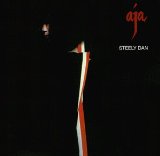 I know Steely Dan gets a lot of disrespect from some quarters. Their music — at least their last four albums in the 1970s — is viewed by some as a prime example of studio soullessness. Others lay at their feet importing smooth jazz into rock. And while those claims could be made about this album, it’s still difficult to find as excellent a combination of rock, pop and jazz. The latter element isn’t surprising. After all, the title cut features not only Steve Gadd, who’s played drums with artists like Chick Corea, but also sax player Wayne Shorter, a jazz giant. I know Steely Dan gets a lot of disrespect from some quarters. Their music — at least their last four albums in the 1970s — is viewed by some as a prime example of studio soullessness. Others lay at their feet importing smooth jazz into rock. And while those claims could be made about this album, it’s still difficult to find as excellent a combination of rock, pop and jazz. The latter element isn’t surprising. After all, the title cut features not only Steve Gadd, who’s played drums with artists like Chick Corea, but also sax player Wayne Shorter, a jazz giant.
True, Steely Dan wasn’t really a band after 1974. That year the touring unit broke up and founders Donald Fagen and Walter Becker retreated to the studio and, as they put it, the band was “reborn as a strictly-studio unit.” Steely Dan’s last four albums of the 1970s — Katy Lied, The Royal Scam, Aja and Gaucho — were all cut with session musicians and guests. But what an array of session players — Gadd, Jim Horn, Jim Keltner, David Sanborn, Tom Scott, Michael Brecker, Larry Carlton, Michael McDonald (who’d been a member of the band when it quit touring). To some, these were just soft jazz or pop lightweights and the music was equivalent to the duo engaging in soundboard masturbation. Yet those criticisms ignore not only the complexity of the music but also the fact people like Shorter and sax player Phil Woods were part of the effort and many of these musicians — Gadd, Keltner, Brecker and the like — were simply top-notch.
Aja may be the epitome of the Fagen-Becker/Steely Dan studio experience. Counting singers, roughly three dozen different musicians appear on the album in addition to Fagen and Becker. While the lyrics don’t have quite the level of arcane imagery found in much of the pair’s song catalog, the arrangements and changes in meter are often unusual, even complex. The performances approach perfection. Granted, you can hear some smooth jazz in the presentation and, as a result, I would call this more jazz-pop than jazz-rock. But the sound. The sound will never cease to amaze. Particularly if you listen with headphones, each note sounds as if it were precisely placed at its particular location in the layers and mix. These are not jigsaw pieces being slapped into place. They are closer to atoms forming matter with each selected according to a specific recipe.
I’m not the only one dazzled by the sound. As Barry Walters wrote in Rolling Stone in 2001, this is an album with “surreal sonic perfection, [and] melodic and harmonic complexity — music so technically demanding its creators had to call in A-list session players to realize the sounds they heard in their heads but could not play, even on the instruments they had mastered.” Two years later, when the magazine named it the 145th album on its list of the 500 Greatest Albums of All Time, it said, “If you were an audiophile in the late Seventies, you owned Aja.” Even the professionals were impressed, as the album won the 1977 Grammy Award for Best Engineered Recording (non-classical).
Still, regardless of the quality, that sound wouldn’t really mean much if Aja weren’t listened to. It certainly met that test. The album went gold (500,000 copies sold) less than two weeks after its release and was certified platinum (1 million copies sold) before the year was out. It was nominated for the Grammy for Album of the Year (losing to Hotel California). While Aja reached number three on the Billboard charts, two songs from it — “Peg” and “Deacon Blues” — hit the top 20 on the singles charts at number 11 and number 19 respectively, while “Josie” would reach number 26 on the top 40 charts. And while those songs hit the charts, you can’t claim that “Black Cow,” which opens the album, or the eight minute title cut are weaker tunes by any means.
All the haters out there can continue to diss the band. I, for one, will continue to marvel at this sonic gem whenever I hear it.
I cried when I wrote this song
Sue me if I play too long
This brother is free
I’ll be what I want to be
“Deacon Blues,” Steely Dan, Aja
Two sociologists say the meltdown of rural America has reached a tipping point, one which is “transforming rural communities throughout the nation into impoverished ghost towns.”
In an article in The Chronicle of Higher Education, husband and wife Patrick J. Carr and Maria J. Kefalas say a brain drain led to a “hollowing out” of rural America — losing the most talented young people at the same time changes in farming and industry have changed the landscape for those who stay. Although the couple moved to Ellis, Iowa, about 80 miles north of Des Moines, to do their research, pictures of Arlington, S.D., and Humboldt, S.D. accompany the article on the publication’s web site.
The loss of jobs and family farms in rural areas has been caused by a variety of factors, they say, including such things as the rise of agribusiness and big-box retail stores and the decline of unions and blue-collar wages. “Civic and business leaders in the places most affected by hollowing out will tell anyone willing to listen how it is their young people, not hogs, steel, beef, corn, or soybeans, that have become their most valuable export commodity,” they write.
They broke the youth into four categories: 40 percent were working-class “stayers;” 20 percent were collegebound “achievers” and they often left for good; 10 were “seekers” joining the military to see the world; and the rest were “returners,” those who eventually came back home but only a small number of whom were “high fliers,” i.e., professionals. The local high school guidance counselor put it more bluntly, saying “the best kids go while the ones with the biggest problems stay, and then we have to deal with their kids in the schools in the next generation.”
Not only is the lack of job opportunities a problem, so is what is available in the workforce. Today’s economy demands more than just a high school education for economic viability, meaning “the choices stayers make doom them to downward mobility and poverty.” If the best and the brightest leave and the downwardly mobile stay, it’s not hard to tell where a community will end up. While some have advocated abandoning the plains (the so-called “Buffalo Commons“), Carr and Kefalas say it would be a mistake to give up on rural America. They suggest a variety of approaches, several at the local level having to do with education and several at the national level dealing with economic stimulus and education.
To some extent, Sioux Falls contributes to the problem. Look at its growth compared to the decline in the state’s small, rural communities. And while the city is probably attracting some of the “achievers,” I would bet it is attracting even more who aren’t leaving their hometowns simply for a wider range of employment options. I would also wager that both Arlington and Humboldt stand a better chance than say Faith or Gettysburg just because they are located relatively close to the I-29 corridor.
But Sioux Falls isn’t immune. A lot of the top kids in my daughters’ high school classes went out of state because they had better scholarship offers. And it isn’t like they’re all going a long way away, with several in Minnesota, Nebraska and Iowa. It also happened with my kids. The scholarship package the Nebraska public universities offered my middle daughter compared to USD’s made her choice of Nebraska a no-brainer. My youngest is in Massachusetts and South Dakota offers neither of her majors. In addition, the ACT scores, grades and class rank that would earn them the South Dakota Opportunity Scholarship ($5,000 over four years) bring full tuition waivers for residents in the Nebraska and Massachusetts systems — and rest assured the out-of-state colleges love to cherry pick here and offer similar scholarships to our best.
And that is where we, at least, face a Catch-22. While South Dakota works hard to provide smaller schools with Advanced Placement courses and similar opportunities through such things as the South Dakota Virtual School, it probably increases the likelihood the best and the brightest become exports. Even if we do entice them to stay or come back, what are the odds they will return to rural communities as opposed to towns along the I-29 corridor? It’s a difficult problem, one I fear may ultimately be insoluble.
The residents of rural America must embrace the fact that to survive, the world they knew and cherished must change.
Patrick J. Carr and Maria J. Kefalas, “The Rural Brain Drain“
|
Disclaimer 
Additionally, some links on this blog go to Amazon.com. As an Amazon Associate I earn from qualifying purchases. There is no additional cost to you. Contact me You can e-mail me at prairieprogressive at gmaildotcom.
|