|
|
Perhaps The Twin Cities should be declared the Literacy Capital of the U.S. The latest survey of the country’s Most Literate Cities ranks Minneapolis first. St. Paul, described as “the rising star of literate cities,” came in at No. 3. The two cities were ranked 2 and 5, respectively, the prior year.
Minneapolis unseated Seattle for the No. 1 position. Seattle dropped to second. Those two cities, along with Pittsburgh, Denver, and Washington, D.C., have been in the top 10 each of the five years the study has been conducted. St. Paul was the most praised this year, viewed as “certainly a bright spot” in a country where literacy seems to become a bigger issue each passing year. St. Paul has moved up in the rankings every year from 11th to 9th to 5th to 3rd. Omaha tied for 34th, down from 31st the last two years.
The ranking is compiled by scoring each city with a population of 250,000 or more in six different categories: newspaper circulation, number of bookstores, library resources, periodical publishing resources, educational attainment, and Internet resources. The categories are compared against the city’s total population.
One of the survey’s more disconcerting notes dealt with bookstores. “Not a single city in our survey has more independent bookstores now than five years ago. Fifty-seven out of 60 cities reported fewer retail booksellers in 2007 than in 2003; in several, the number of booksellers per capita dropped by half of what was reported in 2003.” What makes all that even sadder is that it probably shouldn’t be considered surprising.
Literacy is not, as it is considered in our schools, a portion of education. It is education. It is at once the ability and the inclination of the mind to find knowledge, to pursue understanding, and, out of knowledge and understanding, not out of received attitudes and values or emotional responses, however “worthy,” to make judgments.
Richard Mitchell, The Graves of Academe
Back in late 1975, I started keeping a list of books I’d read each year. I added to the journal whenever I finished a book but didn’t keep a running total, simply adding up the year’s total each December 31. Over the last decade or so, I’ve been running about 10 either side of 60 per year. I was surprised last night when I counted up 2007 and discovered I’d read 101 books during the year, more than ever before.
So what did I read? Not surprisingly, SF was the leading category with 27 titles. Right behind was fiction, with 26 titles, of which nine were translated works. I think the fact those account for half the books contributes to the large number I read. Between the two categories I can think of at least half a dozen offhand that took me only 24-36 hours to read. The only other area that reached double digits was a combination of biographies, autobiographies and memoirs, which totaled 11 among them. I also read six books about hockey.
I also attribute the record number to the fact that for the first time in years I didn’t have a child involved in school athletics or club volleyball. That freed up a number of nights and weekends that were otherwise occupied traveling to or attending those activities. Yet while part of me loves the additional free time, another part misses the interaction with the kids and parents.
I’d like to think the year contained had quality, not just quantity. To help along those lines, my first book of the year is one for the Russian Reading Challenge.
A book is the only place in which you can examine a fragile thought without breaking it, or explore an explosive idea without fear it will go off in your face. It is one of the few havens remaining where a man’s mind can get both provocation and privacy.
Edward P. Morgan, Clearing the Air
My choice for Record of the Year shouldn’t really come as a surprise. It’s got to be Bruce Springsteen’s Magic. I don’t know that I find it as strong as some others have but when you combine a return to the essentials of rock music with the underlying themes of many of the songs, it comes out a winner.
Overall, I thought this a relatively weak year for music. There are a couple other releases that earned consideration for Record of the Year. They include Sky Blue Sky by Wilco and In Rainbows by Radiohead. I think the former is Wilco’s best to date and the layers of acoustic sound on In Rainbows outweigh the electronica I tend to dislike. Besides, there aren’t many bands other than Radiohead that can use a phrase like “The infrastructure will collapse” in a love song — and make it work.
Still, both suffered the same problem for me. On one listen I would really like what I heard; a time or two later I wasn’t overly impressed. I simply kept bouncing back and forth. Magic, in turn, grew on me with each listen and reinforced Springsteen’s status as both a musician and a songwriter.
Leave everything you need and carry only what you fear.
“Magic,” Bruce Springsteen, Magic
This year I again wonder if limiting my list of books of the year to those actually published during the year is the right standard. There were a couple — Michael Arlen’s Passage to Ararat comes to mind — that would have made the list but for the fact they were published before 2007. Adhering to the theory of tradition unhampered by progress, though, this year’s list consists exclusively of books first published in calendar 2007.
Biography
I’ll Sleep When I’m Dead: The Dirty Life and Times of Warren Zevon, Crystal Zevon. This made my mid-year list and remains top of the heap. The book borrows extensively from Zevon’s own diaries and note-books, giving it a slight autobiographic feel. But his ex-wife supplements the tale extensively with interviews with dozens of fellow musicians, family members, friends, lovers and others, giving us a more objective view. As a result, it truly provides perspective on Zevon’s music and private life.
Two works deserve honorable mention. The first indicates why I wait until year end before posting my list. I finished Twenty Thousand Roads: The Ballad of Gram Parsons and His Cosmic American Music by David N. Meyer over Christmas. It may be among the most extensively researched and thorough biographies I’ve read in some time and one which expressly recognizes that those talking about Parsons today may well have vested interests. Kudos also to the memoir Songs from the Black Chair, Charles Barber’s first hand account of struggles with mental illness.
Favorite novel (non-SF)
This is probably the toughest category of the year. I read plenty of good fiction this year, most of it in translation. Maybe the quality speaks to why nothing stands head and shoulders above the others. There are, though, three I highly recommend. Listed alphabetically, they are: Christian Jungersen’s The Exception, Laila Halaby’s Once in a Promised Land and Antonia Arslan’s Skylark Farm. There’s no common theme among them other than the kind of writing that makes you forget you’re reading a book. Coming close behind is one on which I blow somewhat hot and cold but is still worthy of a mention: Ian McEwan’s On Chesil Beach.
The list also brought about a somewhat surprising realization. Even though I buy the vast majority of books I read (or get them from publishers or publicists), I got each of these from the local library. Only McEwan’s work is from a “big name” author. It’s refreshing to know that it in allocating its money amongst the various demands and needs, the library is investing in quality fiction.
Favorite SF work
I’m really going to cop out here, changing the category from favorite novel to favorite “work.” That’s because I just was so impressed with the anthology The SFWA European Hall of Fame. It is the SF work I most enjoyed reading this year and that seems to come to mind most frequently. If I have to actually pick a novel, I’m going to do the same bail out I did at midyear and pick two: Brasyl by Ian McDonald and Blindsight by Peter Watts. As I said before, both cover such a wide range of ideas that you at times stop reading simply to ponder them.
Favorite nonfiction
Although lengthy and not light reading, the nod goes to The Whisperers: Private Life in Stalin’s Russia by Orlando Figes. It is hard to believe that a look at what everyday private life was like in Russia during the Stalin years could be any more thorough or better researched. Honorable mention goes to Jeffrey Toobin’s The Nine: Inside the Secret World of the Supreme Court, a look at a Court in transition that requires an interest in where this country is going more than an interest in the field of law.
Biggest disappointment
Perhaps a guy shouldn’t pick on the dead but given the fact he won this year’s Bad Sex in Fiction award for the same book, I don’t think my award will matter. Norman Mailer’s The Castle in the Forest took an interesting concept — the story of Hitler’s childhood from the perspective of the demon assigned by the devil to supervise him — and made it vapid.
As usual, there were a lot more books I wish I’d read but what would a new year be without fairly full TBR shelves?
How many times I learned
That the greedy just get greedier
While the vulnerable get burned
“Accidentally Like A Martyr,” Warren Zevon, Preludes
The sad but all too true irony of this just grabs me. The Associated Press reports:
Greek Orthodox and Armenian priests attacked each other with brooms and stones inside the Church of the Nativity as long-standing rivalries erupted in violence during holiday cleaning on Thursday.
The church is built on the spot in Bethlehem where Christians believe Jesus was born. I guess it isn’t just alcohol that has a tendency to bring relatives to blows over the holidays.
Your religion is what you do when the sermon is over.
H. Jackson Brown, Jr., P.S. I Love You
|
Disclaimer 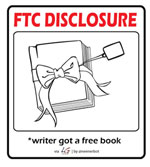
Additionally, some links on this blog go to Amazon.com. As an Amazon Associate I earn from qualifying purchases. There is no additional cost to you. Contact me You can e-mail me at prairieprogressive at gmaildotcom.
|