|
|
Science fiction as literature of substance? What a concept!
Needless to say, I was happily surprised when the South Dakota Humanities Council chose Ray Bradbury’s Fahrenheit 451 as the state’s book for The Big Read in 2008. Yet I about fell on the floor Friday when my mail contained a notice and registration form for a “2008 Bradbury Mini Conference.”
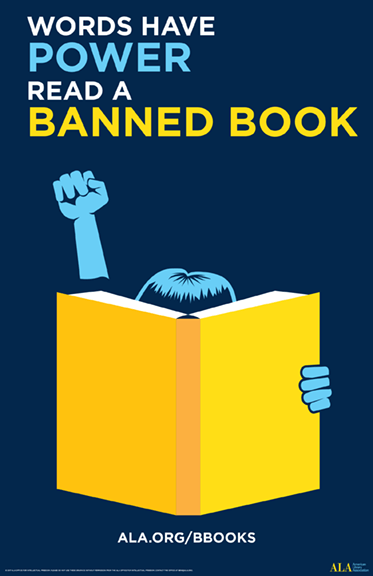
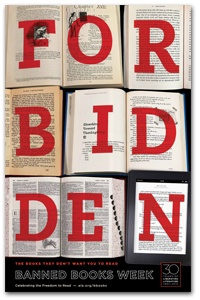
Yes, the Humanities Council is actually going to sponsor a conference Feb. 1 and 2 springing from Bradbury’s book. While it will include sessions specifically related to the book (“Music and Fahrenheit 451” and “Beyond Fahrenheit“, to name two), it goes beyond that. Other sessions tentatively include: “Lawless Behavior to Preserve the Freedom to Read”, “Banned Books and Libraries in Post 9/11 America”, “Sensing Censorship?”, “Bradbury’s Influence on the Science Fiction World” and “Science Fiction Writing Today.”
What? Whether it’s the NEA, the Humanities Council or a combination of the two, someone has actually figured out there is political and cultural relevance — even in South Dakota — to a genre the literati usually look upon with disdain. Granted, Fahrenheit 451 has deservedly received acclaim far beyond the world of SF but, still, it is SF.
The complete conference agenda will be posted on the Humanities Council web site by Jan. 20. What is even more impressive is that registration (including meals) is only $25. Still, with the good comes the not so good. (Sorry, Corey.)
The conference apparently begins at or before noon on a Friday — and is being held in Oacoma. Now I have nothing against Oacoma and certainly don’t believe cultural or arts events must be in Sioux Falls or Rapid City. Still, I can’t help but wonder how attendance will be affected by asking people to travel to Oacoma in the beginning of February, especially when the first day of the conference is a work day. Perhaps this is a fair location because it is on an interstate and probably somewhat centrally located (or equally inconvenient) for most potential attendees. But if the conference is intended to bring together “scholars, educators and members of the public” and the tentative presenters are from Dakota Wesleyan University, SDSU or out of state, wouldn’t holding in it a community with a post-secondary school make sense? Or how about one of the eight towns that make up the “Big Read communities,” three of which have public colleges and another two have educational centers where the state colleges collaborate to offer classes? Most of those choices also provide a larger pool of locals who may show up for one or two sessions just because it’s there.
I dislike being even partially critical of an excellent concept and truly wish the Humanities Council success with this event. But even given my interest in SF and the topics of the tentative sessions, I question whether I can/will attend. It may ultimately depend on the list of final sessions and when they are scheduled. The fact someone like me is hesitant indicates attendance may be heavily influenced by location and poor attendance may later serve as justification for why programs like this “don’t work” in South Dakota. Let’s just hope my concerns are misplaced and the conference is the great success it deserves to be.
If they give you ruled paper, write the other way.
Poet Juan Ramón Jiménez,
epigram to Fahrenheit 451
It’s been a while since doing any sort of round up. It’s not that I haven’t seen good stuff out there, I just haven’t gotten around to posting it. One thing I did get around to since moving the blog to the new server is to update the blogroll. Several blogs that seem to be terminal or on lengthy hiatus are gone and a couple new ones have been added.
As for marginalia, some of these may even border on being dated:
- While Lazysphere is an excellent term, I must express a greater preference for Cory’s phrase: Deep Thinkers or Ratings Whores?.
- SF Signal gives us a list of the 2008 Philip K. Dick Award nominees, (I’ve read one, Gradisil), and the preliminary nominees for the 2007 Nebula Awards.
- JP at SF Signal also strikes a theme that’s appeared here, wondering if we live in a science fiction world. Likewise, a new SF blog uses this concept as a springboard to an interview with noted author Ken MacLeod about the increase in near-future SF.
- Three Percent is keeping track of 2008 translations by month, something of increasing interest to me since most of the books I’ve read this year are works in translation.
- Edward Champion has converted/abandoned The Return of the Reluctant blog to Filthy Habits, a site with “long-form entries on a wide range of topics.” (As an aside, evidently my vote wasn’t enough for him to get one of the open seats on the NBCC Board of Directors, although two people I voted for did.)
- Coolness, at least for space geeks like me. (Via.)
- Jason Kottke gives us a list of his best links of 2007.
- Fine Books Blog has two fine posts (here and here) on “legal” issues surrounding Advance Reading Copies. While I don’t receive a ton of them, a significant number of those I receive are unsolicited and often works I would not/do not read. I’ve also never analyzed it from a legal standpoint but also have never sold online. Many do, though, end up at the local used bookstore. (Via.)
- I’ve never been to Vegas or had the desire to go. But this (and Penn & Teller) could be incentive.
No matter how close to yours
Another’s steps have grown
In the end there is one dance you’ll do alone
“For A Dancer,” Jackson Browne, Late for the Sky
If the label on the copy of Newsweek that arrived Wednesday is correct, it will be the last. Generally, I wouldn’t mention magazine subscriptions expiring but this one is kind of a milestone. You see, my subscription to Newsweek is was in or near its 30th year. But no more.
Newsweek didn’t do anything in particular to piss me off. It’s just that the end of this subscription term coincided with a never ending presidential campaign and caught up with the conclusions about politics I expressed nearly three years ago. I can’t take any more covers or articles on politics, the morass in Iraq or the latest bit of Washington incompetence. I simply don’t need a weekly reminder that the good of the people and the country shall always be outweighed by politics and striving for political advantage.
Over the last year or so, I found myself spending less time reading Newsweek than The Hockey News. I skipped or, at best, merely skimmed a significant percentage of the articles and columns in Newsweek. It appears that will not change with the last issue given the content that appears to be in it. While it will be different not seeing a copy of Newsweek around the house, I don’t anticipate any withdrawal pains whatsoever. That in itself gives insight into why this 30-year relationship is ending.
When you’re lookin’ for truth on the cover of a magazine
How does it feel when you find out what you’re not gonna be?
“What a Scene,” Goo Goo Dolls, Gutterflower
I never want to take anything away from an author as gifted as Tatyana Tolstaya. That said, one of the more intriguing aspects of Tolstaya’s The Slynx is Jamey Gambrell’s translation of the work.
The Slynx is a satire set in a Russia more than 200 years after “the Blast.” Life has reverted to a feudal state. The wheel was only recently reinvented, mice are a dietary staple and a medium of economic exchange, and fire is still considered so magical that people must rely on “stokers,” whose sole job is to reignite stoves in homes when the fire goes out. Those born after the Blast have to live with Consequences – too few, too many and/or deformed eyes, ears or limbs; gills; nostrils on their knees; or cockscomb growing on various parts of the body. The Olderners – people who survived the Blast – have their own Consequences. They live for centuries. But their recollections of pre-Blast life and much of their language are meaningless to the people who inhabit this Russia.
I understand translation is difficult because certain words or idioms simply do not translate well or at all between languages. And not being familiar with the Russian language, I can’t imagine what Gambrell’s efforts. Passers by on the streets and neighbors in the village here may lapse into phrases and insults that seem as appropriate to Brooklyn or the Bronx. Yet even more impressive is the fact Gambrell must take what I presume were bastardized versions of Russian words and translate them into a bastardized English word. Part of the effect and message in The Slynx is created by such bastardizations. Yet while terms like Oldeners, “feelosophy,” “newrottick,” the “elamentree preeceps of more-allity,” or a “spiritual runnysauce” are crucial to the overall feel, you can’t held but wonder how Gambrell arrived at them. For the sound of these words to convey their meaning while at the same time remaining true to the meaning and effect Tolstaya intended is translation above and beyond the ordinary.
Nothing should be taken away from Tolstaya either. The language and thought process of her narrator, Benedikt, gives unique insight into the world she has created. Despite the fact Benedikt, like his fellow residents, has a low grade intellect, he is a worthy vehicle for examining not only concepts of society, government and tyranny but also the joys – and logical ramifications – of an unbounded. virtually obsessive, love of books and reading. Despite being set in a future feudalism, The Slynx is perfused with literature, with Russian literary references that grow in number as the tale proceeds. Of course, that is perhaps something one might expect given that Tolstaya is the great-grandniece of Leo Tolstoy (although Alexander Pushkin is clearly a favorite here).
Tolstaya’s story is truly a novel perspective on Russian culture and history. Thanks to Gambrell’s translation, this edition ensures the humor and biting edge of the satire is fully comprehensible to the English reader.
That’s what they always say about booklets: food for the soul. And it’s true: you start reading and your belly doesn’t growl as much.
Tatyana Tolstaya, The Slynx
In kicking off my Russian Reading Challenge, I thought it appropriate to begin with a famous Russian author. Thus, I started with The Story of a Nobody, an 1891 work by Anton Chekhov. The tale produced several diverse thoughts.
First, many people, myself included, might be tempted to think that there is little in common between ourselves and 19th century Russians. Yet just four pages in, I discovered I shared a long held feeling with the story’s narrator. Chekhov writes:
I was becoming a dreamer and, like a dreamer, did not know what it actually was that I needed. At times I wanted to retreat to a monastery, sit there for days on end by a window and gaze at the trees and fields; at other times I imagined myself buying a few acres of land and living like a country squire; at others I swore to myself that I would take up academic work and without fail become a professor at some provincial university.
Compare Chekhov’s passage to one from Hugh Prather’s Notes to Myself, published in 1970: “There is a part of me that wants to write, a part that wants to theorize, a part that wants to sculpt, a part that wants to teach…. To force myself into a single role, to decide to be just one thing in life, would kill off large parts of me.” This is a passage I’ve remembered since first reading his book more than 30 years ago. I never really thought a 19th Century Russian author would also express a similar inclination toward still dreaming about “what I’m going to be when I grow up.”
My surprise perhaps reveals an attitude bordering on arrogance on my part that I routinely assume that the ideas and characters in century old literature don’t reflect the thoughts and concerns of “modern” life.
Yet The Story of a Nobody also reflects one of the problems I have with certain “classic” literature. Most of the characters are aristocrats, with the men largely living the good life with no apparent concern about their means of survival. The women, meanwhile, tend to come off as vapid, concerned primarily about their wardrobe, gossip or love. While Chekhov challenges the roles of men, women and class in the story, the archetype remains. Perhaps I’ve seen such portrayals so often because they simply are accurate descriptions of aristocratic life at the time. Still, my “modern sensibility” seems to lead me to view these characters as little more than stereotypes and, as a result, to perhaps give less credence to such characters.
And the idea of preconceptions leads to another element of this edition that brought to mind prior irritations. This book contains both a foreword and an introduction written for this particular edition. Yet if you read either or both before reading the story, much of the content and purpose is revealed. It’s kind of like watching a movie trailer that leaves you nothing to really discover while watching the film. I have no problem if “experts” want to opine on what particular scenes mean or what specific characters or their particular traits represent. But please do so AFTER I have read the book. Let me discover for myself what the book is about and reach my own conclusions first. After all, isn’t that why we read a book in the first place? Why make it introductory material and create the possibility a reader will approach a book with preconceived notions based on someone else’s views?
Personally, I never read this kind of material before reading the book. I make it a point to do so after I’ve completed the book as it allows me to see what the people writing the introduction or commentary think and how their views are similar to or different from mine. It is not uncommon for this to lead me to go back and re-read passages because of something I didn’t see or realize in my reading. I know everyone can skip over this introductory material like I do. But it would make life so much easier for the reader if this material appeared at the end of the work rather than the beginning.
I should also note that while The Story of a Nobody was prompted by the Russian Reading Challenge, I’m not actually planning on counting it toward the challenge at this point. That’s because it clocks in at only 99 pages, meaning, as the foreword notes, it is “too long to be a short story and too short to be a novella.” Instead, I will consider it an educational warm up — and one worth that investment.
Cynicism deadens pain.
Anton Chekhov, The Story of a Nobody
|
Disclaimer 
Additionally, some links on this blog go to Amazon.com. As an Amazon Associate I earn from qualifying purchases. There is no additional cost to you. Contact me You can e-mail me at prairieprogressive at gmaildotcom.
|