|
|
Science fiction’s most common motif is speculating on our future. Sometimes, though, it also gives a glimpse of our past. That is especially true with reissues of classic works, such as Philip Wylie’s Triumph.
First published in 1963, Triumph is a heart-of-the-Cold War tale of nuclear apocalypse. The trigger of a cataclysmic World War III is a confrontation with Communists in a post-Tito Yugoslavia. Fourteen people gain shelter in a massive underground facility built by a wealthy businessman in a Connecticut mountain. It is stocked with equipment and supplies to enable them to survive for two years. Given the suddenness of the nuclear exchange, this is a rather randomly through together group. They include the millionaire, his wife, their daughter and her well-bred fiancee; the family’s African-American butler and his daughter; a brilliant Jewish scientist, who also happens to have had Navy combat training; a gigolo and his mistress; two children separated from their parents in the holocaust; the daughter of a wealthy Chinese businessman; and a Japanese engineer. Although the scientist. Ben Bernman, is the most frequent focus, the group as a whole helps reflect the devastating impact of nuclear war and how individually and collectively they try to survive physically and psychologically.
While Triumph still fits in the mainstream of modern post-apocalyptic literature, its reissue also allows it to serve as a window on then-current American thought. First, there is no doubt this is a conflict between good and pure evil. In Wylie’s hands, the nuclear exchange seems inevitable. The free world, he writes, never understood that “Russian Communist leaders had always been willing to pay any price whatsoever to conquer the world, so long as some world remained to be ruled in slavery, and so long as some of the Soviet elite survived to be its rulers.”
Thus, the Soviets not only strike with extreme nuclear force, they take long-planned steps to try to assure some survivability of its elite and possible control of regions in the southern hemisphere. The Soviets also don’t hesitate to use dirty weapons to spew deadly radiation throughout the U.S. to attempt to ensure it will be unlivable and unusable for generations. Bernman frequently makes observations about the various types of radiation used and released in the weapons and their effects. That detail perhaps is not surprising given that Wylie was at one time a special advisor to the chairman of the U.S. Joint Committee for Atomic Energy. Yet Wylie also goes to the personal level, exploring, for example, how persons with differing views on even building nuclear armaments can be driven to a fury and revenge that leads to additional nuclear exchanges even when most of a nation has been incinerated or poisoned.
From a domestic standpoint, the polyglot make-up of the survivors provides Wylie plenty of opportunity to comment on a variety of social issues, not the least being race and male-female relations. The language reflects the book’s time, with occasional references to “colored people” and “Negro.” Still, Wylie is never overbearing in his examination of those issues. For example, race is explored not only in the context of the issues presented by the civil rights movement but also by discussing racial problems that arose between the Chinese and Japanese.
Wylie, who died in 1971, had a background as broad as the subjects he addresses and it helps make Triumph as intriguing today as it was when first released. In science fiction, he would probably receive the most nods of public recognition as co-author of When Worlds Collide. Yet his 1930 book Gladiator is said to have inspired the character Superman while another book, 1932’s The Savage Gentleman, is credited as the inspiration for the pulp hero, Doc Savage, who appeared on newsstands the following year. Yet Wylie also wrote nonfiction and hundreds of short stories, serials, newspaper columns and social critiques.
Triumph is resurrected as the latest installment in the “Beyond Armageddon” series of Bison Books, comprised of reprints of classic novels. Like other works in that series, Triumph occasionally is slightly anachronistic, such as its references to “colored people” or the fact the Cold War battle with communism no longer exists. Given the time that has passed, those instances are insignificant compared to the work’s overall tone and approach. On the other hand, some readers could not help but wonder if the aberration is that the book’s subject — nuclear armageddon — has not itself become archaic nearly half a century later.
No one had ever told [the children] what they called “real stories” before: that function had been left by their parents to TV.
Philip Wylie, Triumph
That’s my name for it but Regret The Error has announced its annual awards in media errors and corrections, which it calls Crunks 2007. The scope and variety of awards makes the entirety worth reading. Yet the following correction from The Sentinel-Review in Woodstock, Ontario, probably ranks as my favorite:
In an article in Monday’s newspaper, there may have been a misperception about why a Woodstock man is going to Afghanistan on a voluntary mission. Kevin DeClark is going to Afghanistan to gain life experience to become a police officer when he returns, not to shoot guns and blow things up.
Still, you would think shooting guns and blowing things up would be considered a fringe benefit.
We misspelled the word misspelled twice, as mispelled, in the Corrections and clarifications column on September 26, page 30.
Correction in The Guardian
The results of a National Book Critics Circle survey in which I participated are in. And evidently I am largely in step with contemporaries when it comes to issues in the “ethics” of book reviewing.
You can look at the full survey results but here’s a few highlights:
- More than three-quarters of those surveyed (76.5%) said it was never ethical to review a book without reading the entire book. What surprises me is that some eight percent see nothing wrong with it.
- A nearly identical percentage (76.3%) agree that “commissioned” book reviews should be identified as such. Less than five percent said they need not be identified.
- A slightly smaller number (64.9%) believe someone who’s written an unpaid blurb for a book should not be allowed to write a fuller review of the book. I had already decided this concept will apply to a forthcoming book for which I recently provided a blurb.
- Surprisingly, while more than 80 percent think “literary journals” and magazines should follow the same ethical rules as newspaper book sections, little more than half (54.6%) believe “literary blogs” (whatever they may be) should.
- Forty percent thought a reviewer should not read other reviews of a book before reviewing it while only 18% approved of doing so. Perhaps reflecting there are a variety of factors that might impact this in any particular situation, 33.5% gave “other” as a response.
- More than half (54%) say it is never acceptable for a reviewer not to say what they really think about a book. Saying it’s acceptable or “other” roughly split another 38 % of the vote. I agree with the majority but note that one need not use razors in expressing what you really think.
- The yes and no votes were equally split on a related issue. Thirty-four percent fell on either side of whether it is ethical for a reviewer to decline to review a book they already accepted for review because they didn’t like it and didn’t want to say negative things in print.
- Barely half (51.6%) see no problem with the practice (followed here) of a review containing a link to Amazon or other site where the book can be purchased. I, of course, fall in that half but the practice is disclosed in my Reader Pledge.
- Finally, fully 60 percent say it is acceptable for a newspaper book section or magazine to “ignore” self-published books submitted to it.
Even if there were established rules of ethics for book reviewers, compliance would be voluntary. Still, I think it’s interesting to see the views in this area, particularly in terms of honesty and disclosure. I should also notethat GalleyCat has some pertinent observations on the survey in light of the blogger v. mainstream reviewer debate that’s been going on for some time now.
I never read a book before reviewing it; it prejudices a man so.
Sydney Smith, quoted in Bon-mots of Sydney Smith and R. Brinsley Sheridan (1893)
As continuing work on one of the most significant S.D. Supreme Court briefs I’ve done in years (or ever) has kept my attention all week, here’s a few recent odds and ends as I settle in to watch UM-UND hockey on the tube:
- Among the things falling victim to work was an intended post on the “outrage” being shown over the movie The Golden Compass. But that’s alright. Cory at Madville Times has an excellent post on the crusade that I would be hard pressed to top. He even makes my intended point about how so much of this energy can be better spent not fearing contrary ideas but actually using them ideas as a learning experience. Go. Read. Think..
- The delay also makes this more timely: we miss you, John. (Via.)
- We Americans sure are an embarrassing lot.
- David Louis Edelman gives us a thoughtful and thought-provoking list of humanity’s five biggest moral challenges.
- Where do books go when they
die are unread?
- Hmmm, maybe these justify buying myself a Wii for Christmas (assuming one can be found).
- An explicit set of “special instructions” to baseball players in 1898 shows today’s athletes don’t have a monopoly on “obscene and indecent language. (Also via.)
- Newsweek of all places is the source of what may be my reading challenge for next year: the Russian Reading Challenge 2008. In addition to wondering whether to join, I’m wondering if I would ever be brave enough to tackle the new translation of War and Peace as part of it.
- On a somewhat related note, Three Percent is compiling a list of the best translations of 2007.
- The 10 most manly writers ever? (Via.)
Why in the world are we here?
Surely not to live in pain and fear
“Instant Karma,” John Lennon
Best way to take a break from a South Dakota Supreme Court brief that’s consuming most of your time? Perhaps a new decision by the Court that has absolutely nothing to do with your case but interests Internet denizens.
In the decision, handed down Wednesday, the Court applies case law every lawyer recalls from the first year of law school to the advent of the Internet age. It weighs in on how at least some use of the Internet will or won’t lead to getting sued in another state. While saying it was reserving to another day whether buying something over the Internet from a non-South Dakota resident subjects the seller to the jurisdiction of South Dakota courts, the Supreme Court unanimously ruled that an instance of advertising over the Internet was not enough.
Marschke v. Wratislaw resulted when Marschke bought a car from Wratislaw, a Montana resident. Marschke learned of the car via eBay, where Wratislaw included his toll-free telephone number and link to his business website. Marschke did not bid on the car on eBay. Instead, he called Wratislaw and bought the car with a written purchase agreement. When Marschke got the car, though, he decided it wasn’t in the condition he expected. As will happen, that led to him suing Wratislaw, who, in turn, said South Dakota courts had no jurisdiction over him.
The Supreme Court agreed. A lengthy footnote discusses case law on whether use of the Internet can subject a person or business to the jurisdiction of another state’s courts. Still, the Court said it would not address that issue because the actual sale of the car did not occur on the Internet. Instead, it said Wratislaw’s “single act” of posting the car on the Internet wasn’t enough for him to be sued in South Dakota and that any contact with South Dakota created through using the Internet for advertising “is attenuated.”
One cannot help but think that the advertising via eBay is somehwat unique compared to an ongoing ad. The eBay posting expires after a period of time and, thus, more closely resembles the “single act” language of the court than a person or business that advertises the same product or item on the Internet day in and day out. In addition, it would seem that jurisdiction might have existed if the sale had actually occurred via eBay because that the Internet contact was the core the transaction.
As the actual sale in this case did not take place on the Internet we leave for another day a resolution of that issue. We do so as we are to reject “any talismanic jurisdictional formulas[.]
Marschke v. Wratislaw, 2007 SD 125 (Dec. 5, 2007)
|
Disclaimer 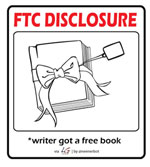
Additionally, some links on this blog go to Amazon.com. As an Amazon Associate I earn from qualifying purchases. There is no additional cost to you. Contact me You can e-mail me at prairieprogressive at gmaildotcom.
|