Blogroll

Race reflections in a “white-washed” book cover

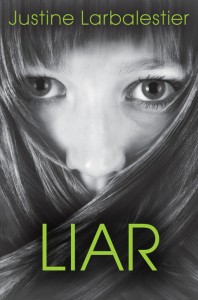
liarUndoubtedly, we’ve come a long way thanks to the Civil Rights Movement. Yet we can find in sometimes surprising places confirmation that underlying, institutionalized racial issues still exist. A case in point: the picture to the left, which is the cover of the forthcoming young adult novel Liar by Australian author Justine Larbalestier.

Quite attractive, isn’t it? Too bad that Micah, the novel’s main character, is “black with nappy hair which she wears natural and short” and could pass for a boy. Now maybe she is a really, really, really excellent liar. Even then, I doubt she can lie her way into looking like the girl on the cover. Larbalestier “strongly objected” to various covers the U.S. publisher, Bloomsbury Books, suggested because “none showed girls who looked remotely like Micah.” As is evident, she lost. And that loss raises a couple issues.
liarozOne concern is artistic. Larbalestier says she worked hard to make Micah a believable character. “One of the most upsetting impacts of the cover,” she writes, “is that it’s led readers to question everything about Micah: If she doesn’t look anything like the girl on the cover maybe nothing she says is true. At which point the entire book, and all my hard work, crumbles.” While that is certainly a concern to authors, it is to a great extent mainly an issue between the writer and her publisher.

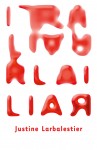
More broadly disturbing is what the cover says about our continuing attitudes toward race. Liar is also being published in Australia and the cover of that edition appears at the right. That cover certainly doesn’t create the same artistic concerns. And while I’ll leave it to graphic designers and the like to assess the marketability of the book with the Australian cover, the contrast certainly is an indictment of American attitudes toward race. As Larbalestier wrote on her own blog:

Every year at every publishing house, intentionally and unintentionally, there are white-washed covers. … Editors have told me that their sales departments say black covers don’t sell. Sales reps have told me that many of their accounts won’t take books with black covers. Booksellers have told me that they can’t give away YAs with black covers. Authors have told me that their books with black covers are frequently not shelved in the same part of the library as other YA—they’re exiled to the Urban Fiction section—and many bookshops simply don’t stock them at all. How welcome is a black teen going to feel in the YA section when all the covers are white? Why would she pick up Liar when it has a cover that so explicitly excludes her?

Now maybe what’s really needed is to assess differences among the reading selection of young adults of various races, what might cause them and the extent to which cover art plays a role. And maybe the publisher is simply doing what the marketplace demands. Perhaps Liar would not sell as well in the U.S. without this cover. That’s something we’ll never know. What we do know is that the publishing industry’s perception alone reflects a certain reality of American society. It’s more than a bit depressing that in the 21st century, we still not only judge books by their cover, we judge them by the skin color of the persons on the cover.


Clearly we do not live in a post-racist society.

Justine Larbalestier

Challenging that TBR stack

Call it coincidence. Call it serendipity. Either way, the conjunction of a post that reminded me just how big the “to be read” stacks are and the announcement of a reading challenge have motivated me to whittle down those stacks.

It’s the Random Reading Challenge. The rules are fairly simple: (1) randomly select any number of books from the TBR list, (2) assign a number to each book based on how many books you selected (e.g., 1 through 10), and (3) use a random number generator and then read the book assigned to that number.

I’ve modified (broken) the rules a bit. First, I didn’t choose a random number of TBR books. Instead, I’m using the 51 that were in that recent post and numbering them by the order in which they appeared in the post. I figure that was arguably random as it freezes the list at a specific point in time. Second, although the challenge begins August 1, I started a week early, figuring even if the one or two might not count toward the challenge, every one helps reduce the stacks. Thus, I’ve already read one book and decided another was going in the box heading to the used book store as I’ve started it twice and it just hasn’t generated any continuing interest.

And reducing any guilt I feel over the large number of unread books helps bring serenity.

Updates:

Book 1 completed (August 8, 2009): Blameless in Abaddon, James Morrow

Book 2 (August 17, 2009): The Measure of a Man: A Spiritual Autobiography, Sidney Poitier

Book 3 (August 30, 2009): Voices From the Street, Philip K. Dick

Book 4 (November 21, 2009) (I know, a bit of a gap): Windows on the World, Frederic Beigbeder

Book 5 (November 27, 2009): To Kill a Mockingbird, Harper Lee

Book 6 (November 29, 2009): The Innocent, Ian McEwan

Book 7 (January 26, 2010): Black Dogs, Ian McEwan

Book 8 (February 14, 2010): Death in Spring, Merce Rodoreda

Book 9 (April 27, 2010): Manhunt: The 12-Day Chase for Lincoln’s Killer, James L. Swanson


The love of books is a love which requires neither justification, apology, nor defence.

John Langford, The Praise of Books

Weekend Edition: 7-25

South Dakota Blogosphere Bulletin Board

The recording industry brings down a post by Ken Blanchard. And then recording companies wonder why they’re despised. (Of course, I first had to get over my initial reaction.)

Mother Nature Network recognizes Rebecca of Flying Tomato Farms (hmmm, sounds like a potential book title to me) as one of its 40 Farmers Under 40. She’s number 39. (Via Cory.)

Blog Headline of the Week

Jesus H. Christ, Houston, we’re on the &*!!@# moon!

Bookish Linkage

Ed gives us a 2009 edition of a book blogger taxonomy. I’m glad he says it’s “by no means complete” as I don’t think I fall into any of the categories (although I do somewhat fear the Caped Crusader monker — and should perhaps fear more knowing what category I’m actually in).

Ten books that should be removed from the literary canon(s).

Lifehacker presents a Bookworm’s Guide to the Lifehacker Galaxy.

I generally don’t go into chain stores so was surprised to see that “Target has been building itself into a tastemaker for books.” That also prevents me from commenting on the taste it is spreading.

The Electronic Frontier Foundation is starting an effort to ensure that Google Books has a strong privacy policy.

Nonbookish Linkage

John Thune’s whacky gun plan” puts the state and Sioux Falls in not so favorable light. But then, these are whacky East Coast Commie Pinko Liberals complaining, right? (Via Denise.)

John Stewart is the nation’s most trusted newscaster — even in South Dakota. Hey, it’s from Time magazine so it’s got to be true. (Via.)

A beserk groundhog” evidently mistook a man — and two cops — for Bill Murray (in Caddyshack, not Groundhog Day). (Via.)

Apple has approved a new iPhone app called “Cannabis” that uses Google maps to show you where to buy medical marijuana.

The Big Picture takes us to the longest solar eclipse of the century.

A collection of space pron.


Writing turns you into somebody who’s always wrong. The illusion that you may get it right someday is the perversity that draws you on.

Philip Roth, American Pastoral

Favorite Film Friday: 2001: A Space Odyssey

I’ve lost track of the number of times I’ve seen 2001: A Space Odyssey. I do have one huge regret about all those viewings, though. None has been in a movie theater on a big screen.

2001I was 11 when the movie came out in 1968. I asked my parents to let me go see it in a Cinerama (the era’s version of IMAX) theater in Minneapolis that summer. Neither one wanted to go so I was out of luck. It’s one of those minor deals that still sticks in my mind, particularly with the retrospective knowledge of what it would have been like on such a huge screen.

Of course, whether I saw the movie in that or any other theater probably wouldn’t have made any difference to my comprehension of the meaning(s) of the film. After all, despite all the viewings on VHS and DVD and years of reading science fiction and watching Stanley Kubrick movies, I still don’t know that I understand it. And I actually think anybody who claims to grasp the meaning of the film is full of crap (although Kubrick claimed a 15-year-old girl provided the “most intelligent” commentary on it).

Whether we understand it or not, there’s no doubt 2001 is both a cinematic classic and a cultural icon. Most Baby Boomers (and perhaps others) commonly refer to the Richard Strauss composition Also sprach Zarathustra as “the 2001 theme.” The wipe at the from the opening “Dawn of Man” segment to the next is undoubtedly one of the most classic transitions ever. HAL, the computer with artificial intelligence in the movie, itself became an icon, not only being elected to a hall of fame but sparking the urban legend that the name was an intentional one letter shift from IBM. Finally, there’s the five-minute or so fantastic, psychedelic journey in the penultimate part of the film. When contrasted with the final scenes, it is no wonder we are left wondering just what we saw.

In 1991, the movie was selected for the National Film Registry, which preserves up to 25 “culturally, historically, or aesthetically significant films” each year. The U.K.s Film4 channel ranked it number 6 on its list of 50 films to see before you die. It was 22nd on the American Film Institute’s 1998 list of the 100 greatest American movies and actually rose to 15th place in the 10th anniversary edition. Filmsite‘s commentary on the movie in its discussion of those top 100 movies said, “Director Stanley Kubrick’s work is a profound, visionary and astounding film (a mysterious Rorschach film-blot) and a tremendous visual experience.”

Groundbreaking for its time, 2001‘s special effects show their age today. Yet I think the description of it as a “Rorschach film-blot” remains accurate after repeated viewings. And even though I’m living years after that then-distant future, I keep coming back to the film. Maybe one day I’ll understand it. Actually, I think finding it in an IMAX theater is far more probable — and that will help me erase 40 some years of disappointment.


I am putting myself to the fullest possible use, which is all I think that any conscious entity can ever hope to do.

HAL 9000, 2001: A Space Odyssey

I like my law real, not televised

In what appears to be becoming an annual pop culture tradition, the cover story of the new ABA Journal is The 25 Greatest Legal TV Shows. In August 2008, the magazine’s cover story was the 25 greatest legal movies.

Perhaps showing my preference for movies over television, I’d seen more of the top 25 movies than I have the TV shows. But given the accuracy of most TV shows, that’s probably a good thing. As it perhaps fitting, the list was picked by a 12-person jury. Here it is, with comments:

1. LA Law — Enjoyed it to begin with but gave up watching a couple years in when the stuff that was done in the courtroom grew increasingly ludicrous and the soap opera plot lines increased.

2. Perry Mason — Perhaps showing my age, it is a crime — a felony, in fact — for this show not to be number one on the list. Most of the shows I saw were probably in syndication.

3. The Defenders — Although from the Perry Mason era, I don’t think it was as widely syndicated so I don’t know if I’ve ever seen an episode. Besides, this may have been back in the day when you were lucky if you got two channels on your rabbit ears or other television antenna in northeastern South Dakota.

4. Law & Order — Can’t say that I’ve ever sat and watched an episode, in large part because I’m not a fan of detective/cop shows. (This applies to the entire Law & Order franchise.)

5. The Practice — Never watched.

6. Ally McBeal — Doubt if I ever watched a complete episode due to nausea.

7. Rumpole of the Bailey — May have seen one or two episodes but I’m not a fan of British dramas.

8. Boston Legal — Have seen bits and pieces which, for the most part, I found enjoyable but for whatever reason have never seen a complete episode, despite the fact my wife loved the show. Reflective, I guess, of my issues with television commitment.

9. Damages — Watched the first and second season (on DVR) because of Glenn Close being in it. The first season I enjoyed. I came very close to giving up the second and fear it has gone off the track.

10. Night Court — Watched fairly regularly but it wore a bit with age.

11. Judging Amy — Never saw an episode.

12. Owen Marshall: Counselor at Law — May have seen an episode or two but, if I did, it didn’t leave an impression.

13. JAG — Never saw an episode.

14. Shark — Saw an episode or two but quickly discarded.

15. Civil Wars — Watched several episodes but never grabbed me.

16. Harvey Birdman, Attorney at Law — I don’t know if I even knew this show existed.

17. Law & Order: Criminal Intent — See Law and Order above.

18. Murder One — Can’t say I ever saw an episode.

19. Matlock — Unfortunately, I have seen an episode or two.

20. Reasonable Doubts — If I saw an episode, it evidently was far from memorable.

21. Law & Order: Special Victims Unit — See Law and Order above.

22. Judd for the Defense — Sounds familiar but may well be a victim to the television access problems mentioned for number three.

23. Paper Chase — I’ve seen bits and pieces of the series and enjoyed it enough that this reminder may cause me to go look for it to rent on DVD.

24. Petrocelli — Doesn’t even ring a bell.

25. Eli Stone — Don’t know that I’ve heard of it.

So there it is, at best I’ve seen episodes in maybe half of these. Further indicating that my disdain for television may be heightened by series that deal with subject matters I know, I don’t believe I ever saw any of the dozen shows that made the honorable mention list.


Every time you think television has hit its lowest ebb, a new type program comes along to make you wonder where you thought the ebb was.

Art Buchwald, Have I Ever Lied to You?