|
|
This week’s moment is shorter than usual for a couple reasons. One is work commitments. The other is more basic: what else can you really say about Dark Side Of The Moon? The latter means I’m not going to talk about content as much as another notable element of the LP — its chart history.
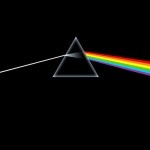 Released in the U.K. on March 24, 1973, Dark Side had been released a week earlier in the U.S. As a result, it hit the Billboard charts before Pink Floyd’s fellow Brits had a chance to hear the LP. The band, however, began performing it in concert in 1972 and a bootleg was circulating about a year before the album came out. It alone reportedly sold more than 100,000 copies. Released in the U.K. on March 24, 1973, Dark Side had been released a week earlier in the U.S. As a result, it hit the Billboard charts before Pink Floyd’s fellow Brits had a chance to hear the LP. The band, however, began performing it in concert in 1972 and a bootleg was circulating about a year before the album came out. It alone reportedly sold more than 100,000 copies.
Dark Side debuted at number 95 and would remain on the Billboard Top 200 chart for the next 736 weeks, more than 14 years. In fact, as of this week the LP was number 12 on Billboard’s “Top Pop Catalog” and has spent 1,646 weeks — more than 32 years — on both it and the Billboard 200 charts. More than 34 million copies of the recording have been sold worldwide and, in fact, as of 2006, roughly 8,000 to 9,000 copies were still being sold each week. And, for what it’s worth, Pink Floyd’s official web site reports that in in 1990 Australian radio listeners voted it the best album to have sex to.
I heard Dark Side countless times in the years after its release. Despite that, I didn’t actually get around to buying it until CDs existed. In fact, if memory serves I bought it because it fell off the charts in 1988 and I was hoping that if people like me went and bought copies, it would make it back to the charts. But in light of all the chart longevity there’s two facts that I find most interesting:
Dark Side was the number one album for only one week, beginning April 28, 1973. And the album that replaced it at the top of the charts? Elvis Presley’s Aloha From Hawaii – Via Satellite, the King’s first number one LP in a decade.
There’s someone in my head but it’s not me.
“Brain Damage,” Pink Floyd, Dark Side Of The Moon
Chris Hedges has never been known to pull punches or really sugarcoat his view of things. In fact, he engages in equal opportunity critique, as evidenced by a couple of his books, When Atheism Becomes Religion: America’s New Fundamentalists (originally titled I Don’t Believe in Atheists) and American Fascists: The Christian Right and the War on America.
Hedges lets loose this week with his weekly column at Truthdig. Titled “America Is in Need of a Moral Bailout,” he writes:
We live in an age of moral nihilism. We have trashed our universities, turning them into vocational factories that produce corporate drones and chase after defense-related grants and funding. The humanities, the discipline that forces us to stand back and ask the broad moral questions of meaning and purpose, that challenges the validity of structures, that trains us to be self-reflective and critical of all cultural assumptions, have withered. Our press, which should promote such intellectual and moral questioning, confuses bread and circus with news and refuses to give a voice to critics who challenge not this bonus payment or that bailout but the pernicious superstructure of the corporate state itself. We kneel before a cult of the self, elaborately constructed by the architects of our consumer society, which dismisses compassion, sacrifice for the less fortunate, and honesty. The methods used to attain what we want, we are told by reality television programs, business schools and self-help gurus, are irrelevant. Success, always defined in terms of money and power, is its own justification. The capacity for manipulation is what is most highly prized. And our moral collapse is as terrifying, and as dangerous, as our economic collapse.
I couldn’t agree more. Between the cult of personality and an economy built on buying things we don’t really need with money we don’t have, we seem to be a society lacking in common sense, ethics or foresight. This, though, isn’t a government bailout. It requires individual and personal effort — one that would bailout both society and government.
I’m not holding my breath, though.
The values that sustain an open society have been crushed.
Chris Hedges, “America Is in Need of a Moral Bailout“
Random Observations
To the extent I have heroes today, here’s two of them: Bruce and Jon.
While I realize Google is intent on taking over the interweb, I’ve started playing with its Chrome browser and it is fair competition for Firefox. Chrome, though, really needs to follow Firefox’s extensions concept and, reportedly, a new beta version may be doing so.
Bookish Linkage
The 2009 Hugo Award nominations have been announced. The only best novel finalist I’ve read is Cory Doctorow’s YA book Little Brother.
Also announced were the finalists for the Arthur C. Clarke Award, “the UK’s premier prize for science fiction literature.” I do worse here, having read none of the six.
An interesting blog approach: How books got their titles.
Nonbookish Linkage
Space porn: Saturn’s moons.
Earth porn: Undersea volcano erupts.
I have complete faith in the continued absurdity of whatever’s going on.
Jon Stewart, April 22, 2007
Think the recent news about jurors using Twitter and Google during trials is limited to more populated areas? Think again. Next week the South Dakota Supreme Court will hear arguments in a case where a new trial was granted because of a juror’s use of Google before the trial even started.
The case involves a lawsuit against Takata Corp., a Japanese corporation, and TK Holdings, its American subsidiary. The plaintiffs claim seat belts manufactured by Takata unlatched during a rollover accident. When a potential juror received his summons for jury duty, he “Googled” the two companies because he’d never heard of them. He found their home pages and learned Takata made seat belts and airbags and that TK was the American subsidiary.
During jury selection, the juror was not asked directly if he knew about Takata and he didn’t volunteer information about his Google searches. He ended up on the jury and, according to a summary of the case,
Three-quarters of the way through six hours of deliberations [the juror] responded to a question about whether Takata had notice of previous claims of seat belt malfunction by telling another juror of his prior Google searches. [He] also stated that he had not seen any law suits on either web page during his searches. At least five other jurors either heard the comment or were made aware of the comment during jury deliberations.
Juries are to decide a case based on the evidence presented in the courtroom. Thus, South Dakota’s pattern jury instructions include specific jury admonitions, such as, “Do not do any research or make any investigation about the case on your own.” Likewise, a cautionary instruction suggested to be given when the jury retires to deliberate says “you must not consider anything you may have heard or read about this case other than the evidence which has been properly admitted herein.”
The jury returned a verdict for Tanaka and TK Holdings. Later learning of the discussion during deliberations, the plaintiffs sought a new trial on the grounds the juror’s information should not have been brought into deliberations. The trial judge agreed and granted the motion and the defendants have appealed her ruling.
As a result, while courts in other jurisdictions are struggling with these situations, South Dakota trial courts may get guidance on them. It’s even possible the case could affect the content of jury questionnaires, admonitions and instructions. At the same time, it’s also possible that use of the internet may not be reached. One question the Court faces is whether the fact the information was obtained before trial and could have been discovered during jury selection prevents it from being prejudicial. Either way, the case is further proof of the pervasive effects of cyberspace in the real world.
We are currently not planning on conquering the world.
Google co-founder Sergey Brin, March 2, 2006
Millions of people like me grew up with Neil Young being a significant contributor to the soundtrack to their youth. From Buffalo Springfield to Crosby, Stills, Nash & Young, to his exceptional work with Crazy Horse and solo, Young was a pervasive influence. Yet despite so many songs considered absolute classics today — “Cinnamon Girl,” “Down By The River” and “Southern Man,” to name just three — it was a more laid back approach that brought him his greatest commercial success.
 Harvest, released in February 1972, not only became his best selling record, it also produced his only number one single. The song, “Heart of Gold,” with backing vocals by James Taylor and Linda Ronstadt, reached number one on March 18, 1972. Once again, though, Young was in a musical vanguard. Harvest, released in February 1972, not only became his best selling record, it also produced his only number one single. The song, “Heart of Gold,” with backing vocals by James Taylor and Linda Ronstadt, reached number one on March 18, 1972. Once again, though, Young was in a musical vanguard.
Harvest reflected his exploration of the increasingly popular country rock sound. Much of the album, partly recorded in Nashville, oozes country. It has more pedal steel guitar than Young playing electric guitar. Although Buffalo Springfield and even Young’s previous LP, After the Gold Rush, are part of country rock’s early endeavors, within about a year of Harvest we would see debut releases from the Eagles, the Ozark Mountain Daredevils and Pure Prairie League.
The more acoustic nature of the album also reflected two other, somewhat overlapping, trends. One was the growing popularity of the introspective singer-songwriter style. While not entirely new, it took off in the early 70s with artists like Taylor, Jackson Browne and Joni Mitchell. Some of these artists — Browne in particular — were also a source of what would be called the Southern California Sound, also more mellow and introspective but which also included artists like the Eagles.
Like After the Gold Rush, this LP is heavily acoustic. Young’s unique electric guitar style makes an appearance only twice, the first time being eight songs in (“Alabama”) and the next being the last cut on the LP, “Words (Between the Lines of Age).” Young’s explanation for the acoustic emphasis of Harvest, though, is a bit more pedestrian. Suffering from a back condition, Young wore a brace through most of the recording sessions. He said the muscles on one side of his body were so weak he had difficulty playing electric guitar.
There were other interesting stylistic approaches. Both “A Man Needs a Maid” and “There’s a World” were Young on the piano — with the London Symphony Orchestra. Also, while Young was known for extended pieces like “Down By The River” and “Southern Man,” much of Harvest is in radio-sized bites. More than half the songs are less than three and a half minutes and only one, “Words (Between the Lines of Age),” breaks four and a half minutes.
Although Harvest would break the top 100 in Rolling Stone‘s 500 Greatest Albums of All Time, many fans saw Harvest as just too middle of the road. I was one, preferring the rougher, electric feel Young achieved with Crazy Horse. In fact, I got so tired of hearing “Heart of Gold” and “Old Man” on the radio and felt this was such a departure that I actually gave away my copy of the LP to a high school classmate. While I did buy it on CD a few years ago, my favorite songs remain the last three: “The Needle and the Damage Done” sandwiched between the two electric guitar pieces.
In retrospect, Young perhaps viewed Harvest, or at least parts of it, like those somewhat disenchanted fans. In the liner notes to Decade, Young’s 1977 two-LP retrospective, he wrote said “Heart of Gold” was a song that “put me in the middle of the road. Traveling there soon became a bore, so I headed for the ditch.”
And were it not for that ditch, Young may not be known today as “the Godfather of Grunge.”
There’s a world you’re living in
No one else has your part
“There’s a World,” Neil Young, Harvest
|
Disclaimer 
Additionally, some links on this blog go to Amazon.com. As an Amazon Associate I earn from qualifying purchases. There is no additional cost to you. Contact me You can e-mail me at prairieprogressive at gmaildotcom.
|