|
|
All art involves blending and building upon what came before. Music is no exception. Both rock and jazz demonstrated that as the 1960s came to an end. Artists in both camps began incorporating more of what they were hearing in the other genre. Eventually, it gained the name of “jazz rock” and would go on to become a jazz category known as fusion.
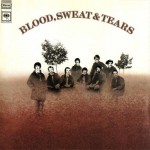 No one would claim that Blood, Sweat & Tears was the first or even the best of these bands. But it does have the distinction of perhaps being the first to make the genre a popular sucroses. The band’s eponymous second album, released in December 1968, spawned three hit singles and the album itself not only hit number one on the Billboard album charts 40 years ago this week, it bested Abbey Road for the Grammy Award for Album of the Year. No one would claim that Blood, Sweat & Tears was the first or even the best of these bands. But it does have the distinction of perhaps being the first to make the genre a popular sucroses. The band’s eponymous second album, released in December 1968, spawned three hit singles and the album itself not only hit number one on the Billboard album charts 40 years ago this week, it bested Abbey Road for the Grammy Award for Album of the Year.
This was a different band than the one that recorded the group’s first LP in early 1968. Gone were three founders of the band, keyboardist and vocalist Al Kooper (who wrote more than half the songs on that first LP) and trumpet players Randy Brecker and Jerry Weiss. David Clayton-Thomas became the band’s new lead singer. Not only would his distinctive and tremendous voice become a trademark of the group, he wrote “Spinning Wheel,” itself nominated for three Grammy Awards and which was one of only three wholly original tunes on the album.
To a certain extent, it is somewhat surprising that Blood, Sweat & Tears would be the breakthrough hit that it was. It is a somewhat quirky amalgam of styles. The LP opens and closes with “Variations on a Theme by Erik Satie,” an exploration of a piece by the French composer and pianist, unquestionably the first time many listeners had heard of or been exposed to Satie. The same might be said for the band’s version of the jazz standard “God Bless The Child,” written by Billie Holiday in 1939. The recording comes some three years before Lady Sings the Blues, the hit movie based on Holiday’s life. There are also two relatively sweet pop love songs, “Sometimes In Winter,” written by guitarist Steve Katz, and “You’ve Made Me So Very Happy,” co-written by Motown founder Barry Gordy. Finally, there is the band actually stretching out and improvising on “Blues — Part II,” an 11 minute track that is entirely instrumental until roughly the last two minutes and which fades into the soft opening of “Variations on a Theme” to close the LP.
Some of the commercial success likely stemmed from the fact the album was produced by James William Guerico. Guerico had produced The Buckinghams, a Chicago-based horn band that was one of the most popular bands in the U.S. in 1967. Shortly after Blood, Sweat & Tears was released, Guerico would be in the studio with a band then known as Chicago Transit Authority. He would produce that group’s first 11 albums.
While this isn’t my favor BS&T album, it and other bands like it were undoubtedly a gateway drug to my later love of jazz, something that wouldn’t arise for several more years.
Give me my freedom
For as long as I be
All I ask of livin’
Is to have no chains on me
“And When I Die,” Blood, Sweat & Tears
Whether it’s because we like to commemorate anniversaries of events or a perception, right or wrong, that it was a time of promise, we have a seemingly never-ending fascination with the 1960s. With Magic Bus: On the Hippie Trail From Istanbul to India, Rory MacLean seeks to explore a somewhat unique element of ’60s culture. To a certain extent, though, Magic Bus serves almost as a metaphor for the era.
The book seeks to retrace the tracks of the hippie travelers who headed east to find enlightenment. Thus, MacLean travels from Turkey through Iran, Afghanistan, Pakistan and India to “the End of the Road,” Nepal. The hippies headed to Kathmandu and India in search of enlightenment (and dope). Even if they found dope, the vast majority didn’t find self-realization and returned to become what younger generations now call “the worst generation.” And while the hippie trail was viewed then to be a source for Eastern wisdom and a different level of consciousness, the current state of the countries MacLean visits don’t necessarily reflect that the ’60s were of great benefit.
The trail spawned a tourism industry in Turkey, where now even fishing villages are “skimmed by a sheen of tourism.” Iran’s revolution brought an end to it being an accessible transit point. Afghanistan has become a country where, at the gate of a refuge camp just outside the historic city of Herat, a “cobbler sells single shoes for one-legged mine victims.” The Kabul Museum in Pakistan, once home to the finest collection of antiquities in Central Asia, has a sign outside the main door asking, “Is your weapon unloaded?”. India’s focus seems to be on making money, not Krishna consciousness. Nepal is both an “apartheid state of spectacular inequality” and one which a few decades of tourism turned “into a vulnerable Himalayan theme park.”
Granted, none of this can be laid exclusively or squarely at the feet of the hippie travelers. But it is also proof that regardless of how anyone views the 1960s, you can’t go back. Despite MacLean’s keen eye for detail, that seems a fundamental problem with his goal. Try as he might, he doesn’t’ really illuminate the driving force behind or the experiences of these travelers. Instead, it is as if MacLean, born in 1964, is trying to grab hold of a experience that he holds in awe but slightly preceded him. This is reflected in the fact that he calls these journeyers of the 1960s “the Intrepids,” evidently because they were intrepid travelers. Granted, they may have been trailblazers to some extent but if they were world-changing, it is difficult to see it today. And while those who lived through the time recall it with fondness and pleasure, one of the most honest statements may be that of a now well-to-do Indian bookseller, who tells MacLean, “I lived for the moment — so forgive me if I don’t remember much else.”
All things considered, Magic Bus is perhaps stronger as a travel book than cultural history. That is not surprising given that MacLean is a well-recognized travel writer. His observations of both Afghanistan and Pakistan, for example, stand out in comparison to his discussions with those who remember the hippie trail as it was. Additionally, he explores how the hippie trail led to the birth of the modern travel guide. The first book from the company now know as Lonely Planet was about an overland journey in the early 1970s through the same countries and it first focused on guide-books for those following the hippie trail. At the same time, MacLean is not hesitant to examine how the development of this industry changed the types of travelers on the road and the impact of those changes.
MacLean’s search for enlightenment about the hippie trail may reinforce one universal truth — you can’t recapture the past. Or, to paraphrase a Joan Baez song, the sixties are over so set them free.
Self-discovery is a myth because there is nothing to find.
Tourism consultant in Dehli, India,
quoted in Rory Maclean, Magic Bus
Random Observations
Good news, bad news. My youngest daughter found out this morning she got accepted at the college to which she is probably most wants to go. The bad news is tuition is $40,000+ annually.
Wednesday night’s performance by The Blue Note 7 is already a strong candidate for concert of the year.
A remake of The Three Stooges? Is absolutely nothing sacred?
Bookish Linkage
A site dedicated to bookmarks, of all things, comes up with a list of the most interesting bookstores in the world. I’ve been in the bookstore in Helsinki and could have stayed a long, long time.
But evidently problems encouraging people to read aren’t limited to the U.S. According to a story on the U.K. site TheBookseller, a recent study found that in lower income, non-professional families “books were seen as alien and unattractive, while reading was considered an anti-social activity for people who, as one respondent said, ‘don’t know how to live’.”
Is this a sign of bad economic times? Nonfiction Lover, a librarian, notes that her library has experienced a rash of thefts — not of books, but toilet paper.
SF Signal has come up with its list of the 10 best blogs of science fiction and fantasy authors.
The finalists for the Prometheus Awards have been announced. The best novel award is given annually by the Libertarian Futurist Society for “pro-freedom novels.” Two of the books are also finalists for the Hugo Award for best novel.
Nonbookish Linkage
Once again, The Big Picture excels — this time with the flooding in North Dakota.
What’s “blowin’ in the wind”? Evidently, at Bob Dylan’s place it’s an outhouse.
David Barash makes observations I’ve often had: “Marx was wrong: The opiate of the masses isn’t religion, but spectator sports. … The real question we should be asking during the madness surrounding this month’s collegiate basketball championship season is not who will win, but why anyone cares.”
Woke up this mornin’
With nothin’ on my mind
Nothin’s all I’m a lookin’ for
Nothin’s all I’ll find
Title track, Goose Creek Symphony, Welcome to Goose Creek
Some contend that the term literary fiction is so overused and broad, it now amounts to little more than a name for a recent genre. And if you’re an illiterati like me, you might consider literary fiction to be like pornography — I can’t define it but “I know it when I see it.” Applying that standard to A Free Life, the most recent novel by award-winning Chinese-American author Ha Jin, erases any doubt it qualifies as literary fiction.
At its most simple, A Free Life traces the story of Nan and Pingping Wu, Chinese immigrants chasing the American dream. Yet while a tale of immigrants in modern America, it also reveals a core commonality. The Wus are dealing with the day to day events of work and life, events that so often seem routine and constant but which ultimately add up to goals realized and dreams unfulfilled. And like life, A Free Life unfolds and reveals itself slowly, consuming some 650 pages in its new trade paper edition. There are ups and downs but it isn’t a roller coaster ride.
A purposeful sameness is actually what the Wus want. “‘I hope we just live a life similar to others’ here, making some money and having our own home, so that every day will be the same as the previous one,” Pingping tells Nan. Despite the fact we are observing ordinary lives — at least ordinary for modern immigrants — Jin’s style not only keeps us reading but generally wanting to press forward to see how the Wus will live and how their lives will turn out. To a certain extent, A Free Life seems almost an invitation to savor our own life experiences as much as we are induced to appreciate the Wus’. Still, even significant events, such as a miscarriage or a brief visit to China, are relayed in the same easy style, even though the reader may want more than a continually even keel.
Nan and Pingping aren’t the happiest couple. Even though Pingping loves Nan deeply, he still pines after his first love, something Pingping knows. As the novel opens, they are awaiting in the arrival of their six-year-old son Taotao. They left him with relatives in China when they first came to the U.S., where Nan was a graduate student in political science in Boston. The Tiananmen Square protests in 1989 convince Nan to not only stay in the United States but to abandon his studies. Despite being college-educated and long dreaming of being a poet, Nan takes on a variety of low-paying jobs such as night watchman and dishwasher to provide food and shelter for his family.
Ultimately, the save enough money to make a down payment on a Chinese restaurant in the Atlanta suburbs. Working 14 hours a day, Nan and Pingping first make sure they have the business paid for so no one can take it from them. Then, each bank deposit goes toward paying for the house they’ve found. Even as their relationship grows stronger, Nan still desires to be a poet, a dream he defers because of the obligations of work and family, or so he tells himself.
Jin, an immigrant himself, explores the contradictions and ironies of the immigrant experience in a variety of ways. For example, shortly after his arrival Taotao is puzzled by a fortune cookie they receive with a Chinese meal. Born and raised in China, he’s never seen this American creation before. Years later, when Nan, now the accomplished owner and cook in a Chinese restaurant returns to China to visit his family, he finds the food wanting.
Even the title hints of contrasts. Nan and Pingping have more freedom to pursue their dreams than in China. Yet they are almost enslaved by their desire to make their business a success. Nan and Pingping have more freedom to control their lives than in China. Yet despite owning and running a successful business, they can’t afford health insurance and dental visits. Nan and Pingping are entirely free to pursue the American dream as they perceive it, although never being totally free of their upbringing. Yet perhaps the ultimate proof that they can become “Americanized” — at least Nan — comes as they are realizing their dream.
When a fellow Chinese immigrant frequently praises Nan for having everything — a beautiful and devoted wife, a son, a home and a business of his own — it doesn’t give Nan succor. Rather, the words leave him wondering why he “didn’t feel as content as he should.” Likewise, when the Wus finally pay off their home mortgage — in less than five years — “a kind of disappointment sank into his heart. …. He should feel successful. But somehow the success didn’t mean as much to him as he should.” Must the part of Nan that still desires to be a poet always succumb to the dream of success?
It does not take long for Jin’s concise language, short chapters and unhurried approach to prove that literary fiction need not be immersed in metaphor or allegory. Without you perhaps quite realizing it, A Free Life wraps you in how an immigrant’s history gives unique expression to the American dream and how that dream influences and affects their lives and relationships. Some may claim the book is too dry or too slow. Yet whether in terms of style or content, Jin still accomplishes much.
The notion of the American dream had bewildered him for a good decade; now he knew that to him, such a dream was not something to be realized but something to be pursued only.
Ha Jin, A Free Life
As a former newspaper reporter, I’m one who is still addicted to and tends to bemoan the disappearance and struggles of daily newspapers. That’s despite the fact that a lot of newspapers aren’t what they once were (and who am I to really judge whether that’s good or bad.)
U.S. Senator Ben Cardin (D.-Md.) has a somewhat unique idea. Tuesday, he introduced the Newspaper Revitalization Act. The legislation is brief and would allow newspapers to qualify as nonprofit entities existing for educational purposes under the Internal Revenue Code. Although it would require qualifying newspapers to contain “local, national, and international news stories of interest to the general public,” newspapers would not be allowed to make political endorsements. That is because the Internal Revenue Code prohibits nonprofits from engaging in political campaigns, including statements in favor of or in opposition to any candidate for public office. I speculate this provision alone would dissuade most newspaper publishers from pursuing this option if the legislation is enacted.
While the bill would make advertising revenue exempt from taxation, it would do so only if the space allotted to commercial advertising “does not exceed the space allotted to fulfilling the educational purpose” of the newspapers. Cardin said subscription revenue also would be tax exempt and “contributions to support coverage or operations could be tax deductible.” He indicated the legislation, if passed, may not be “an optimal choice for some major newspapers or corporate media chains interested in profit” but should be an option for many local newspapers. One other comment was perhaps the most insightful regarding the state of American newspapers: “This option should cause minimal revenue loss to the Federal Government as most newspaper profits have been falling for years.”
For those of you who might be wondering, the bill wouldn’t make the cost of your newspaper subscription or classified ad tax deductible. That’s because the IRS says a charitable contribution must be made “without getting, or expecting to get, anything of equal value.” Comments about whether you are getting value equal to the price of your subscription should be directed to your local newspaper.
I think the future is electronic. It’s radio, television and the Internet; it’s not really newspapers anymore. I think we’ll always have newspapers but they’ll lose influence.
Boston Globe sportswriter Will McDonough, Teen Ink (December 1999)
|
Disclaimer 
Additionally, some links on this blog go to Amazon.com. As an Amazon Associate I earn from qualifying purchases. There is no additional cost to you. Contact me You can e-mail me at prairieprogressive at gmaildotcom.
|