|
|
Memory is a funny thing. I struggle to recall events my friends, wife and kids remember vividly. Names continually elude me. But what really puzzles me is the relatively mundane — even inane — things that I clearly recall.
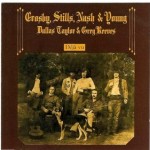 A perfect example is Déjà Vu, the album released on March 11, 1970, by Crosby, Stills, Nash & Young. I still recall the first time I seriously looked at and considered the album. It was in a store in California in the summer of 1970. I can’t tell you the name of the city or town but I do remember it was pouring rain and that’s why we ducked into the store. I also remember I bought a bumper sticker there that read, “They Shoot Students, Don’t They?”, a protest against the May 1970 Kent State shootings that was a takeoff on a popular 1969 movie. A perfect example is Déjà Vu, the album released on March 11, 1970, by Crosby, Stills, Nash & Young. I still recall the first time I seriously looked at and considered the album. It was in a store in California in the summer of 1970. I can’t tell you the name of the city or town but I do remember it was pouring rain and that’s why we ducked into the store. I also remember I bought a bumper sticker there that read, “They Shoot Students, Don’t They?”, a protest against the May 1970 Kent State shootings that was a takeoff on a popular 1969 movie.
I didn’t buy the album at the time, even though it had reached No. 1 on the album charts in May. I recall that one of the things that intrigued me was the look and feel of the cover, somewhat leathery-like under the cellophane wrapper.
Although Neil Young appeared with David Crosby, Stephen Stills and Graham Nash at Woodstock in 1969, this was the first studio recording in which he was a member of the band. And despite the fact they would tour as CSN&Y upon the album’s release, it was the last studio album of the foursome until 1988’s disappointing American Dream. The only LPs billed as CSN&Y that appeared in the interim were 1971’s 4 Way Street, a double album recorded on their tour in support of Déjà Vu, and So Far, a “greatest hits” compilation released in 1974.
Déjà Vu seems to reveal some of the fractiousness that somehow seemed inherent in the band and that would appear throughout its off-and-on history. The rendition of Joni Mitchell’s “Woodstock” and the song “Carry On,” converted to even more impressive levels in live performances, represented CSN&Y as a group. The balance of the LP seemed to be each member performing his own songs with a bit of help from the others. In fact, Nash said later the band was frequently “at each other’s throats” while Stills estimated it took 800 hours of studio time to complete the album.
Not surprisingly, Nash penned the songs that took off from the LP. Even with its steel guitar (contributed by Jerry Garcia), “Teach Your Children” was typical hippie era music while the piano hook in “Our House” seems destined for radio success. Personally, I favor the back-to-back “4 + 20” by Stills and the multi-part “Country Girl” by Young. Although clearly a downer of a song (the last lyric being, “And I find myself just wishing that my life would simply cease”), “4 + 20” is quintessential acoustic Stills but barely clocks in at two minutes. “Country Girl,” on the other hand, is a different sound than one might expect going into the album. And it and Young’s other contribution, “Helpless,” plainly distinguish his work.
Just as the band was seemingly divided during the recording, the LP also split CSN&Y fans. The harmonies may not be quite as exquisite as on Crosby, Stills & Nash and others are disappointed in the guitar work given that both Stills and Young are part of the band. Those who like the album feel its variety and range are its strength, even if it isn’t as cohesive as the debut album. I probably tend to listen to Déjà Vu more but that may well be because of my partiality to Young’s work and “Country Girl.”
In closing, it’s also probably worth noting that while there is a hippie feel to some of the songs — “Teach Your Children” and “Almost Cut My Hair,” for example — this was a vibe that was giving way to other topics and feelings. As such, Déjà Vu may as much reflect something that was disappearing, not the illusion that surrounds a first time experience.
If I had ever been here before I would probably know just what to do
Don’t you?
Title track, CSN&Y, Déjà Vu
It’s the latest ubiquitous story topic throughout dead tree and electronic media and THE thing everybody absolutely must use or be left in the dust. “Tweeeting” on Twitter.
I don’t — and won’t — “tweet.” While I know it’s ill-advised to be critical of something you’ve never used, I simply fail to see how my activities and thoughts are so important I need to update people immediately. In fact, I’ve found thoughts and ideas tend to evolve and improve with a bit of time. As it’s too many years since psych class, I’m not sure if it’s ego or narcissism or both that drives this compulsion to update everybody all the time on everything we’re doing or thinking. But what concerns me more is what it may indicate about the written word.
Granted, Reader’s Digest Condensed Books are nearing 60 years of age. Yet whether it’s decreasing attention spans or information overkill, we seem to want what we read in smaller and smaller doses. Even blogs are an indicator. Some blog posts may run 1,000 words or even more. I’d wager, though, that there are just as many, if not more, that are in the range of 100 words or less and consist of little more than observation or reaction with little or no thought or analysis.
And what is Twitter called? “Microblogging.” Or, as one Twitter user told the local daily, “It’s blogging for lazy people.” And therein lies my concern. Are we becoming so lazy we demand written information consist of no more than 140 characters? Is instant “knowledge” more important than greater comprehension? Do we really care if a celebrity is at Starbucks or planning a birthday party for their child? And if it’s a friend who’s at the coffee shop, why “tweet” instead of simply calling or texting?
I don’t fault Twitter itself. It is simply the most recent “in” thing that converts our diet of written information into increasingly smaller bites. And evidently being an old man like Jon Stewart, I have no idea of “why it is.” Yet there does seem one point of solace. Given the 140 character limit, we can’t be losing much of substance.
Microblogging platforms like Twitter … are the fast food equivalent of the blogging world.
Michael Arrington, TechCrunch,
State of the Blogosphere 2008
Bookish Linkage
After a December police raid on the organization that helped with much of the research, a Russian publisher has backed out of publishing The Whisperers: Private Life in Stalin’s Russia, one of my favorite books of 2007.
Even though it got rid of its standalone book section, the LA Times continues its annual book awards, announcing the finalists this past week.
Likewise, the American Booksellers Association announced the finalists for its Indies Choice Book Awards. The winners are decided by a vote of booksellers.
The Believer gave its fifth annual book award to Novel About My Wife, a book of which I’d heard nothing.
Nonbookish Linkage
RS reports Dylan will release a new CD — with 10 new original tunes — next month.
Looks like a Bruce exhibit may cause me to take a trip to Cleveland. It was a Dylan exhibit that took me to the Experience Music Project in Seattle a few years ago.
Just as Phish announced it was releasing free MP3s of this weekend’s three reunion performances, it also filed a lawsuit to prevent the sale of bootleg merchandise with the band’s name and trademarks.
A new twist on giving things up for Lent. Too bad that each year I give up giving up things for Lent.
Best blog line of the week: In noting that the Western Collegiate Hockey Association’s yearly award ballots went out, the Western College Hockey Blog notes that “some people are having a tough time with the Player of the Year voting because, as it turns out, all of the WCHA’s good players are in the NHL.”
Sometimes I just sit and wonder
Why in the world can’t the world get along?
“The Corn Won’t Grow, So Rock ‘N Roll,”
Goose Creek Symphony, Welcome To Goose Creek
One of the things I claim to get from my recent world lit addiction is that it enables me to learn about and at least intellectually travel to all sorts of countries. At the same time, I’ve never been huge into so-called travel books. Any doubt of that was erased when the UK’s The Guardian came up with its list of the 20 best travel books of all time.
There is just a slight UK orientation to the list but the number one book is American. And there’s a couple entries might surprise you. Sadly, I’ve only read one and read a few pages into two others. Here’s the list with an triple asterisk after the one I’ve read and one asterisk by the ones I started:
- On the Road, Jack Kerouac
- As I Walked Out One Midsummer Morning, Laurie Lee
- Naples ’44, Norman Lewis
- Coasting, Jonathan Raban
- Travels with Charley: In Search of America, John Steinbeck *
- Notes from a Small Island, Bill Bryson
- Homage to Catalonia, George Orwell
- The Beach, Alex Garland
- The Great Railway Bazaar, Paul Theroux
- The Road to Oxiana, Robert Byron
- Venice, Jan Morris
- In Patagonia, Bruce Chatwin
- The Sun Also Rises, Ernest Hemingway
- The God of Small Things, Arundhati Roy *
- A Short Walk in the Hindu Kush, Eric Newby
- Arabian Sands, Wilfred Thesiger
- Fear and Loathing in Las Vegas: A Savage Journey to the Heart of the American Dream, Hunter S. Thompson ***
- Our Man in Havana, Graham Greene
- The Journals of Captain Cook
- Among the Russians, Colin Thubron
It isn’t the fact I haven’t read most of these books that irritates me. It’s that, based on The Guardian‘s descriptions, there’s now even more books I wish I had time to read
You’d better take care of me, Lord . . . because if you don’t you’re going to have me on your hands.
Hunter S. Thompson, Fear and Loathing in Las Vegas
When I first saw it last week, I thought I had misread parts of it. “It” was a blog post by a columnist for Canada’s National Press titled “Watching boomers in turmoil is worth a recession.” Unfortunately, my eyes hadn’t tricked me.
In the post, Colby Cosh found “a special delight” in the crumbling world economy because of its impact on baby boomers. “I’m willing to watch my meagre savings suffer from market turmoil in exchange for contemplating the dilemma of those who are now between 55 and 65,” he wrote. He is so overjoyed by the potential impact that “[t]he first time I see [a Baby Boomer] shopping for dog food, I doubt I’ll be able to suppress a laugh.”
Now perhaps I could pass this off as Cosh being an equal opportunity hater. After all, a bit later in the post he said, “As for the younger crowd, it is a quite distinct pleasure to watch their panic and uncertainty.” But Cosh’s view of boomers isn’t anything new. The April 2000 issue of Esquire magazine contained a piece by Paul Begala called “The Worst Generation.” It doesn’t take long to get the drift: “I believe it’s time someone stated the simple truth: The Baby Boomers are the most self-centered, self-seeking, self-interested, self-absorbed, self-indulgent, self-aggrandizing generation in American history.”
Last August, a staffer on the excellent Wisconsin Public Radio program To The Best of Our Knowledge let go with a rant against the boomers. Charles Kane, a Gen Xer, was blunt: “Quit living in the past and get the hell out of our way.” Like Begala, he essentially contended that, contrary to what they’d like others to believe, boomers didn’t accomplish anything. His bottom line:
You compromised. And then you romanticized your contributions to society. You celebrate your youth when you should be ashamed of your adulthood. You’ve left us with a legacy of materialism and cynicism. And you know what, we don’t appreciate it one bit. Enjoy your retirement. You failed.
The reaction to Kane’s piece was so strong that TTBOOK later devoted an entire show to “Boomer Backlash.” And while Kane was glad baby boomers are retiring, Cosh is now thrilled it may be an uncomfortable retirement.
While I’m slightly younger the Cosh’s targets, I am a boomer and will freely admit the promise and potential weren’t fulfilled. Hippies became yuppies. Peace and love turned into greed and cocaine. Social justice morphed into “trickle down” economics. Another significant generational sin is represented by one word: disco. Still, as Abbie Hoffman said in his last public appearance before his death in April 1989, boomers may not have ended racism, but they helped end legal segregation. Likewise, the ERA may not have passed but women’s rights and status have advanced far more in the last 40 years than the prior century and a half.
Maybe I’m just seeing the extreme end of antipathy toward boomers. Still, the level of hatred surprises me. Boomers also experienced a generation gap. We heartily disagreed with “The Greatest Generation” on plenty of issues: Vietnam, the draft, politics and religion, to name a few. Yet I don’t believe anyone wanted harm, economic or otherwise, to befall that generation. I just wonder how and why “don’t trust anyone over 30” became “let them eat dog food.”
We were young, we were reckless, we were arrogant, silly, headstrong. And we were right. I regret nothing.
Abbie Hoffman, April 4, 1989
|
Disclaimer 
Additionally, some links on this blog go to Amazon.com. As an Amazon Associate I earn from qualifying purchases. There is no additional cost to you. Contact me You can e-mail me at prairieprogressive at gmaildotcom.
|