Blogroll

Musing Mondays: Recommendations

musing-mondays-new

How often do you recommend books to others, and who do you recommend them to? Do you only recommend books to your “reading friends” or to anyone you think might find the book interesting? What does it take for a book to make it to your ‘recommendation’ list?

Other than what people may gather from my reviews or best of the year lists, I generally don’t make recommendations. I would say the furtherest I go is to suggest or mention to friends and co-workers books I recently read or am currently reading. It is unusual for me, though, to recommend someone buy or read a book. I think that stems from the fact that I view reading tastes as highly individual and personal. Thus, it is the very rare book that strikes me to the point I recommend someone read it. In fact, even among my desert island books, Marilynne Robinson’s Gilead and Tim O’Brien’s The Things They Carried might be the only two I would recommend to almost anybody.

I believe the others may require knowledge of the reader’s tastes and inclinations. For example, while I think Mary Doria Russell’s The Sparrow is quite literary, the fact it is science fiction-based turns too many people off. I may mention it if people ask about reading something that is science fiction but personal predilections, particularly toward genre fiction, leave us all with blinders at times.


Could we teach taste or genius by rules, they would be no longer taste and genius.

Joshua Reynolds

Weekend Edition: 12-27

A lazy week personally and in the blogosphere as a whole leads to a very abbreviated edition this weekend.

Bulletin Board

My personal best of the year posts in music and books will be up probably Tuesday and Wednesday

Bookish Linkage

Hmmmm, library porn.

Nonbookish Linkage

Somehow I missed this when the issue was released but here’s Bruce Springsteen’s ballot for the greatest singers of all time. (At least he didn’t vote for himself, like Keith Richards and Ozzy Osbourne or the tool from Tool and another piece of work did.)


Life’s so different than it is in your dreams

“Please Call Me, Baby,” Tom Waits, The Heart of Saturday Night

Booking Through Thursday: Wintery books

btt21

What are the most “wintery” books you can think of? The ones that almost embody Winter?

The two books that come to mind are about as diametrical as you can get.

Alexander Solzhenitsyn’s description of the conditions in which the gulag prisoners work in One Day in the Life of Ivan Denisovich has stayed with me since I first read the book years ago. Being a denizen of what can often feel like the frozen tundra (and has this year), the imagery seemed to especially resound with — and amaze — me.

Moving from one extreme to the other, how could I think of winter without thinking of How the Grinch Stole Christmas!? The Grinch and Max in the snow remain a primal book memory for me.


A man who’s warm can’t understand a man who’s freezing.

Alexander Solzhenitsyn, One Day in the Life of Ivan Denisovich

A heathen’s Christmas greeting – 2008

Another Christmas, another posting of my traditional Christmas greeting. Although I call it traditional, my greeting is not traditional in the standard sense of the word. But you gotta realize this is coming from someone whose kids remember John Lennon’s “Happy Xmas (War is Over)” as being the Christmas song they heard most often at home while growing up. I call my greeting traditional solely because I have used it on prior Christmases and will continue doing so into the foreseeable future. After all, isn’t that how it becomes a tradition?

Thus, in passing along Christmas greetings to you, I once again excerpt from another of the greatest Christmas songs, “The Rebel Jesus” by Jackson Browne:

And once a year when Christmas comes
We give to our relations
And perhaps we give a little to the poor
If the generosity should seize us
But if any one of us should interfere
In the business of why there are poor
They get the same as the rebel Jesus

But pardon me if I have seemed
To take the tone of judgment
For I’ve no wish to come between
This day and your enjoyment
In a life of hardship and of earthly toil
We have need for anything that frees us
So I bid you pleasure
And I bid you cheer
From a heathen and a pagan
On the side of the rebel Jesus


A very merry Christmas
And a happy New Year
Let’s hope it’s a good one
Without any fear

“Happy Xmas (War is Over),” John Lennon

Midweek Music Moment: Dave Brubeck/Paul Desmond

This time of year has always been one of transitions, even if it’s just an effort to make a New Year’s resolution. The jazz world saw a transition on December 26, 1967. That was the day the Dave Brubeck Quartet formally disbanded.

Since the quartet had been founded in 1951, there were two mainstays: Brubeck, of course, on piano and alto saxophonist Paul Desmond. For most fans at the time, it was probably nigh on impossible to conceive of a Brubeck ensemble without Desmond.
time-out
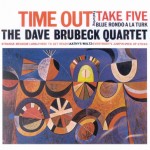
I’ve previously detailed my jazz education. Undoubtedly one of the LPs I heard during that time — and the one that invariably comes to mind when most people think of the Brubeck Quartet — was Time Out. There’s good reason. Time Out was such a landmark that it was named to the Library of Congress National Recording Registry in 2005.

Recorded in 1959, it explored different, some would say odd, time signatures. The prime example is Brubeck’s “Blue Rondo à la Turk” set in 9/8 meter to echo Turkish rhythms. But that beat underlies less than half the tune. Standard 4/4 time is actually more prevalent as the middle of the tune is comprised of Desmond and then Brubeck strolling through almost quintessential displays of the “West Coast” style of cool jazz. It is a compelling counterpoint to the intensity of the 9/8 approach that opens and closes the tune.

Yet it is “Take Five,” written by Desmond, that is most likely to mark the album for most audiences. Set in 5/4 time, “Take Five” actually reached No. 2 on Billboard’s “Adult Contemporary” charts in 1961 and No. 25 for “Pop Singles.” The LP sold more than a million copies. It took the West Coast style to perhaps its commercial apex.

If bebop was emotional, West Coast cool was cerebral. It was smoother, softer and more laid back. And if anyone epitomized the fluidity of its sound, it was probably Desmond. In fact, he may have described West Coast jazz the best, once likening what he was trying to achieve to the “sound of a dry martini.”

Although even the abstract art on the cover proclaimed this as “modern jazz,” viewed from today’s prisms then-current pictures of Brubeck and Desmond wouldn’t classify them as cool. They generally wore suits when they performed usually, of course, with white shirts and narrow black ties. And then there was the ubiquitous black horn-rimmed glasses that seemed bigger than the ties. Yet the quartet epitomized the cool West Coast school to such an extent that it was highly popular not just in jazz clubs but on college campuses. In fact, it recorded several LPs on campuses and the success of one recorded exclusively on a tour of campuses — Jazz Goes to College — landed Brubeck on the cover of Time magazine in November 1954.

The West Coast sound, though, may well have peaked with Time Out. By the mid-1960s jazz was moving on, with the free jazz movement reflecting the times and the explosion of rock and roll laying the groundwork for fusion. Brubeck decided to devote more time to composition and the quartet disbanded. Desmond, whose sound may be the ultimate expression of West Coast cool, went into semi-retirement. “Take Five” and Time Out, though, remain not only hallmarks of their collaboration, but of an entire genre.


I was unfashionable before anyone knew who I was.

Paul Desmond