|
|
So you’re among people streaming out of the bars at closing time on Labor Day weekend and, being a considerate and insightful person, decide it’s a prime opportunity to yell obscenities at the cops driving by. Perhaps not the wisest idea in the world but you might simply be exercising your First Amendment rights. At least that’s the conclusion of the South Dakota Supreme Court in a new decision.
As Marcus Suhn was amidst a group estimated at about 100 people in downtown Brookings, he saw a police car go by. He yelled: “Fucking cop, piece of shit. You fucking cops suck. Cops are a bunch of fucking assholes.” For some reason, one of the police officers in the car took offense. Suhn was arrested for and convicted of disorderly conduct. In a 4-1 vote, the Supreme Court reversed the conviction, agreeing that it violated his First Amendment rights.
The main issue was whether Suhn’s language fell within the so-called “fighting words” exception to the First Amendment. Under the doctrine, first enunciated by the U.S. Supreme Court in 1942, fighting words are among “those which by their very utterance inflict injury or tend to incite an immediate breach of the peace.” The South Dakota Supreme Court said that as offensive or abusive as Suhn’s words were, they didn’t meet that test.
Although it may not be necessary to show that those who hear the words are actually provoked to violence, a telling commentary as to how “ordinary citizens” would likely react was how the people standing on Main Avenue in Brookings did react. The crowd merely responded with facial expressions of disbelief.
…. Just because someone may have been offended, annoyed, or even angered by Suhn’s words does not make them fighting words.
Retiring Justice Richard Sabers disagreed. He said because Suhn “spewed the most distasteful profanities at police officers at two o’clock in the morning amidst hundreds of people, the majority of whom were likely intoxicated or under the influence of alcohol,” they had a tendency to not only provoke an ordinary citizen “but also a member of the crowd in this mob-like setting.” Sabers found the reaction of the crowd “atypical, or at least unexpected for the situation, especially considering that the bar patrons congregating on the sidewalk may have been looking for further action. It is surprising to me that no one joined the defendant in yelling profanities at the police or even hurled objects at the patrol car.”
Initially, his dissent left me pondering this question: if one other person in the crowd had yelled profanities, would Suhn then have incited a breach of peace? I realized, though, it was too much like a law school Socratic method question to be pursuing on the last day of the year. Instead, I thought back to my days stumbling out of leaving downtown Brookings bars during college. I’m not sure if the crowds I was in were wiser or cowardly — no one generally yelled things like that loud enough for the cops to hear.
[W]hile the particular four-letter word being litigated here is perhaps more distasteful than most others of its genre, it is nevertheless often true that one man’s vulgarity is another’s lyric.
Cohen v. California, 403 U.S. 15 (1971)
For the second year in a row, I regret my tradition of limiting my list of books of the year to those actually published during the year. As a result, I’ve modified a once or twice used category to lead off this year’s list. Otherwise, my list wouldn’t include the best book I read this year.
Books I Wish I’d Read The Year They Were Released
One of the unusual things this year is that two of the best books I read all year were read within a week of each other — in January. Perhaps not as unusual given my world literature fascination is that both were translated works.
Per Petterson’s Out Stealing Horses was as unhurried as its central character. Originally published in Norway in 2003 and released in the U.S. in 2007, it is a quiet and unpretentious masterpiece. Despite it’s excellence, my favorite book of the year is Dorothea Dieckmann’s Guantanamo.
More painful emotionally and psychologically than Petteson’s work, I am still amazed that a work of fiction first published in Germany so skillfully takes us inside the mind of a prisoner at the U.S. military’s detention facility at Guantanamo Bay. How much did I like it? It is now a desert island book.
Best 2008 Novel
While not a translated work, my favorite novel published this year is also by a foreign author. The Secret Scripture by Sebastian Barry was a finalist for the Mann Booker prize. My opinion, shared by others, is it should have won the award. It is probably a testament to Barry’s skill that the secret was, in hindsight, so obvious. Its almost Rashômon-like points of view simply heighten the enjoyment.
Deserving of honorable mention are Marilynne Robinson’s Home, which continues her exquisite examination of life, faith and family, and The Wasted Vigil by Nadeem Aslamin, which contains the unforgettable image of nailing books to a ceiling to preserve them from destruction by the Taliban.
Finally, since world lit is prevalent in my look back at the year, I should mention Roberto Bolaño’s 2666. It received tons of praise and made a significant majority of the year’s “best of” lists. Bolaño undoubtedly was pondering great thoughts and ideas and the book is an intriguing read. But the extensive amount of gratuitous information and tangents he throws in left me feeling I’d been led on far too many side roads.
Favorite nonfiction
While I read a lot of very good nonfiction, none really grabbed me. I would have to say Eric Weiner’s The Geography of Bliss topped the list. The concept of visiting places in the world that are the happiest and unhappiest was a unique exploration of the world and our views toward happiness.
Other strong contenders were Kafka Comes to America, a federal public defender’s look at the Kafkaesque world of terrorism investigations and Guantanamo Bay detainees; The Foresaken: An American Tragedy in Stalin’s Russia, a look at what happened to Americans who emigrated to the Soviet Union following World War I and were caught up — and essentially abandoned — during Stalin’s terror; and, Leningrad: State of Siege, a look at life, death and survival in Leningrad during World War II through the eyes of its residents. The latter two also reflect my fixation this year on Russia and Russian history.
Biggest disappointment
Paul Auster’s Man in the Dark starts with an interesting premise: the main character in an alternative America imagined by a literary critic must kill the critic who is imagining him and his America. But that premise is abruptly abandoned and the focus and conclusion deals with the critic’s mundane and ordinary thoughts of his life.
[Heavy sighing is] just my way of relieving the grumpy pressure that has built up inside of me. A good sigh, like a good moan, is a self-correcting mechanism.
Eric Weiner, The Geography of Bliss
Want to know the value of album cover art? Take a look at the cover of the Grand Funk album released on December 29, 1969. The blistering red. The afro-haired drummer. The (then) cool looking bass player. The intensity of the lead guitarist. It makes clear that the music they’re generating is causing the album title to vibrate and buzz.
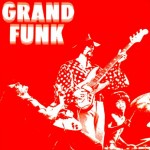
How effective was the cover? Enough that a then 13-year-old boy would shell out hard earned cash at the Tempo Store (you gotta be old to remember those) to buy the album without ever having heard of the band or any of its music. And while the cover art may not have been the primary motivation for others, I was far from alone.
Grand Funk Railroad was one of those bands critics detested. But the band drew thousands and thousands of people to rock festivals and stadium concerts, helping create arena rock. In 1971 it even sold out Shea Stadium faster than the Beatles. The band even thundered Also Sprach Zarathustra, familiar to most as theme music to 2001: A Space Odyssey, from the sound system before taking the stage. As a result, among the musically cultured, listening to Grand Funk Railroad was a guilty pleasure.
Immediately after Grand Funk opens with crashing cymbals and fuzz guitar on “Got This Thing On the Move,” there’s no question the band had its own view of the concept of power trio. Mark Farner’s guitar, Don Brewer’s drums and Mel Schacher’s bass are equal partners throughout most of the album. Even when just laying down a basic bass line, Schacher is as upfront in the mix as the other two. While Farner wrote most of the songs and was probably the “star,” anyone listening to early Grand Funk Railroad has to wonder how many future bass players Schacher inspired. And while he would rely less on it in the future, Farner surely burned through a few fuzz boxes with the music from this LP.
Using a perhaps rudimentary blues-based approach, the band mixed a metal tinge with a hardcore garage sound. At the time, it was just straightforward hard rock. It stood in sharp contrast to both the form and content of what was topping the charts during this time. Half of the songs clock in at six and a half minutes or more and side two consisted of three songs. Yet especially the final two tracks — Farner’s “Paranoid” and a cover of The Animals’ “Inside Looking Out” — display a jamming talent that would be a hallmark of the band. Somewhat surprisingly, Grand Funk went gold in about six months.
Grand Funk Railroad would change its style and approach in coming years, even making it into the top 40. In fact, as with other bands of the era, the original band would ultimately end in bitter litigation. Grand Funk, though, still represents a raw, almost primal, hard rock sound that would influence thousands of listeners, including a 13-year-old kid whose eyes were drawn to that red cover.
Nobody knows the band Grand Funk? The wild, shirtless lyrics of Mark Farner? The bong-rattling bass of Mel Schacher? The competent drum work of Don Brewer? Oh, man!
Homer Simpson, Homerpalooza
Iris Chang seemed to have it all: bestselling and critically acclaimed author at age 29, successful and sought after public speaker, attractive and motivated woman, married for more than 10 years and with a young child, and considered by many as among America’s best young historians. Yet in November 2004, Chang committed suicide at age 36.
Her friends and readers were stunned both by the act and that it was attributed to depression. Neither fit what they knew about her. It was so beyond comprehension that talk even began that it was murder. In Finding Iris Chang: Friendship, Ambition, and the Loss of an Extraordinary Mind, Paula Kamen not only sorts through the rumors, she seeks out what might have led Change to take her own life.
Kamen, a college classmate and friend of Chang’s, received a phone call from Chang three days before the suicide. Chang told her she had been “very, very sick” for sick months. For the first time since Kamen had known her, sounded down and spoke of “overwhelming fears and anxieties.” After learning of the suicide, Kamen wrote a eulogy for Salon.com. The response to it and Kamen’s own feelings of guilt led her to seek out what may have led to her friend’s suicide.
To a certain extent, Finding Iris Chang could serve as a useful guide for how to research a biography. Kamen uses a first person approach to her research process as she gathers information from interviews with Chang’s friends, colleagues and husband and various documents Chang donated to university archives. Each piece — from growing up as the eldest child of Chinese immigrant, university professor parents to the impact her book research had on her — is examined to see how it may fit in the puzzle and whether it was evidence of the bipolar disorder Chang was diagnosed with in the months prior to her death. In retrospect, Kamen realizes that the incomparable drive, desire and competitiveness Chang displayed throughout her life may have been indicative of a manic side. She also looks into how events in the last several years of Chang’s life may have aggravated her psychological condition. Likewise, Kamen takes a look at speculation that the content of Chang’s books may have contributed to her death, whether by contributing to her depression or creating reason to kill her.
Chang’s bestseller, The Rape of Nanking: The Forgotten Holocaust of World War II, examined Japanese atrocities in Nanjing, China, after its army took control of the city in December 1937. The book detailed how thousands upon thousands of people were raped, tortured or executed. Chang became a strong advocate urging that Japan needed to formally apologize and pay compensation. At the time of her death, Chang was engaged in research and interviews for a book on the Bataan Death March, another Japanese atrocity in which thousands of American and Filipino prisoners of war were forcibly marched 60 miles to prison camps in the summer of 1942. Some believed her immersion in the gruesome and grisly details of these events brought about or worsened her depression. Others, however, speculated that her advocacy and the subject matter led to a Japanese right wing — or even American government — conspiracy to murder her. Kamen comes to no definitive conclusions but does question the validity of the conspiracy theories and, detailing how the suicide was not a spur of the moment act, finds more normal reasons for what may have led Chang to it.
Although the first-person approach can be a guide for research, it does not unequivocally work as a writing style. Because she draws heavily on her friendship with Chang, Kamen frequently interjects herself into the narrative. While the personal connections between Kamen and Chang add and help evaluate pieces to the puzzle, it at times goes to extremes. For example, Kamen is inclined to detail some of her own medical problems and her efforts to cope with them, apparently believing they are at least some basis for comparison in trying to understand Chang’s state of mind. Invariably, though, those details shed light on Kamen, not Iris Chang. Likewise, some may be put off by Kamen’s somewhat non-linear approach to the book. Her chapters are named after questions that frame her search, although some of those questions are not ones a reader may think necessarily pertinent, at least as phrased by Kamen.
The definitive Iris Chang biography probably will not exist until sometime after 2015. That is when her personal papers from the last years of her life archived at Stanford University will be available to the public and researchers. Until then, Finding Iris Chang serves as a useful introduction to the human side of an exceptional and talented woman.
Even in death, Iris was still testing my stamina.
Paula Kamen, Finding Iris Chang
To tell you the truth, for a significant part of 2008 I wondered if there was going to be a best of music post this year. And it wasn’t for lack of listening. I explored a wide range of new releases: Jack Johnson’s Sleep Through the Static, Counting Crows’ Saturday Nights & Sunday Mornings, Mudcrutch, Everclear’s The Vegas Years, Death Cab for Cutie’s Narrow Stairs, Fleet Foxes, Randy Newman’s Harps and Angels, Viva la Vida, O.A.R.’s All Sides, TV on the Radio, Ben Folds’ Way to Normal, the Pretenders’ Break Up the Concrete, and Mellencamp’s Life, Death, Love and Freedom. Even Jackson Browne’s Time the Conqueror didn’t seem to flip my trigger. Roughly three-quarters of the year was gone before one of the masters and serendipity took charge.
The master? Mr. Robert Zimmerman. While Tell Tale Signs: The Bootleg Series Vol. 8 is a collection of unreleased recordings, studio demos, alternate takes and live tracks of material from 1989 to 2006, it became my favorite record of the year as I seemed to enjoy it more each time I listened to it. This is almost quintessential Dylan. He takes songs you’ve heard or are familiar with and turns them inside out. In doing so, he not only gives them a different musical feel, but a different flavor to what underlies the song. For example, there are two versions each of “Mississippi” and “Dignity” unlike the cuts appearing on prior records. But each, particularly the opening acoustic version of “Mississippi” and the piano demo of “Dignity” just two tracks later, easily stands on its own.
Tell Tale Signs shows the breadth of Dylan’s talent and craft. These are tunes Dylan, for whatever reason, decided not to release publicly when recorded. Most recording artists would love to have one release that sounds like this archival material. Who’da thunk a 67-year-old would put out a rock album wholly deserving of the critical acclaim it’s received?
But serendipity means it isn’t just retirement age musicians that grabbed my interest. Within weeks of the release of Tell Tale Signs, I happened across two other releases that, while falling a bit short, are deserving of runner-up awards.
The first was Original Boardwalk Style by former Phish guitarist Trey Anastasio and the “Undectet“. I’ve never been a huge jam band fan. In fact, my favorite Phish release may be among the least “jammy” of their catalog. Yet this CD, recorded live at The House Of Blues in Atlantic City on December 30-31, 2006, may take the concept of jam bands to a new extreme. It combines Anastasio’s tremendous guitar skill with an excellent rhythm section (including what certainly sounds like the greatest organ ever, the Hammond B-3) and then throws in something that makes me feel good all over — five horn players. Now you’re talking a jam band. You might have to be real old (my age or so) to get the comparison, but at times the sound here puts me in mind of what Terry Kath could have achieved had someone just turned him loose to lead the Chicago rhythm section and horns wherever his inspiration and guitar skills took them.
The CD is available only on Anastasio’s web site and I stumbled across it simply because someone lent me their copy. It would have made album of the year but for the fact that my general inclination about jam bands tends to take over. In addition, I wouldn’t rank Anastasio as among today’s most gifted lyricists. But trust me, “Plasma” and “Shine,” the second and third cuts on the CD, are alone worth the price.
Finally, in the last month or so two co-workers turned me on to The Gaslight Anthem’s The ’59 Sound. I’m not sure if it’s something to do with the water in New Jersey, but this New Brunswick, N.J., band undoubtedly has some Springsteen coursing through it (even quoting Springsteen in its lyrics). The band’s website describes it as part of the punk underground, I might classify it as a garage sound. Regardless, the songs mine much of the same ground for which Springsteen is noted. If there’s a problem it’s one I’ve often had with punk-based music. After a while, there seems a sameness to the tunes and their structure. Here, it’s that the same drum beat reappears too often, giving the same feel to too many of the cuts. Regardless, considering this is only the band’s second full length release, it is one of the best of the year.
I met the sons of darkness and the sons of light
In the bordertowns of despair
“Dignity,” Bob Dylan
|
Disclaimer 
Additionally, some links on this blog go to Amazon.com. As an Amazon Associate I earn from qualifying purchases. There is no additional cost to you. Contact me You can e-mail me at prairieprogressive at gmaildotcom.
|