|
|
This started out as simply a post about some of the fascinating stuff flowing out of NASA earlier this week (and, no, I don’t mean “news” about Lisa Nowak). But a variety of items conspired to lead to its delay and inclusion here, as well as a declining attitude toward much. The silver lining is that the tournaments are here. Not basketball — the good stuff. The WCHA Final Five is this weekend (and on FSN, where the third period of the Gopher-Wisconsin game just started), the NCAA Division I hockey regionals are next weekend, followed by the Frozen Four after that. All that said:
- If you haven’t already, you need to take a look at the amazing pictures and time-lapse video of the recent solar eclipse from a spacecraft studying the sun. In other words, from a perspective humans will never see.
- And, as you may have read, another spacecraft is believed to have found evidence of seas, albeit of methane or ethane, on Titan, one of Saturn’s moons.
- This is somewhat science related since it comes from comes from Scientific American. It seems my coffee breakfast most of my life isn’t as bad as everyone tells me because “brewed coffee contains soluble fiber, the roughage found in oatmeal and apples that aids digestion, helps the body absorb vital nutrients and keeps a lid on cholesterol.” (Via.)
- This discussion is pertinent both to me and to South Dakota’s claimed intent to try to keep the bright kids in South Dakota. An offer of nearly seven times the amount of merit aid (just short of a free ride) than offered to date by USD made it easy for my middle daughter to decide she will attend a public university in a neighboring state. (Via.)
- Get the buzz on the litblog wars.
- I would think the Catholic Church would have more important things to worry about.
I need a dump truck mama to unload my head
“From a Buick 6,” Bob Dylan, Highway 61 Revisited
Satire is a dangerous vehicle. There is a fine line between farce and simply being absurd, between making a point and clobbering the reader over the head with it. At times, those lines, particularly the latter, blur for Matthew Moses in his Anti-Christ: A Satirical End of Days. Yet there are probably many in its intended audience who will view it all as a reflection of the renowned mantra from Network, “I’m mad as hell, and I’m not going to take this any more!”
Moses is mad about two things in particular — religion, especially the Roman Catholic church, and the current state of politics and government. At the outset of the novel, his protagonist probably could care less about either. Matthew Ford is, quite simply, a pathetic loser for whom nothing goes right. In his fourth year of college, he still lives with his parents, a phobic mother and a father who retreats to the basement to watch porn. But then, Matthew isn’t a model human being either. He’s “a man whose mouth proved the asshole of his mind.”
Thus, Matthew is an unlikely fulcrum for the eruption of open warfare between Heaven and Hell, which have been in a lengthy Cold War. But when Matthew throws a ghost out of his bedroom, he sets off a chain of events that not only brings him face to face with God, Jesus, Satan, and Buddha but ultimately brings about Armageddon.
Along the way, there’s plenty to offend most religionists. For example, the story of Jesus and his role in Heaven will appall most Christians. Roman Catholics will certainly object to the portrayal of their clergy and its institutions. Islam arises only as the result of an angelic coup attempt against Jesus. And while Satan at first comes off as a relatively rational fellow, he reverts to character and demonstrates that certain struggles for power, particularly religious ones, can do nothing but harm man.
Matthew unwillingly and unwittingly becomes the focus of the book’s religious and political struggles. His eviction of the ghost leads to him being taken to Heaven to meet with Jesus. Heaven is populated exclusively by Caucasians and angels are relegated to border patrol officers trying to prevent Mexicans from sneaking in. Even then, it is an overcrowded and minimalist place of “enforced serenity,” where the message, “Independent thought only confuses and blinds you from the truth” plays in the background on an endless loop.
Christianity is little more than a massive corporate-like enterprise with the Pope as the earthly member of its board. Christ’s headquarters in heaven “is not a place for questions” because questions “only lead to doubt.” When Matthew refuses to cooperate, he is returned to Earth and, as if his life weren’t bad enough, made to suffer like Job.
That brings Satan to center stage. In a scene reminiscent of the biblical account of Satan’s temptation of Christ, Satan tells Matthew, “Faith wants you to be docile. It wants you to be ignorant so you can be exploited.” But Satan also preaches that modern government and politics serve only the rich and powerful and to further disenfranchise the average individual. He encourages and helps Matthew to stand up for the common man. Ultimately, he mobilizes an unlikely force — those made fat by fast food restaurants. The U.S. government is overthrown because, as the clueless and moronic president tells the country, “Crowds of the obese are rampaging through the streets, seizing government buildings and enacting what many are calling the fattest coup in history.”
By this point, however, the book’s machinations tend to become quite tangled and it all begins to feel too contrived. As Matthew’s true destiny is revealed, the focus becomes the final struggle between Heaven and Hell. Yet the the story devolves to the point where Armageddon comes off as a gory B horror movie involving humans, angels, demons and zombies.
Ultimately, Moses is often too unsubtle and the book too circuitous, failings that may come with the territory of self-published books. Moreover, one of the core messages — and the reader’s interest — may get lost in the overly tumultuous closing chapters. Still, the book rises above the level of most self-published works. More important, it will strike a responsive chord with those tired of the increasing dominance of religion in society and its growing role in politics, as well as those who see a political system attuned toward the self-interest of politicians and the powerful rather than helping the average citizen. This is satire and farce that not only portrays the corruption and misuse of societal institutions but excoriates those institutions for what they have done to the principles upon which they claim to be based.
One man’s mob is another’s protest.
Matthew Moses, Anti-Christ: A Satirical End of Days
Most anyone familiar with my musical tastes may find my selection for record of the year for 2006 surprising. Sure, there was a new Dylan and a new Springsteen. What ultimately won out, though, was Stadium Arcadium by the Red Hot Chili Peppers. The selection prompts several observations.
I’d never heard a Red Hot Chili Peppers record before this one. And I didn’t even pick this up until after the first of this year. Why then? First, it was No. 2 on Rolling Stone‘s list of the 50 top albums of 2006. Then it was nominated for six Grammy Awards (ultimately winning four). The combination of the two led me to listen to the two-CD set. I was impressed from the opening cut (the Grammy-winning “Dani California”) but was even more surprised when the quality carried all the way through the second CD. This is an amalgamation of a lot of what makes for good ol’ rock music. It melds a variety of influences from 30 years ago to the present. While a few tunes have a similar feel and sound (which might be expected when there are 28 songs in total), the bottom line is this is just one damn fine piece of rock music, incorporating Hendrix to rap to ballads to pop to you name it. It is refreshing to hear rock music today that incorporates and advances the impact of prior artists.
The album is also a perfect indication of why the RIAA’s efforts against downloading music can actually work against artists. As I said, I’d never heard a Chili Peppers album before. In fact, I may have only heard one of their tunes before, their remake of Stevie Wonder’s “Higher Ground.” While impressed by that, it, Rolling Stone and the Grammys aren’t sufficient for me to buy a two-CD set by a band to which I’ve had such limited exposure. Yet because I was intrigued, I located and downloaded the album. Within a week of doing so, I bought the set. It is a sale that would have never occurred but for having heard it first thanks to the internet.
Why not Dylan’s Modern Times? After all, it was No. 1 on Rolling Stone‘s list and also garnered several Grammy nominations. It continues Dylan’s exploration and extrapolation of what I would call roots rock. That said, Dylan is disadvantaged by my love of Blood on the Tracks and Highway 61 Revisited. It’s not fair to hold each of his releases to those standards but the result is that Modern Times is to me as Love and Theft was: a welcome display of Dylan’s incomparable talents but not something that is going to win out when I look to put a Dylan CD in the player.
If the amount of time spent in a CD player at home or in the car were the test for album of the year, Neil Young’s Live at the Fillmore East might be the hands down winner. This is Neil with Crazy Horse during what I consider to be one of his most productive and creative periods. And the CD plainly demonstrates why he later was called the godfather of grunge. He and Crazy Horse played like that before anybody ever thought of calling it grunge. It ultimately doesn’t earn album of the year honors due to an wholly arbitrary technicality. Coming out of the vault, I don’t consider it a 2006 recording. (Ironically, that same standard made Young’s Prairie Wind my 2005 record of the year instead of Thelonious Monk Quartet with John Coltrane at Carnegie Hall.)
Why did I discount other popular or highly praised albums from the year? As I said at the time, Springsteen’s We Shall Overcome: The Seeger Sessions just isn’t the kind of music I really enjoy. While The Hold Steady’s Boys and Girls in America reminds me of the E Street Band, it didn’t maintain my interest. Falling even shorter was The Crane Wife by The Decemberists, which not only bored me on first listen but increased my boredom on subsequent ones.
Who knows? Maybe two or five years from now I’ll look back and wonder how Stadium Arcadium made the cut this year. I ain’t asking now, though, because I keep listening to it and cuts from it keep running through my head. You’ve got to admire a two-CD collection of songs that can pull that off, especially when your toughest decision is which of the two CDs to listen to.
The more I see the less I know
“Snow (Hey Oh),” Red Hot Chili Peppers, Stadium Arcadium
Work, travel and real life precluded any posting this week. And while lacking sufficient ambition to write any reviews, the TBR stack grew a bit thanks to a library trip, bookstore trips (both in and out of town) and receipt of books I’ve agreed to review. This all yields marginalia for the time being with more substantive posts to come in the near future.
- Among the things that went unnoted was Thursday night’s announcement of the National Book Critics Circle awards. Of the winners, I am currently reading biography winner James Tiptree, Jr.: The Double Life of Alice B. Sheldon by Julie Phillips. I’ve read none of the other winners, which again indicates just how far my nominations went.
- As an aside, I was surprised at how many erotic novels were on a “New Fiction” table at a chain bookstore I visited out of town this week.
- You won’t find any in my book journal, which I mentioned in connection with the A to Z lists. Jessica Allen reviews her book journal in the WaPo. FWIW, the first book in mine is The Gulag Archipelago (assigned for a college course) and there’s been 1,450 books read from the start of the journal in 1975 (a year for which it is incomplete) to today.
- Damn! Scott Hudson sold out.
- The NYT seems to be on an atheism related kick. First there’s an article on how atheists are among those most critical of the “neo-atheists,” followed by an interesting cover piece in the Sunday magazine exploring why people believe in God. Wonder if that’s got anything to do with the fact that three books expressly advocating an atheist viewpoint are on the paper’s nonfiction bestseller list, joined by another book that describes the Christian right as one book described as American Fascists.
- ManyBooks.net has a bunch of free and downloadable post-1950 science fiction books. (Via SF Signal.)
- The USHL’s director of photography has launched a blog. (Via USHL Hockey blog.)
There are four kinds of people in this world: cretins, fools, morons, and lunatics.
Umberto Eco, Foucault’s Pendulum
It seems that with more frequency I find myself thinking about “back when I was a kid” or the “good old days.” Still, whether it is due to localized snowfall amounts, growth of the city or simply memory exaggeration, it strikes me that blizzards were bigger and badder back in the day. Huge drifts and lengthy white out conditions seemed more prevalent. Not that I really want any of that. Besides, my body be telling me it be a lot harder moving snow now than then. Just a couple observations from the recent weather. Book-related internet observations include:
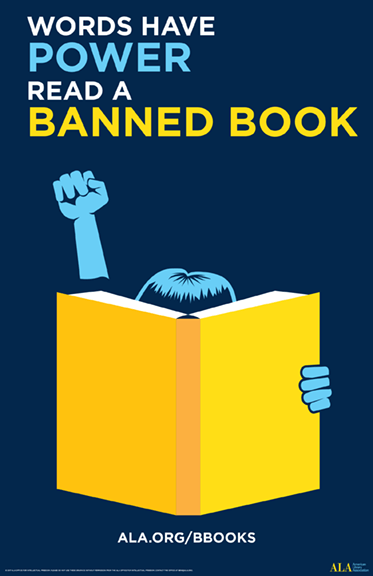
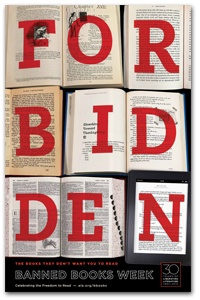
- Seems book banners are getting more innovative. A group of Michigan wackos has asked state and federal prosecutors to investigate whether the local school district is violating obscenity laws by using books by Toni Morrison (The Bluest Eye), Richard Wright (Black Boy), and Kurt Vonnegut (Slaughterhouse-Five). To top it off, the U.S. Attorney’s office has asked the FBI to investigate. In light of the titles and authors, these books would seem, by definition, to fall outside the requirement that an obscene work be one which, taken as a whole, lacks serious artistic or literary value.
- But then there’s food wackos who want to attack book reading programs.
- Book award notes: Finalists for the Nebula Awards (via SF Signal) and the LA Times Book Prizes (via Critical Mass, which deserves credit for posting the full list of nominees, something the Times itself inexplicably did not do) have been announced.
- Granta has come up with its second list of the best young American novelists (21, all under age 35). (Also via Critical Mass).
- John Scalzi will be making a Minneapolis appearance May 5 in support of his new novel, which comes out in April. As that’s a Saturday, I may have to check my calendar and take a trip.
So you know, that you’re over the hill
When your mind makes a promise that your body can’t fill
“Old Folks Boogie,” Little Feat, Time Loves a Hero
|
Disclaimer 
Additionally, some links on this blog go to Amazon.com. As an Amazon Associate I earn from qualifying purchases. There is no additional cost to you. Contact me You can e-mail me at prairieprogressive at gmaildotcom.
|