|
|
I’m sorry, but putting a library book in “a back room where it is held under lock and key and can be seen only by appointment,” is the equivalent of banning it.
Hmmm, for some odd reason both law professors and well known lawyers seem somewhat taken aback by U.S. Supreme Court Justice Antonin Scalia’s dissent this week noting that the Court “has never held that the Constitution forbids the execution of a convicted defendant who has had a full and fair trial but is later able to convince a habeas court that he is ‘actually’ innocent.”
Man says he didn’t download that kiddie porn, it was his cat. Makes sense. After all a cat’s paw could easily type “kiddie” instead of “kitty.” (Via.)
Perhaps a seminar on how NOT to violate employment discrimination laws is in order for this Iowa law firm.
It is unfair to believe everything we hear about lawyers, some of it might not be true.
Gerald F. Lieberman
What do neo-Nazis, skinheads and fundamentalist Mormons have in common? In South Dakota, they comprise the “hate groups” identified by the Southern Poverty Law Center.
The SPLC has created an online map of organizations and groups it considers to be “hate groups,” which it defines as having “beliefs or practices that attack or malign an entire class of people, typically for their immutable characteristics.” The South Dakota map has four such groups: the National Socialist Order of America, a neo-Nazi group; Nordwave, another Neo-Nazi group; Retaliator Skinhead Nation, a “racist skinhead” group; and, the Fundamentalist Latter Day Saints, a “general hate” group.
Perhaps the best known is the Fundamentalist Latter Day Saints, which was headed by now-jailed Warren Jeffs. The group split from the Church of Jesus Christ of Latter-day Saints when the LDS Church renunciation of polygamy and is now the largest polygamist Mormon group in the U.S. It is known in South Dakota because it bought about 100 acres of land it developed into a compound near Pringle (although the SPLC bases the group in Edgemont). The SPLC designated the sect a hate group in part because of Jeffs’ comments on blacks, women and gays,
The only other group given a specific location by SPLC is the Retaliator Skinhead Nation, which it puts in Centerville. According to its web site, the group is “an elite organization created by and for the white race. …our goal is to secure the streets and neighborhoods which we live [sic] no matter where that may be from the increasing crime and vandalism created by the savage gangs and the increasing number of mudd [sic] races that are infesting our land.” According to the Anti-Defamation League, though, the group disbanded in 2006 and became part of an organization known as Volksfront.
No location is given for the National Socialist Order of America, a Neo-Nazi party created in 2007 following a rift in the National Socialist Movement. It was started by John Taylor Bowles, who was the NSM’s presidential candidate until the split. Among his contentions during the campaign was that the Patriot Act gives the President the ability to remove nonwhites from the country.
Nordwave, meanwhile, bills itself as “the voice of National-Socialism.” Its web site identifies one of its “units” as Nordwave South Dakota. Although no location is mentioned, a November 17, 2008, item on the South Dakota group’s site says it is “beginning to build a community here in South Dakota. We now make up 1% of th [sic] population of a small town. It may not seem like much but its [sic] only the beginning. This is the first of many targeted towns and has alot [sic] of potential to become a strong white cultural community.” There is little after that date, though.
Assuming the latter to be true, South Dakota’s pioneer heritage appears to be reviving in a perverse sort of way, given that two of the four groups are trying to create their own communities.
…you can safely assume that you’ve created God in your own image when it turns out that God hates all the same people you do.
Anne Lamott, Bird by Bird
Thirty-seven years ago hard-core Chicago fans like me thought the rest of the county had finally caught on. In retrospect, what we were seeing was actually the beginning of a new and different path, one that would lead some of us from the band.
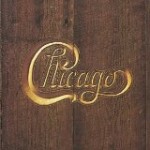 On August 19, 1972, Chicago V became the number one album in the U.S., the first album by the band to reach that mark. But even from the outset, fans should have noticed a change. On August 19, 1972, Chicago V became the number one album in the U.S., the first album by the band to reach that mark. But even from the outset, fans should have noticed a change.
The first clue might seem a bit odd but it was the fact the album consisted of only one LP. The first three Chicago releases had been two-LP sets while the fourth was a massive four-LP live album. Yet that difference actually shows up in the music. Unlike the first three albums, Chicago V doesn’t have extended expositions where the band explored tunes in greater detail. Instead, the longest tune (although listed as two on the LP) was “Dialogue, Part I and Part II.” At just over seven minutes (it was cut to about five for radio play), it was built on a conversation between guitarist Terry Kath as a politically conscious individual and bassist Peter Cetera as a college student more interested in getting high than politics.
But a number of the tunes on the LP seemed more pop oriented, a reflection in part of keyboard player Bobby Lamm taking on more of the songwriting duties. He wrote 80 percent of the tunes on the album, including the hit “Saturday in the Park.” This more poppish trend would continue on Chicago VI, another single LP that would reach number one and that seemed to have pop and radio written all over it. By about 1975, the music I identified as Chicago seemed to have been swallowed up.
Don’t get me wrong. Parts of Chicago V that are tremendous. The opening cut, also written by Lamm, was a tribute to composer Edgar Varèse called, appropriately “A Hit by Varèse.” Built around an unusual meter like seen in Varèse’s compositions, it also features the horn section trading several rounds of jazz-inspired solos. There is the political and social commentary of not only “Dialogue” but “While the City Sleeps” and “State of the Union” (which Cetera has said is based on an incident that occurred in Sioux Falls). It closes with a bluesy acoustic piece written by Kath that seems to be a look back at the history of the band and perhaps even the closing of the Sixties.
But it seems that so much of the power is watered down by a more pop-oriented feel. A perfect example is “Dialogue Part 2.” Kath has an excellent solo but it seems buried and lost in the mix. There are other times you wish someone in the band would take off on an extended solo but it just doesn’t happen. Yet it was really only with the perspective of the later albums that we can see this release was the first harbinger of a change in style and direction.
Of course, there’s also the fact that maybe I’m just showing my age. After all, Kath was the heart and soul of the band I loved. A founder of the band, he died in 1978, 11 years after Chicago was formed. Earlier this week, latecomer Bill Champlin announced he was leaving the band — after 28 years.
Will you try to change things
Use the power that you have
The power of a million new ideas?
“Dialogue, Part I,” Chicago V
I guess I’ve been too lighthearted when I’ve said in the past that I may be am “addicted” to reading. Turns out there “arguably” is such a thing as a reading addiction.
When does reading become an addiction? Well, “reading is an addiction when it is used as a mechanism to avoid reality. A person can avoid facing life by reading all day. A person can also avoid facing themselves by reading all day. This is the only time that reading really becomes a problem.” Great! My dream of actually being able to read all day means I’m deranged, mentally ill!!
But, then, maybe that response is just a phase of my addiction. You know, denial. Isn’t there something about admitting you have a problem before you can deal with the problem?
Damn! There is. The web site actually says that convincing yourself that heavy reading is not unhealthy is denial. (Emphasis from web site.)
So, maybe I’m being too flippant about this. I better see if there’s any truth to this possibility of an addiction. Unfortunately, suggestions on coping with a reading addiction may confirm the worst.
“Have you tried unsuccessfully to cut back on your reading?” Maybe, I only cut back on my reading if real life demands it.
“Are you preoccupied with thoughts of the book when you are away from it?” Maybe, it depends on how good it is.
“Does reading help you escape from your problems?” Duh. After all, to quote a song, “You can’t run away forever/But there’s nothing wrong with getting a good head start.” (Oh no!!! Should I worry about a music addiction too??? I better read up on that.)
But so I have the symptoms, does it really mean there’s a problem? Things are looking bleak again as I itemize various problems believed to be associated with reading:
“How many book groups do you belong to?” None. That would require leaving the house and take time away from reading.
“Do you still recognize your family members when you pull yourself out of a book?” You mean my family is still alive?
“Have you gone into debt buying books?” First, I want to know if there are good and bad levels of debt for purposes of this question.
“Do you sneak out of work to visit a bookstore or library, just so you can be surrounded by books?” You don’t?
Perhaps I should just admit it. After all, I had to read web sites to figure this out — just more proof of the insidious nature of my disease. But if I’m addicted, someone is to blame. Let’s see, I need to get a list of my elementary school teachers, then there’s that favorite aunt of mine who always bought me books, the various libraries and bookstores I’ve frequented and, oooh, a real deep pocket, Amazon. I might even be able to convert this into a great class action!
But mentioning libraries, bookstores and Amazon reminds me — maybe before filing suit I better see if I can find a book about reading addiction.
Books can be dangerous. The best ones should be labeled “This could change your life.”
Helen Exley
Although I don’t watch the show, the concept behind American Idol strikes me as a microcosm of music in America today. The general auditions attract “tens of thousands each year, a few hundred might get to audition for the judges, a couple dozen might be “semifinalists” and the show then winnows them out with some going home quickly, others becoming household names and a very few actually becoming stars.
 Increase the initial number of those auditioning exponentially and you’re starting to scratch the surface of music and musicians in the real world. Drawing on his years as a performing rock musician and songwriter in the Boston area, Thomas A. Hauck gives readers a chance to go beyond that surface in his self-published novel, Pistonhead. Increase the initial number of those auditioning exponentially and you’re starting to scratch the surface of music and musicians in the real world. Drawing on his years as a performing rock musician and songwriter in the Boston area, Thomas A. Hauck gives readers a chance to go beyond that surface in his self-published novel, Pistonhead.
Using one week in the life of rock guitarist Charlie Sinclair, Pistonhead explores the world of performing musicians are good — or lucky — enough to perhaps make the level analogous to those who actually get to perform before the Idol judges. Even if you’ve managed to hook up with a few others to form a creative and professional unit, you’re still spending nights playing in clubs where most people are more interested in drinking than listening to your music. Some audiences may be hostile and even the opportunity to open for other “name” acts doesn’t mean anyone’s really there to hear you perform. On top of all that, you still have to get up the next morning and go to a “real” job so you can make ends meet. That’s exactly where Sinclair, the 24-year-old lead guitarist in the fictional Boston-based rock band “Pistonhead,” finds himself.
Sinclair loves music and has the dream of the band making it someday. Yet his best friend, Jack “Rip” Taylor, who also happens to be the band’s lead singer and co-writes with Sinclair, seems to have picked up a drug habit and, along with it, the company of shady characters. He’s working on as an assembly line supervisor through a temp agency and his work team is comprised of behavioral health patients in a rehab facility. Rumor has it, though, that the jobs will soon be off-shored. These and an assortment of personal issues we all face come to a head during the week Hauck uses to focus the story, forcing Sinclair to look and see inside himself and his music.
Hauck’s background gives Pistonhead a realistic flavor, not only from the struggles of keeping a band alive and moving forward but what goes through a musician’s head while performing. The book also provides a taste of the grind second- and third-tier musicians experience. There is the tediousness of the assembly line pitted, the obstacles of trying to get a break in today’s music industry and the question of whether at some point the costs outweigh the exhilaration of playing music. Yet Hauck also seems to carry his attention to detail into less important matters. For example, we have a paragraph on the etymology of ergonomics and its history as a field of study. We often get specific accounts of how Sinclair gets from point A to point B, including not only the train lines he uses on a trip but whether, after leaving the train, he walks “two blocks up” one street or “ten minutes down” another.
Hauck also throws in occasional tastes of irony, some obvious and others a bit more subtle. There is, for example, a scene in which Sinclair has to go to an emergency room for a foot injury after struggling with Rip’s drug issues. While Sinclair is trying to prevent those issues from tearing the band apart, the television in the emergency room shows a prescription drug ad where pills danced around and “happy senior citizens frolicked in a field of daisies.”
Pistonhead could well be cast as a converse of literary nonfiction. While it is a novel, it is undoubtedly based on Hauck’s own experiences, thereby giving it a quasi-documentary feel. Even if it does wrap a couple things up just a bit too easily due to its compressed time frame, at just 175 pages the book is a compact look into the dedicated pursuit of an avocation you’ll never see on so-called reality television.
Until he got those dreams of being some sort of rock star, my son was on the right track. He got sucked in by all of your rock and roll fast-lane debauchery.
Thomas A. Hauck, Pistonhead.
|
Disclaimer 
Additionally, some links on this blog go to Amazon.com. As an Amazon Associate I earn from qualifying purchases. There is no additional cost to you. Contact me You can e-mail me at prairieprogressive at gmaildotcom.
|