|
|

Do you read celebrity memoirs? Which ones have you read or do you want to read? Which nonexistent celebrity memoirs would you like to see?
Generally, no, although I make exceptions for musicians, such as Dylan, Clapton, Zappa or others whose music I’ve enjoyed. I do have a copy of Sidney Poitier’s autobiography that I picked up at a used bookstore in my TBR bookshelf but have yet to open it. I have also read the memoirs of one or two authors, if they can be considered celebrities.
I think I read the musician memoirs not because they are celebrities per se but because their music has played some role in my life. And taking the term “nonexistent” celebrities literally, I’d have to say memoirs by Jimi Hendrix and Jim Morrison are at the top of the list.
Celebrity is a mask that eats into the face.
John Updike, Self-Consciousness
As a follow up to this week’s Musing Mondays, I figured this would be a good time to check on how I’m doing on the reading challenges I adopted for the year. So far, more than so good. I’m actually one book shy of completing all three. Here’s the tally so far:
Notable Books Challenge — read six books from “notable book lists” from a variety of sources.
Books read: This Republic of Suffering: Death and the American Civil War, Drew Gilpin Faust; The Ten-Cent Plague: The Great Comic-Book Scare and How It Changed America, David Hajdu; Dangerous Laughter: Thirteen Stories, Steven Millhauser; A Free Life, Ha Jin; and Breath, Tim Winton
Favorite: Dangerous Laughter.
Lost in Translation Reading Challenge — read six books in translation over the course of the year. (On this one, I kind of “overachieved.”)
Books reviewed: Yalo, Elias Khoury (Arabic); Every Man Dies Alone, Hans Fallada (German); Detective Story, Imre Kertész (Hungarian); The Unit, Ninni Holmqvist (Swedish); and God’s Mercy, Kerstin Ekman (Swedish).
Books read but not reviewed: Amerika: The Missing Person, Franz Kafka (German); The Drinker, Hans Fallada (German); Tranquility, Attila Bartis (Hungarian); and, The Thief and the Dogs, Naguib Mahfouz (Arabic).
Favorite: Every Man Dies Alone.
World Citizen Challenge — read five books about foreign countries from among three of the following categories: politics, economics, history, culture or anthropology/sociology, worldwide issues, and memoirs/autobiographies.
Books read: Commander of the Faithful: The Life and Times of Emir Abd el-Kader, John W. Kiser (history); Yalo, Elias Khory (worldwide issues – torture); Kidnapped: And Other Dispatches, Alan Johnston (memoirs); “Socialism Is Great!”: A Worker’s Memoir of the New China, Lijia Zhang; (memoirs) and, To Live or to Perish Forever: Two Tumultuous Years in Pakistan, Nicholas Schmidle (politics/worldwide issues/memoir).
Favorite: To Live or to Perish Forever
Perhaps I need to spend the Fourth looking for a new reading challenge or two.
In a very real sense, … people who have read good literature have lived more than people who cannot or will not read.
S. I. Hayakawa, Language in Thought and Action
We hear about bestseller lists, the Top 40 and all sorts of measures of popularity of various items in our culture. But what about in the world of American law? What kind of top 10 list would there be?
LexisNexis, which provides online legal research services among other things, has arrived at one such list. It has compiled the Top 10 most frequently accessed U.S. Supreme Court decisions. According to LexisNexis, this list is of the cases “most often downloaded by legal researchers for various purposes.” I’m not sure if that means the list is limited to those cases that are actually downloaded nor is there a specific time period mentioned. Regardless, it’s an interesting slice of what’s popular in American law and it has some surprising entries.
Here’s the countdown:
10. Burlington Industries v Ellerth (1998) — Perhaps for employment law geeks lawyers only. The case deals with whether an employer can be held liable for a hostile work environment created by a supervisor.
9. Anderson v. Liberty Lobby, Inc. (19865) — Decided the same day as number 8, a procedural biggie for civil litigation lawyers. Sets the standards for how a trial court is to evaluate summary judgment motions, specifically in libel actions.
8. Celotex Corp. v. Catrett (1986) — This is sort of a companion case to number 9, as it helped set the current standards for summary judgment motions, although this one does not involve the heightened level of proof required in some libel actions.
7. Roe v. Wade (1972) — If I have to tell you what this is, you’ve been under a rock for the last 35 years.
6. Campbell v. Acuff-Rose Music (1994) — Established that a parody — 2 Live Crew’s take on Roy Orbison’s “Oh, Pretty Woman” — can constitute “fair use” of copyrighted material even if done for commercial purposes.
5. Gonzales v. Raich (2005) — The “medical marijuana” case, in which the Supreme Court held that the federal government may ban the use of marijuana even where states approve it being used for medicinal purposes.
4. Morse v. Frederick (2007) — School district’s suspension of a student for displaying a banner reading “BONG HiTS 4 JESUS” during school-related event did not violate the student’s First Amendment rights.
3. Bell Atl. Corp. v. Twombly (2007) — Definitely for antitrust law geeks lawyers only. Deals with how to plead a conspiracy claim under the Sherman Antitrust Act.
2. Tinker v. Des Moines Indep. Cmty. Sch. Dist., No. 21 (1969) — The seminal student free speech case dealing with students who wore black armbands to school to protest the Vietnam War.
1. Terry v. Ohio (1968) — Recognized the validity of “stop and frisk” searches by law enforcement.
I would certainly think if a list of the most sought after cases by the general public were compiled, it would be much different. For example, the Miranda decision would likely be on the list and Roe v. Wade would be higher. At the same time, the fact Tinker and Morse are in the top four indicates that the First Amendment rights of students continues to be a persistent issue.
…where a police officer observes unusual conduct which leads him reasonably to conclude in light of his experience that criminal activity may be afoot and that the persons with whom he is dealing may be armed and presently dangerous … he is entitled for the protection of himself and others in the area to conduct a carefully limited search of the outer clothing of such persons in an attempt to discover weapons which might be used to assault him.
Terry v. Ohio
I was actually hoping to get into the TBR piles this weekend — if I can resist the omnipresent bibliolust (such much for my observations on want vs. need). Anyway, it may depend on how quickly a couple books I have on hold show up at the local library. Here’s what’s currently on my radar:
American Pastoral, Philip Roth — I know. It was published 10 years ago but it’s shown up on so many recommended lists lately — and been recommended by friends — that I started to feel I’m missing something important. Therefore, I await a library copy, hopefully yet this week.
Everything Matters!, Ron Currie, Jr. — While it may also be fertile grounds for disappointment, I have to take a leap on a novel about someone who knows exactly when the world will end — especially when it’s compared favorably to Vonnegut.
The Kindly Ones, Jonathan Littell — This French novel about a Nazi SS officer has not only generated controversy due to its subject but is evidently a book you love or hate. Publisher’s Weekly called it an “overlong exercise in piling-on” but it’s won the highest literary awards in both France and Greece. It’s on the list because I may just have to decide for myself.
The Photographer: Into War-torn Afghanistan with Doctors Without Borders, Didier Lefèvre and Emmanuel Guibert — I’ve seen and heard plenty of favorable reviews of this combination of photography with the graphic novel format that when I saw the local library had it I put it on my hold list.
The Secret Speech, Tom Rob Smith — While I can’t say I was knocked over by Smith’s first novel, it was good enough that I figured it wouldn’t hurt to put my name on the hold list for this.
Tears in the Darkness: The Story of the Bataan Death March and Its Aftermath, Michael and Elizabeth Norman — When I did some quick background checking on this when it was offered for review, I decided it was worth a read, especially since a gentleman who lived down the street from me when I was in elementary school was among those captured on Bataan.
No matter how busy you may think you are, you must find time for reading, or surrender yourself to self-chosen ignorance.
Atwood H. Townsend in Good Reading
With the Fourth of July upon us, it seems an appropriate time to celebrate a unique American music: jazz. So, you wonder, why is this post about Frank Zappa? The vast majority of the uninitiated think Zappa was just a weird rock musician. In point of fact, he was a too often unheralded explorer of the jazz fusion idiom. In fact, he might even be considered one of its pioneers.
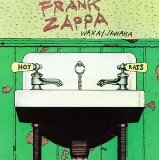 Zappa first really explored jazz-rock with his 1969 solo album, Hot Rats. That record came just a few months after Miles Davis released In a Silent Way, which represented his immersion into fusion. On July 5, 1972, Zappa confirmed his interest in the genre with the release of Waka/Jawaka. Zappa first really explored jazz-rock with his 1969 solo album, Hot Rats. That record came just a few months after Miles Davis released In a Silent Way, which represented his immersion into fusion. On July 5, 1972, Zappa confirmed his interest in the genre with the release of Waka/Jawaka.
Some refer to Waka/Jawaka as “Hot Rats II,” not only because of the music but the faucets on the water taps on the cover read “Hot” and “Rats.” This album, though, came at a rougher time in Zappa’s life. In December 1971, Zappa was pushed from a stage in London, resulting in a month in the hospital and a year in a cast or wheelchair. Because of his physical limitations, he spent quite a bit of time in the studio and the results indicated he’d certainly been listening to Miles, who had added the best-selling Bitches Brew and A Tribute to Jack Johnson to his fusion catalog.
The influence is seen in the opening cut of Waka/Jawaka, recorded in large part with studio musicians. “Big Swifty,” which took up the entire first side of the original LP, echoes what Davis was doing. Part of the resemblance is undoubtedly due to trumpeter Sal Marquez, who’d previously played with both Buddy Rich and Woody Herman. Still, the instrumental piece left little doubt Zappa still had the jazz-rock bug and was very adept at it. If anything, he’d taken it a step further and gave it more of a big band feel with his studio soundboard skills. That did, however, impact the tune a bit. Although technically excellent, the tune is slightly lacking in improvisational energy.
For whatever reason, side two opens with what I consider a couple throw away tunes. “Your Mouth” is a blues-based tune that is closer to more standard Mothers fare. “It Just Might Be A One-Shot Deal” is similar, but also imported not only jazz but both rock and country feel thanks to a pedal steel performance from “Sneaky Pete” Kleinow from The Flying Burrito Brothers. The two songs feature vocals but, combined, are less than half the length of “Big Swity” and nearly five minutes shorter than the title cut, which closes the album.
The instrumental title cut demonstrated Zappa was not influenced by Davis alone. It has a more big band feel and echoes the rock end of the jazz-rock movement, be it early Chicago, some BS&T or even The Flock. Here, Zappa includes not just Marquez on trumpet but two trombone/baritone players, as well sax, piccolo and flute. At the same time, the tune remains more Zappaesque than “Big Swifty,” although the latter would tend to be performed on subsequent tours.
Significantly, Waka/Jawaka was not Zappa’s last foray into fusion. Just four months later he would release The Grand Wazoo, which further explored the idiom with an even bigger ensemble. In fact, the title cut used 11 woodwind and brass players. Thus, in the space of three years, three solo Zappa albums explored jazz through the concept of rock. Zappa’s estate has done an excellent job monitoring his music and releasing various recordings. Hopefully, some day it will provide us with a Zappa jazz collection.
Jazz: The Music of Unemployment.
Subheading in Frank Zappa, The Real Frank Zappa Book
|
Disclaimer 
Additionally, some links on this blog go to Amazon.com. As an Amazon Associate I earn from qualifying purchases. There is no additional cost to you. Contact me You can e-mail me at prairieprogressive at gmaildotcom.
|