|
|
I know. It’s hard to go to any music or pop culture site without seeing some reference to the 40th anniversary of Woodstock in August. But I’m actually going to talk about something other than the festival itself — the soundtrack to the documentary film, Woodstock.
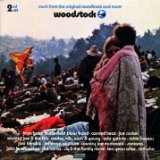 I couldn’t tell you today which came first for me, the soundtrack or the film. If I were a betting man, I would say the soundtrack. After all, the movie, released in late March 1970, actually had “graphic nudity” and “profanity” (shocking, just shocking!!!). In the town in which I was born and raised, that sort of thing could keep a movie out of a theater for years, rendering it drive-in fare, at best. Besides, since it was rated “R”, I was still a year or two shy from getting into the movie (and the same attitudes that could have kept the film out of the local theater meant it also enforced the ratings system). I couldn’t tell you today which came first for me, the soundtrack or the film. If I were a betting man, I would say the soundtrack. After all, the movie, released in late March 1970, actually had “graphic nudity” and “profanity” (shocking, just shocking!!!). In the town in which I was born and raised, that sort of thing could keep a movie out of a theater for years, rendering it drive-in fare, at best. Besides, since it was rated “R”, I was still a year or two shy from getting into the movie (and the same attitudes that could have kept the film out of the local theater meant it also enforced the ratings system).
I do know, though, that I had the three-LP album fairly soon after it was released in May 1970. I mean we’d all heard about Country Joe and his “Fish cheer” (you know, “Gimme an F, Gimme a U,” etc.). Likewise, the words Hendrix and “Star Spangled Banner” astonishing. Just those two things alone would be enough to piss off parents and what more could a teenage boy want from an album? And while I’m sure there were plenty of other reasons, thoughts like those led to the album hitting number one in the nation 39 years ago this week. That’s quite a feat for a three-LP set (although one George Harrison would duplicate within six months with All Things Must Pass).
With greater perspective, though, it was a worthy investment. I understand the argument some have made that the acts at Woodstock weren’t big deals at the time. They were either artists on the way up or who had recently passed the peak of their careers. But even if you accept that, so what? Who cares that no one had heard of Crosby, Stills, Nash and Young? Who cares that Country Joe and Arlo Guthrie may have been passing their peak? Who cares that Joe Cocker and Santana each had only one album to their credit (with Santana’s being released the same month as the festival)?
The fact is there’s plenty of good music on the soundtrack. In fact, looking back there are very few weak cuts on the LPs and picking which are and which aren’t is going to depend entirely on taste. And, yes, I did eventually see the movie. More than once, in fact, and have owned it on DVD for a number of years. And, no, the “graphic nudity” and “profanity” did not scar me for life — or at least any more than I was already.
This is the second time we’ve ever played in front of people, man, we’re scared shitless.
Stephen Stills, Woodstock, August 18, 1969
“The evil that men do lives after them,” William Shakespeare wrote in Julius Caesar. The magnitude of the human cruelty and violence is often reflected when the events have a name virtually everyone recognizes. One of those is the Bataan Death March, the name given to the Japanese forcing more than 70,000 American and Filipino prisoners of war to walk up to 60 miles from the Bataan peninsula in the Philippines to a central transfer point in April 1942, the midst of the hottest season, with little or no food or water and subject to being beaten, shot or bayoneted at the whim of their captors. More than 65 years later, that event is explored masterfully in Tears in the Darkness: The Story of the Bataan Death March and Its Aftermath.
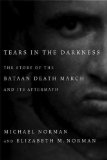 The book, written by husband and wife Michael and Elizabeth M. Norman, combines broad perspective and history with specific, personal events from a wide range of observers and participants. The book is made even more powerful by the range of personal perspective it uses. Although the story of Ben Steele of Montana helps provide a framework, the Normans give us viewpoints of a significant number of Americans and Filipinos, as well as Japanese. The book, written by husband and wife Michael and Elizabeth M. Norman, combines broad perspective and history with specific, personal events from a wide range of observers and participants. The book is made even more powerful by the range of personal perspective it uses. Although the story of Ben Steele of Montana helps provide a framework, the Normans give us viewpoints of a significant number of Americans and Filipinos, as well as Japanese.
Steele, whose drawings illustrate the book, works well as an archetype of the American experience. He joined the Army Air Corps before the war and ended up being stationed in the Philippines. He was among the many U.S. military men on the island who were forced into combat roles for which they hadn’t really been trained. He was on the Death March and in the largest prison camp set up after it. He was placed on a road building crew in the middle of the jungle under conditions worse than the prison camp. He spent time in what passed for the central hospital for American prisoners, one the equipment available for a tracheotomy were a piece of rubber tube and a safety pin. He was then was crammed with more than 1,000 others into the hold of tanker and shipped to Japan as forced labor in a coal mine.
Thus, Steele saw virtually the entire spectrum of the Bataan experience. As noted, though, his story is just part of Tears in the Darkness. The Normans do an excellent job relating the events and circumstances leading up to the battle of the Philippines, the battle in the Bataan peninsula and the death march. Likewise, they follow Norman and others home after the war and report on the war crimes trial of Masaharu Homma, the Japanese general who commanded the force that invaded the Philippines.
Both for those aspects of the book and the core story — the march, its aftermath and the treatment of the prisoners — the Normans interviewed more than 400 people in the U.S., Japan and the Philippines for the book. They make use of private diaries and letters, including those of Japanese military men, to not only explore what happened but to provide first hand insight into how it impacted those involved. Many of these excerpts can only be called harrowing. Yet they not only reveal what the Japanese did, but the impact of continued brutality on the human psyche and the levels to it might lead a man to resort.
Yet Tears in the Darkness doesn’t read like some stodgy historical tome. It is cogent and engrossing but never dogmatic. Granted, we are all appalled at what takes place in the course of the book. With the contemporary firsthand accounts and even explaining, for example, just what lack of water does to a person, the Normans allow us to attempt to grasp just how excruciating and horrendous things were. “Every man was forced to look inward,” they write. “Those who saw nothing — and there were many — abandoned all hope of ever seeing home again. It was almost as if death itself had become contagious[.]”
There is, of course, no good reason for the maltreatment, starvation, torture and massacre of the prisoners. Still, the book goes beyond the emotional aspect of the story to look at how and why this may have happened. This examination is broad also. For example, the Normans look not only at cultural issues and the raw emotion of revenge, but also how American and Filipino preparedness played a role as this appalling chapter of American, Filipino and Japanese history opened.
It isn’t often someone recommends a book that explores such evil, horrifying and torturous events. Tears in the Darkness, though, is essential reading for anyone who wants a full picture of the Bataan Death March or a touch of insight into why evil lives longer than the men responsible for it.
They lived on hope because hope was all they had.
Michael and Elizabeth Norman, Tears in the Darkness
Who, if anyone usually accompanies you to the library? Is it somewhere you go alone? Or is it a regular outing with family or friends? Which do you prefer?
A lot of my visits to the library tend to be stopping by just to pick up a book on reserve. If, however, I go to wander or explore, odds are that my wife will be with me. As I’ve noted before, it is not uncommon for one of our weekend “dates,” particularly in the winter, to consist of browsing around the main or one of the branch libraries and then going out for lunch or dinner.
I have no strong preference because once in the library we tend to roam different areas. Still, I would guess that a vast majority time if one of us is going to the library for more than just dropping off a book or picking one up, we ask the other if they want to go.
…more people need to start spending as much time in the library as they do on the basketball court.
Kareem Abdul-Jabbar, Kareem
Bulletin Board
Dakota Rural Action has created a searchable online South Dakota Local Foods Directory. (Via.)
Achievement Awards
Blog headline of the week: Bernard Madoff Sentenced; Books To Come
Bookish Linkage
C. Max rounds up the releases we can look forward to the rest of the year, calling it an “epic year for books.”
The book world’s version of Alien v. Predator?
Awful Library Books looks at books some libraries might want to consider retiring from their collections (thereby making room on the shelves for others). (Via.)
Neal Stephenson’s Anathem won the 2009 Locus Award for best SF novel.
Cory Doctorow’s Little Brother and Ian MacLeod’s Song of Time shared the 2009 John W. Campbell Award for the best SF novel.
The guide to international SF continues at SF Signal.
Nonbookish Linkage
This could explain a lot: “An imaging study of Chinese and Caucasian people has found that their brains respond less strongly to the pain of strangers whose ethnicity is different when compared with strangers of their own race.”
The 100 best blogs for those who want to change the world. (Via.)
You just knew Michael Jackson’s death couldn’t be immune from this.
For your Fourth of July pondering, historian Joseph Ellis observes that “nothing much happened on July 4, 1776.”
Regardless, for your Fourth of July viewing pleasure, Mount Rushmore is the Astronomy Picture of the Day.
…rightful liberty is unobstructed action according to our will within limits drawn around us by the equal rights of others..
Thomas Jefferson, April 4, 1819
Maybe it’s the fact I grew up during the Vietnam War but I’m a fan of many of the movies about it. Apocalypse Now, Francis Ford Coppola’s adaptation of Joseph Conrad’s Heart of Darkness in the setting of that war, is a classic. I’m not alone in that opinion.
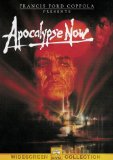 Rotten Tomatoes’ critics give American Beauty 98 percent on its “Tomatometer,” while other critics give it a 90 percent. It won the Golden Palm at the 1979 Cannes Film Festival. In the U.S., it was nominated for best picture at both the 1980 Oscars and the 1980 Golden Globes (losing in both instances to Kramer vs. Kramer). With the advantage of more perspective, it currently ranks 36th on IMDB’s Top 250. It was 28th in the American Film Institute’s 1998 list of America’s 100 Greatest Movies and dropped only to 30th when that list was updated 10 years later. Rotten Tomatoes’ critics give American Beauty 98 percent on its “Tomatometer,” while other critics give it a 90 percent. It won the Golden Palm at the 1979 Cannes Film Festival. In the U.S., it was nominated for best picture at both the 1980 Oscars and the 1980 Golden Globes (losing in both instances to Kramer vs. Kramer). With the advantage of more perspective, it currently ranks 36th on IMDB’s Top 250. It was 28th in the American Film Institute’s 1998 list of America’s 100 Greatest Movies and dropped only to 30th when that list was updated 10 years later.
Apocalypse Now scores with me for several reasons. Perhaps most important is that it is as real — and surreal — as our nation’s experience in the war. Briefly stated, Martin Sheen plays an American captain who travels upriver on a patrol boat into Cambodia to “terminate with extreme prejudice,” i.e., assassinate, a rogue American colonel. As for reality, we see how the characters, particularly Martin Sheen and Marlon Brando, slide from normality to madness. We see how the havoc of war can produce a devolution into barbarity and can make the abnormal normal.
The surreal aspects illustrate the rupture in the American psyche of the times, a rupture to which the war significantly contributed. We have the U.S. military out to kill one of its own. We have Air Calvary helicopter squads launching an attack so the commander can surf at a marvelous beach with a world-class surfer who is on the patrol boat (a sequence the includes the unforgettable line, “I love the smell of napalm in the morning”). We have chaos erupting as a Playboy bunnies are brought in to entertain the troops. We have a near psychedelic portrayal of a continuing battle between the U.S. and North Vietnamese trying to destroy and rebuild the same bridge. There is a common theme — the mission — but it and all around it seem fractured.
And just as the Vietnam War was a catastrophe for the American psyche, the making of Apocalypse Now was the same for the filmmaker and crew. Storms, lack of money and even a nervous breakdown. How many classic movies themselves spawn an exceptional documentary about the making of the film?
Apocalypse Now is far more than a war movie. It is a visual compendium of an entire era of American history that is as strong today as when first released 30 years ago.
We train young men to drop fire on people. But their commanders won’t allow them to write “fuck” on their airplanes because it’s obscene!
Col. Kurtz (Marlon Brando), Apocalypse Now
|
Disclaimer 
Additionally, some links on this blog go to Amazon.com. As an Amazon Associate I earn from qualifying purchases. There is no additional cost to you. Contact me You can e-mail me at prairieprogressive at gmaildotcom.
|