|
|
When J.M.G. Le Clézio won the Nobel Prize for Literature last October, he unwittingly became part of an international ruckus. Just the month before, Horace Engdahl, the permanent secretary of the prize jury, said the United States was “too isolated, too insular” when it came to literature. That “ignorance,” Engdahl said, exists in part because American publishers “don’t translate enough” foreign literature. Thus, when Le Clézio, a French author virtually unknown in America, won the Nobel Prize it was taken by some as further evidence of an anti-American bias.
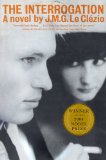 Still, there is validity to some of Engdahl’s argument and Le Clézio is an example. Although a few small American presses have published editions of his works in the last 15 or so years, not a lot of his catalog have been translated into English and the most recent translation issued by a major American publisher came more than 30 years ago. In light of the Nobel Prize, though, the 1964 translation of The Interrogation, Le Clézio’s debut novel that gained him international attention, was reissued in December by Simon & Schuster. The reissue was complete with the original cover photo of a young Le Clézio and his wife. Now out in paperback, the work is unlikely to reduce the umbrage of casual American readers who pick up the book simply because Le Clézio won the Nobel Prize. Again, though, that will not be an issue of his making. Still, there is validity to some of Engdahl’s argument and Le Clézio is an example. Although a few small American presses have published editions of his works in the last 15 or so years, not a lot of his catalog have been translated into English and the most recent translation issued by a major American publisher came more than 30 years ago. In light of the Nobel Prize, though, the 1964 translation of The Interrogation, Le Clézio’s debut novel that gained him international attention, was reissued in December by Simon & Schuster. The reissue was complete with the original cover photo of a young Le Clézio and his wife. Now out in paperback, the work is unlikely to reduce the umbrage of casual American readers who pick up the book simply because Le Clézio won the Nobel Prize. Again, though, that will not be an issue of his making.
The Interrogation, which won a prestigious French literary award when first published in 1963, is not a traditional novel. A Nobel summary of his work describes his early novels as “highly experimental in style and intellectually challenging.” That is true here. In fact, Le Clézio tells readers at the outset of The Interrogation that he “deliberately chose … a tenuous, abstract theme” and that he “made very little attempt at realistic treatment.” As such, it is perhaps symbolic of a literary version of the French New Wave film movement. Certainly, it represents Le Clézio at the start of his career and his beginning exploration of the novel.
The book is the story of Adam Pollo, a 29-year-old man who, Le Clézio says, “is not sure whether he has just left the army or a mental home.” An interrogation of the type most readers would expect from the title does not occur until the last 30 or so pages. Instead, the real interrogation is Adam’s own existential questioning of and approach toward life. He is a squatter in an empty home near the beach. He spends hours gazing out the window or lounging in deck chairs thinking and writing, usually in the form of letters to Michèle, who he considers his lover. Adam will go into town occasionally for food and cigarettes. When he does venture out of the house, he spends his time wandering the city and beach, still pondering often deeply philosophical questions in minute detail, sometimes logically and other times far more chaotically. Adam is so engaged in attempting to assess life as it is — or at least as he perceives it to be — that he doesn’t want a dog to start following him because he fears “the responsibility of leadership.”
In Le Clézio’s hands, we experience a multi-faceted exploration of Adam’s days and thoughts. The story is told in letters, diary entries, verse and even reproductions of newspaper articles of events that occur in the book. Yet language, not presentation, is also a cornerstone tool.
For example, the first two pages of chapter E (all chapters are by letter in alphabetical order rather than number) use a variety of geometry terms as a means of expression. Angles, squares, circles, parallel lines, curved lines and rectangles are all used to describe the process of finding the house in which Adam has taken up residence. Le Clézio returns to this device near the end of the novel, as Adam views the room he is in and then the world in terms of angles and design. “The world, like Adam’s pyjamas, was striped with straight lines, tangents, vectors, polygons, rectangles, trapezoids of all kinds, and the network was perfect[.]”
There is at times dense exposition: “Simultaneity is the total annihilation of time and not of movement; an annihilation to be conceived not necessarily as mystical experience, but by a constant exercise of the will to the absolute in abstract reasoning.” Yet there is also wonderfully descriptive writing: “The sun went on blazing in the naked sky, and the countryside shrank back into itself, little by little, under the heat; the soil cracked in places, the grass turned a dirty yellow, sand heaped up in holes in the walls, and the trees were weighed down by dust. It seemed as though the summer would never end. …. The atmosphere made unremitting efforts.”
This all tends to reflect and reinforce Adam’s fragmented and mercurial mind. We do not learn whether he recently left the army or a mental institution; his internal and external dialogues leave both as possibilities. We do not know whether it is simply society, life in general or anything in particular that created his sense of alienation and detachment or his occasional delusions of seeming grandeur. When Adam ultimately acts publicly in a way that leads to being committed for psychiatric observation, there is still some question whether he or others are more perceptive of reality.
The nontraditional approach of The Interrogation and the fact it is the story of a seemingly unstable mind in existential crisis makes it unlikely to captivate a broad English-speaking audience. That does not, however, mean Le Clézio was awarded the Nobel Prize as a result of anti-American bias. To the contrary, the departure from literary norms The Interrogation embodies is one exhibit in a body of work of which Americans are too unaware, a body of work which undoubtedly provided more than adequate grounds for the honor. While the book is certainly not for everyone, the opportunity for Americans to explore for themselves the work that first brought Le Clézio to the attention of the literary world is one step toward reducing our insularity.
…he who writes is shaping a destiny for himself.
J.M.G. Le Clézio, The Interrogation
Bulletin Board
Check out the South Dakota Jazz Orchestra, playing every Monday night at Skelly’s Pub (h/t South DaCola).
Achievement Awards
MobyLives returns to capturing headline of the week: Next up: Amazon applies for patent on concept of lips moving while reading.
Bookish Linkage
The National Book Foundation has started a book-a-day blog on the winners of the National Book Award for fiction from 1950 to 2008. The celebration will culminate in picking the best of the winners, with public voting from September 21 to October 21.
Amazon has come up with its list of the top 10 books of 2009 so far. I’ve read only one of them. There are supplemental top 10 lists for both nonfiction (where, again, I’ve read one) and fiction (where I’ve very happy to see that Every Man Dies Alone appears).
I don’t know how I missed this before. The Association of American University Presses has a program called Books for Understanding, which creates lists of relevant books on current events. Not surprisingly, the newest one deals with Iran.
Michael Schaub solves the mystery of Dan Brown’s forthcoming book.
A key to our economic recovery? Buying books. (I know I’ve been doing my part this week.)
The flip side: From bookstore owner to homeless.
Continuing its run in book awards, Cory Doctorow’s Little Brother won the Prometheus Award for best novel while The Lord of the Rings trilogy was named to the Prometheus Award Hall of Fame. The awards are given by the Libertarian Futurist Society “to honor libertarian fiction.”
I need to come up with a method of book annotation for reviews. (Via.)
Nonbookish Linkage
Looking at the NEA survey I posted about last month, fellow Blogcritic Ted Goia looks at its ramifications for the jazz audience.
My comments a couple week ago about “stuff” prompts me to point to Love Life, Not Stuff.
Michael Jackson, the inventor?!?!?!??? (Via.)
How blogs changed everything.
I didn’t see this until after my post this week on the Woodstock soundtrack but the couple pictured on the cover are still together.
My years of putting my brain in neutral justified: zoning out is a crucial mental state.
Another belief of mine: that everyone else my age is an adult, whereas I am merely in disguise.
Margaret Atwood, Cat’s Eye
Any doubt in my mind that our air transport system is broken beyond repair came in the last 36 hours as I began checking prices for a one-way ticket for my daughter to get to UMass this September. The travel web site I went to offered me 106 different flight options but the results are absolutely asinine.
The cheapest fare was $274. To get there on the Thursday she needs to be there, though, she would leave Sioux Falls Wednesday afternoon on United, fly to Phoenix (with a stop in Denver), then fly a Delta red-eye from Phoenix to Atlanta (arriving early Thursday morning) and then Delta from Atlanta to Hartford, Conn. The travel time is 16 hours — if you don’t encounter any delays.
For just $4 more she can get there the same day she leaves. Under this itinerary, she would leave at 5 a.m. Thursday on Northwest/Delta and fly to Minneapolis, then fly to Columbus, Ohio, where she would take a United flight to O’Hare in Chicago and then a United flight into Hartford. She would arrive 13 hours after leaving — again assuming no delays — and an hour before dorm check-in closes. UMass is about 45-60 minutes from the airport, depending on traffic.
Having at least some modicum of intelligence, I thought, “Why not just fly direct to Minneapolis, Atlanta or Chicago and then into Hartford?” Either of the first two will cost $754, whether through the travel site or the airline web sites. The Chicago route is “only” $543 at both the travel site and the airline site.
Under what pricing model does two takeoffs and landings cost two to three times more than four? Our air transport system is insane and totally defective.
By the way, Southwest from Omaha with a change of planes at Midway is $204.
…if a farsighted capitalist had been present at Kitty Hawk, he would have done his successors a huge favor by shooting Orville down.
Warren Buffett, Bershire Hathaway shareholder letter, February 2008
The Friday Follies were delayed today due to the ongoing college trip. And it has produced one of the biggest follies I’ve encountered, but that is the subject of a separate post tomorrow. That said, here’s this edition of the follies:
“A super-secure federal prison ruled that two books written by President Obama contain information ‘potentially detrimental to national security‘ and rejected an inmate’s request to read them.” (Via.)
Are “holey” shoes an unfair trial strategy?
Easy legal advice (unless you are too stoned): Don’t put your pot and cocaine in with your money at the drive-through bank deposit canister. (Via.)
If only stupidity were a defense.
I know Clinton was very happy with the work of the “department of law there in the White House.” (Via.)
So you or your business can avoid problems in the future, be aware that the Code of Judicial Conduct precludes a judge from asking for donations of cardboard boxes to help the court move to a new facility.
Offered for debate: drunken breast-feeding is a crime in North Dakota. (Via.)
Son, how you like to make a buck doing a little chore for Dad? (Via.)
I have great faith in fools; self-confidence my friends call it.
Edgar Allan Poe, Marginalia
So I arrived back at UMass yesterday her “new student orientation” that began last night and runs through tomorrow. It gives rise to a couple opportunities, one of which hasn’t come to fruitioin yet but one certainly did.
I had been hoping to try and post to the blog via a WordPress app for my Blackberry Storm. As is the case with beta versions, though, success has yet to be achieved. One problem with connecting was fixed in a new beta but that one, it seems, created its own problem that they’re hoping to fix in a new beta. So, at least at this point, no remote posting.
Shortly after getting here, though, I went to a bookstore book collective I didn’t get to on our first trip here. I later revisited another. So far, there’s three new books going into the carry-on. Two, though, were closeouts at less than half-price (and even less than Amazon), including the predecessor to a book not available in the U.S. that I blogged about more than 18 months ago. The third first showed up on my bibliolust list last November and I’d yet to have seen it in any other brick and mortar bookstore.
Throw in the fact this was an indie bookstore, I clearly had no choice but to buy all three books (plus my daughter bought two).
Supporting our independent community booksellers is a gift we not only bestow on ourselves, but one to preserve for the next generation.
Kristin Kennell, former manager, Elliott Bay Book Company
|
Disclaimer 
Additionally, some links on this blog go to Amazon.com. As an Amazon Associate I earn from qualifying purchases. There is no additional cost to you. Contact me You can e-mail me at prairieprogressive at gmaildotcom.
|