|
|
Bookish Linkage
Tim Winton’s Breath, which I reviewed last week, won the Miles Franklin Literary Award. Winton has won the award, Australia’s most prestigious literary prize, four times.
China Miéville has plenty of interesting ideas, as usual, this time at Amazon’s book blog.
C. Max takes an interesting look at what Amazon’s auto-complete feature may show.
Hey! It’s World Literature Weekend — at the London Reivew Bookshop. Fine, then, I’ll have my own at home. (Via.)
The seven most impressive libraries throughout history. I’ve been to three of them but was perhaps most struck by the Celsus Library.
Five leading authors pick their real fantasy/SF cities. (Via.)
Nonbookish Linkage
Somehow I missed the story that a school with a local branch is immersed in the internet porn wars.
See some speculation on the Disney princesses coping with real life in Fallen Princesses (make sure you click on the photos). (Via.)
The Jazz Journalists Association has announced its 2009 Jazz Awards.
A 70-year ideological history of the U.S. Supreme Court. (Via.)
For a moment, nothing happened. Then, after a second or so, nothing continued to happen.
Douglas Adams, The Hitchhiker’s Guide to the Galaxy
I’m modifying an idea I saw on a book blog recently — revisiting favorites from your past. While that concept was favorite books, mine is going to be favorite movies. These aren’t going to be reviews of the films, just a link or two to assembled opinion on the films and my thoughts about the movie and why it’s among my favorites. I’m hoping to do this on Fridays when I’m not posting a Friday Follies.
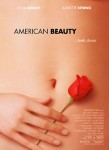 To begin with, I’m going to use my ratings of films at IMDB. Since that list is based first on ranking and second by alphabet, I’m going to start with American Beauty, one of those films I enjoyed so much I remember a couple older women sitting in front of us at the theater turning around with a “WTF?” glare on their face as I laughed uproariously. To begin with, I’m going to use my ratings of films at IMDB. Since that list is based first on ranking and second by alphabet, I’m going to start with American Beauty, one of those films I enjoyed so much I remember a couple older women sitting in front of us at the theater turning around with a “WTF?” glare on their face as I laughed uproariously.
Rotten Tomatoes’ critics give American Beauty 89 percent on its “Tomatometer,” while other critics give it a 91 percent. As a result, it’s not surprising that it gets this consensus: “Critics praise American Beauty for its wit and insight, as well as for its exceptional performances.”
Similarly, the movie scores an 86 (“Universal acclaim“) at Metacritic, with reviewers from Roger Ebert to Rolling Stone scoring it at 100. It’s a 10 out of 10 in my personal ranking at IMDB.
Aside from the fact the humor of the main character, Lester Burnham (Kevin Spacey), is very akin to mine, the timing of American Beauty was significant. I was the same age as Lester when the film was released in 1999. Not surprisingly then, its story of the father of a high school girl dealing with a midlife crisis and depression — okay, so the humor is a bit dark — was something I and my contemporaries could easily grasp and identify with. Granted, the infatuation Lester develops for a friend of his daughter’s is more than a bit unsettling but Lester’s overall attitude and actions made him a “rebel with a cause” in my book
Lester also has some of my favorite movie lines ever. But there’s one that always sticks with me and which I think really gets to the heart of the movie and how we approach middle age. Lester’s wife is concerned he is going to spill beer on the couch. She warns him that it is, after all, a $4,000 couch. Lester’s screamed response: “It’s just a couch!” To her shock, he continues, “This isn’t life. This is just stuff, and it has become more important to you than living. Well, honey, that’s just nuts.”
To me, that represents that Lester has become a bodhisattva. He is enlightened enough to see through the materialism of our lives. We all want stuff, often stuff we can’t afford. Yet it does boil down to “want,” something we seem to have confused with “need.” That confusion simply masks what it is — “just stuff.” It isn’t life and it certainly doesn’t represent meaningfulness or fulfillment.
Whenever I feel my perspective on life may be getting a bit out of whack, I try to tell myself, “It’s just a couch!” And that’s one of the reasons why American Beauty is one of my favorite films.
It’s a great thing when you realize you still have the ability to surprise yourself.
Lester Burnham (Kevin Spacey), American Beauty
It’s another of those news items supporters of arts and literature dread. “American audiences for the arts are getting older, and their numbers are declining,” according to a new report from the National Endowment for the Arts.
Although one in three adults reported visiting an art museum or gallery or attending at least one performing arts even in the 12-month period ending in May 2008, only musicals showed no statistically significant change in attendance since 2002. Previous studies have shown a high correlation between education and arts attendance. From 1982 to 2008, however, attendance by college educated adults has declined in each of the performing arts considered, ranging from a 10 percent drop at art museums to a 39 percent drop in classical music and a 43 percent decline for ballet,
Reading was somewhat of a bright spot in the results. The survey showed the percentage of those reading literature increased from 46.7 percent to 50.2 percent between 2002 and 2008. Yet the gain far from offsets prior declines in reading. From 1982 to 2008, the figures dropped 11.8 percent.
The survey also examined the types of books those who read like to read. For fiction readers mysteries are at the top at 32.5 percent. Thrillers appeal to 21.2 percent, romance to 18.3 percent and science fiction to 16.7 percent. That inimitable category, “Other fiction,” came in at 23.8 percent. Things are a bit more evenly spread out in nonfiction, with readers preferring fitness/self-improvement (26.6%), religious text/religion (25.8%), history/politics (23.2%), biographies/memoirs (22.8%) and “other nonfiction” (19.9%).
The report recognizes that the recession and travel costs certainly contributed to the figures. Still, the long-term trends show important demographic changes. For example, those attending performing arts events are increasingly older than the average U.S. adult. In addition, while attendance rates of 18- to 24-year-olds at jazz, classical music, ballet and play performances declined significantly from 2002 to 2008, during the same period the steepest decline for most arts events was among 45- to 54-year-olds, historically a significant proportion of the audiences.
These figures give cause for concern not just because of what they say about American culture. As South Dakota saw earlier this year, tight budgets may lead government to consider cutting funding for the arts. Declining audiences not only provide talking points for such moves, they may also reflect fewer voices speaking out to maintain arts funding.
What would life be without art? Science prolongs life. …. What is the good of living longer if it is only a matter of satisfying the requirements that sustain life? All this is nothing without the charm of art.
Sarah Bernhardt, The Art of the Theatre
Spirit’s Twelve Dreams of Dr. Sardonicus is one of those albums I have a somewhat different relationship with. Months will go by without listening to it. Once I put it on, though, it’s something I’ll listen to repeatedly for weeks. That’s why it’s earned a permanent place on my iPod.
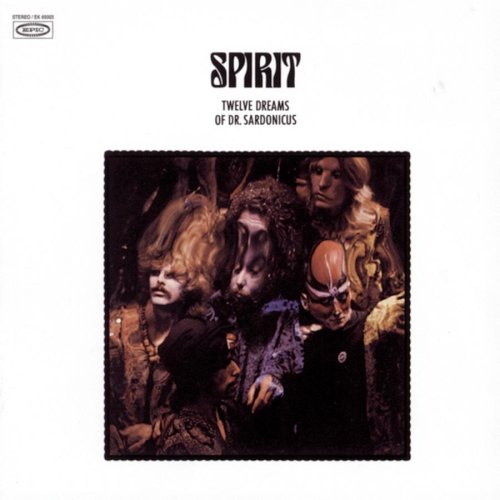 Sadly, the LP may fall into the category of “best albums you never heard.” In fact, it didn’t really gather much attention or traction until 1972, some two years after it was released. And it took until June 18, 1976, some six years after its release, for it to become a gold record. Consider that Olé ELO by the Electric Light Orchestra was certified gold the same day, although it had just been released. Sadly, the LP may fall into the category of “best albums you never heard.” In fact, it didn’t really gather much attention or traction until 1972, some two years after it was released. And it took until June 18, 1976, some six years after its release, for it to become a gold record. Consider that Olé ELO by the Electric Light Orchestra was certified gold the same day, although it had just been released.
None of the songs hit the Top 40. The album never reached the top 50. But there’s tunes off it you’ve likely heard on FM or today’s “oldies” stations. Songs like “Nature’s Way,’ a reflection of the new environmental movement, “Animal Zoo” and “Mr. Skin” gained some play but probably only cultic popularity. Another commonly heard cut is “Morning Will Come,’ the penultimate track. It’s one of my favorite songs, sounding at times like Spirit was parodying the then popular The Grass Roots and saying this is how you play pop music.
Twelve Dreams is undoubtedly Spirit’s pinnacle. Yet it’s one of those albums that’s somewhat hard to quantify. Most people refer to it as psychedelic rock. While this somewhat ignores that it was a style that was ebbing away, it’s probably as accurate as any other. If the sound is somewhat electric, it is clearly eclectic. It clearly has a psychedelic feel and lyrics tinged with a bit of the peace and love hangover of the late ’60s. After all, the album opens and closes with the softly sung lyric, “You have the world at your fingertips/No one can make it better than you.” There are rapid, though not necessarily glaring or clashing, shifts in style and tempo. Yet the album is so diverse that while “Mr. Skin” has a funk feel, just two songs later “When I Touch You” is easily a precursor to ballads that would arise in the coming arena rock era.
This isn’t a perfect album. It even has flaws within songs themselves that make you wonder why the band would throw something in. But any band that mixes together such a stylistic range and isn’t hesitant to shift rapidly among them is bound to hit an off note here and there. Moreover, even if the songs reveal a tad bit of age today, the production and recording values stand up. Twelve Dreams was, if anything, perhaps ahead of its time acoustically when released. Although the band occasionally falls into sending guitars and sounds from speaker to speaker (the opening of “When I Touch You” has echoes of Hendrix’s “EXP” from Axis: Bold as Love, perhaps not surprising since Spirit co-founder Randy California got his stage name from Hendrix when he played in a band with him in 1966 at age 15), the sound is layered and high-quality. Add how tight the band is and it’s a joy to listen to even today.
Some view Twelve Dreams as a concept album, that the 12 cuts on it, many of which flow into each other, represent a night’s dreams by Dr. Sardonicus, whomever he may be. I’ve never really gotten that out of it but whether that was the goal or not is irrelevant. This is an album that was far too overlooked that remains an excellent lesson in rock music and production. Any doubt of that is always erased by the fact that once I start listening to it, it’s damn hard to stop.
The high and the low born are my friends and relations
“Mr. Skin,” Spirit, Twelve Dreams of Dr. Sardonicus
I damn near fell out of my chair when I saw it today. According to the god of television ratings, Nielsen, Game 7 of the Stanley Cup finals on NBC “claimed the top slot in Nielsen’s ranking of the top primetime telecasts on broadcast TV for June 12, 2009. The show drew approximately 8.0 million average viewers Friday evening.”
Granted, that’s about half what an NBA finals game drew the night before and is unlikely to land the game in the week’s top 10 shows. Still, the fact is it the game was airing on a Friday night, did not involve a team from a major media market like New York or L.A. (unlike the NBA) and pulled in 2.5 million more viewers than the second and third place shows.
For a niche sport, that’s a helluva showing!
No, I can’t remember how I scored and I don’t care how I scored.
Pittsburgh Penguin forward Max Talbot
on scoring both his team’s goals in Game 7
|
Disclaimer 
Additionally, some links on this blog go to Amazon.com. As an Amazon Associate I earn from qualifying purchases. There is no additional cost to you. Contact me You can e-mail me at prairieprogressive at gmaildotcom.
|