|
|

This can be a quick one. Don’t take too long to think about it. Fifteen books you’ve read that will always stick with you. First fifteen you can recall in no more than 15 minutes.
Quick AND easy, especially since I’m copying my Desert Island Books and a couple books that just fell short of that list. In alphabetical order:
 1984, George Orwell — Name another book whose content, title and language remain so politically and socially relevant some 50 years after being published. 1984, George Orwell — Name another book whose content, title and language remain so politically and socially relevant some 50 years after being published.
 Cat’s Cradle, Kurt Vonnegut, Jr. — My first Vonnegut book so it must be on the list to ensure his place in my literary pantheon. Cat’s Cradle, Kurt Vonnegut, Jr. — My first Vonnegut book so it must be on the list to ensure his place in my literary pantheon.
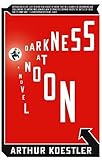 Darkness at Noon, Arthur Koestler — Although a novel, there may be no better inside look at Stalinism. Darkness at Noon, Arthur Koestler — Although a novel, there may be no better inside look at Stalinism.
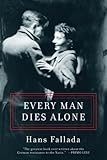 Every Man Dies Alone, Hans Fallada — “The greatest book ever written about German resistance to the Nazis.” (My review.) Every Man Dies Alone, Hans Fallada — “The greatest book ever written about German resistance to the Nazis.” (My review.)
 Fear and Loathing: On the Campaign Trail ’72, Hunter S. Thompson — Gonzo political reportage. We would be far better off had there been more of this the last 30 years. Fear and Loathing: On the Campaign Trail ’72, Hunter S. Thompson — Gonzo political reportage. We would be far better off had there been more of this the last 30 years.
 The Foundation Trilogy, Isaac Asimov — This may be unfair since it really is three books but I think the fact I remember the year I read this (the summer of 1975) firmly establishes it belongs here. I read all three titles (Foundation, Foundation and Empire, Second Foundation) in a row in the pictured one volume set and it may have been the event that truly addicted me to science fiction. The Foundation Trilogy, Isaac Asimov — This may be unfair since it really is three books but I think the fact I remember the year I read this (the summer of 1975) firmly establishes it belongs here. I read all three titles (Foundation, Foundation and Empire, Second Foundation) in a row in the pictured one volume set and it may have been the event that truly addicted me to science fiction.
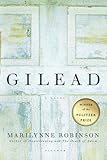 Gilead, Marilynne Robinson — The deliberate (some may say slow) pace reflects how skillfully and wonderfully this book is written. (My review.) Gilead, Marilynne Robinson — The deliberate (some may say slow) pace reflects how skillfully and wonderfully this book is written. (My review.)
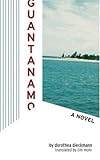 Guantanamo: A Novel, Dorothea Dieckmann — A compelling, almost painful, view of the physical and psychological toll of our “enemy combatant” policy. (My review.) Guantanamo: A Novel, Dorothea Dieckmann — A compelling, almost painful, view of the physical and psychological toll of our “enemy combatant” policy. (My review.)
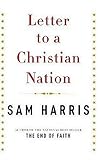 Letter to a Christian Nation, Sam Harris — While the people who need to will likely never read it, I gave copies as Christmas presents in 2006. (My review.) Letter to a Christian Nation, Sam Harris — While the people who need to will likely never read it, I gave copies as Christmas presents in 2006. (My review.)
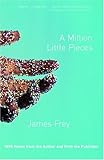 A Million Little Pieces, James Frey — Say what you will, this still remains a work I considered “unputdownable.” A Million Little Pieces, James Frey — Say what you will, this still remains a work I considered “unputdownable.”
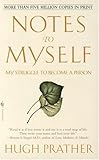 Notes to Myself: My Struggle to Become a Person, Hugh Prather — Despite the fact I generally detest pop psychology work, especially ones this touchy feely, I read this again for the nth time over the weekend and bought a copy for each of my daughters. Notes to Myself: My Struggle to Become a Person, Hugh Prather — Despite the fact I generally detest pop psychology work, especially ones this touchy feely, I read this again for the nth time over the weekend and bought a copy for each of my daughters.
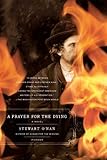 A Prayer for the Dying, Stewart O’Nan — A book I’m estatic to have removed from the list of “best books you never read.” (My review.) A Prayer for the Dying, Stewart O’Nan — A book I’m estatic to have removed from the list of “best books you never read.” (My review.)
 Saturday, Ian McEwan — The palpable sense of dread and foreboding is mixed with insight that speaks volumes about the human condition. (My review.) Saturday, Ian McEwan — The palpable sense of dread and foreboding is mixed with insight that speaks volumes about the human condition. (My review.)
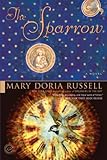 The Sparrow, Mary Doria Russell — This SF work immediately and always comes to mind when I’m asked about my favorite books. The Sparrow, Mary Doria Russell — This SF work immediately and always comes to mind when I’m asked about my favorite books.
 The Things They Carried, Tim O’Brien — As far as I am concerned, the best writing ever on the Vietnam War. The Things They Carried, Tim O’Brien — As far as I am concerned, the best writing ever on the Vietnam War.
Since it will always be now, learning to respond to now is the only thing there is to learn.
Hugh Prather, Notes to Myself
For whatever reason, series abound in science fiction and fantasy. You can’t go through those sections of a bookstore or library without seeing a large number of authors who have embarked on a series. Yet one of the problems that poses for a writer is how much space should be spent trying to bring a new reader up to speed. Should subsequent books stand alone entirely? Should there be an introduction or appendix that allows new readers to get up to date but which prior readers can skip? Or should relevant background be passed along as necessary as the current tale unfolds? There is no uniformly appropriate answer.
 David J. Williams takes a somewhat modern, if not entirely satisfactory, approach with The Burning Skies, the second book of a planned trilogy. He seeks to educate newcomers in broad strokes in first 20 or so pages about what transpired in The Mirrored Heavens, the first book in the series. Other than that, there are occasional snippets passed on in the text and an organizational chart of the main characters but which does not really explain any prior interactions. As for the Earth of 2110 in which the story is set, Williams puts greater detail on a related web site rather than as an appendix or supplement to the book. David J. Williams takes a somewhat modern, if not entirely satisfactory, approach with The Burning Skies, the second book of a planned trilogy. He seeks to educate newcomers in broad strokes in first 20 or so pages about what transpired in The Mirrored Heavens, the first book in the series. Other than that, there are occasional snippets passed on in the text and an organizational chart of the main characters but which does not really explain any prior interactions. As for the Earth of 2110 in which the story is set, Williams puts greater detail on a related web site rather than as an appendix or supplement to the book.
The themes and approaches of the two books are entirely consistent, though. The ultimate goal is political and military control of the world. The cyberpunk-edged battles for control are seen through some of the leaders and secret operatives of different geopolitical powers and often competing government entities. The operatives in particular are the continuing character base. They include Carson, Spencer and Lynx, physically modified and trained “razors,” agents who immerse themselves into electronic/cyberspace networks or “zones,” usually as part of a team. Claire, a main focus of the book, is a breakthrough “super-razor,” with implications of being almost a post-Singularity messiah. The razors work with “mechanics,” heavily armed and armored agents who can physically carry out missions facilitated by a razor hacking into and undermining opponents in the zones. In the first novel, Autumn Rain, a terrorist group, attacked a space elevator. In The Burning Skies, all hell breaks loose on the orbiting Europa Platform, although it is unclear who is trying to trap who, Autumn Rain, the U.S. or the Eurasian Coalition.
The strongest stylistic thread between the two books is virtually nonstop action. The characters often escape death in the face of apparently insurmountable odds, although thousands of soldiers and civilians are not quite so fortunate. In fact, once the characters take their places on or near the Europa Platform, the vast majority of the first 250 or so pages are filled with rapidly paced descriptions of continuing battles between and among the geopolitical entities and their agents and soldiers. Williams quickly cuts from the point of view of one group of characters to another, rarely spending more than two pages on each before changing again. Even more so than The Mirrored Heavens, the feel is like that of a first-person shooter video game in which the reader continually jumps from shooter to shooter, although all of them are on the same side (supposedly). As Williams has acknowledged, some have even called his style “combat porn.”
Yet it’s not just the battles that are no holds barred. Within and among the various groups and alliances, there are conspiracies and double dealing within double dealing and conspiracies. In fact, when the last third or so of The Burning Skies moves to Earth, the action sequences subside as Williams presents a somewhat neuropsychogical exploration of Claire. Still, the plot continues to try to both hide the ball and slowly reveal the hidden machinations and intrigues.
Personally, I prefer the more thought-provoking aspects of “soft” science fiction over the warfare inherent in military science fiction, especially when the battles royal are as unrelenting as here. As a result, Williams’ continuing, if not increased, focus on action as opposed to the political, historical and sociological aspects of this future Earth makes this the weaker of the two books from my perspective. But if you enjoyed The Mirrored Heavens because of its action or are a fan of fast-paced and ferocious combat SF, The Burning Skies should not disappoint.
Security specialists think they’re creating multiple levels of access, while they’re really building labyrinths within which minotaurs can hide.
David J. Williams, The Burning Skies
For me, On The Border was the breakthrough album for the Eagles — and, it seems, much of the rest of America.
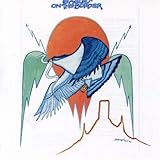 The album, the band’s third, went gold on June 5, 1974, just 10 1/2 weeks after its release. In contrast, the band’s first two albums both took about 18 months to go gold. I think the reason On The Border broke through quicker is seen in the bookends to the LP. The album, the band’s third, went gold on June 5, 1974, just 10 1/2 weeks after its release. In contrast, the band’s first two albums both took about 18 months to go gold. I think the reason On The Border broke through quicker is seen in the bookends to the LP.
It opened with “Already Gone,” which showed a more hard rock flavor than the prior two albums. Although it was one of three tunes on the LP to which no member of the band has a writing credit, the rock edge is due in large part to the addition of Don Felder. He gave the band a three-guitar lineup and the song features a twin guitar solo with him and Glenn Frey. I still recall a good friend from high school (the song hit the charts in our last months of high school) who played guitar and just absolutely loved the squeal of one of the solo licks.
But it was perhaps the other bookend that really presaged the band’s future. Closing the LP was “Best of My Love,” a ballad that displayed the ability of Don Henley and Frey (who wrote the song with J.D. Souther) to pen big hits. The song hit number one not only on the Billboard pop chart but also the adult contemporary chart. In addition, it was a crucial component in On The Border showing that the Eagles could mix country rock, rock and ballads in a way that worked well together, even if it wasn’t totally seamless. “Best of My Love” also was a strong indicator what was to come on the band’s next LP, where three songs would reach the top 5 (“One of These Nights,” number 1; “Lyin’ Eyes,” number 2 and “Take It To The Limit,” number 4).
In between the two, there was plenty of other good music. While “Already Gone” cracked the Top 40 charts, it wasn’t the only taste of harder rock. “James Dean” is a hard driving piece whose writers included Jackson Browne who, with Frey, wrote the band’s first top 40 tune, “Take It Easy.” Also falling in the hard rock category is “Good Day in Hell,” a Frey-Henley tune featuring Felder on slide guitar, and the title cut, a funkier and more R&B-oriented tune.
Yet the album didn’t abandon the country influences displayed on the first two albums. Even “Already Gone” had a bit of a country flavor. Yet that aspect of the band was seen clearly on other tunes. “Midnight Flyer” is an up-tempo, banjo-driven tune but, given the competition, is probably the weakest cut on the LP. “My Man” is among my favorite songs, a beautiful, pedal steel tinged tribute to Gram Parsons, who died about six months before the release of On The Border. The album also gave me and a lot of people our first exposure to Tom Waits, with an top-notch rendition of “Ol’ 55,” on which Frey sings the verses and Henley the chorus.
As I say, On The Border was what really led me to the Eagles. And the LP itself led me to what is my favorite LP by the band. On The Border caused me to go listen to the band’s first two LPs and, with time, its predecessor, Desperado, became the Eagles studio album I would pick if I could only keep one. Thus, On The Border became a breakthrough album for me in more ways than one.
So often times it happens that we live our lives in chains
And we never even know we have the key
“Already Gone,” Eagles, On The Border
Although last month I was sort of whining about the number of books I had to review in the coming weeks, I got all six read and the reviews posted. There’s two additional ones that were offered after the first of the month that I got read but just haven’t gotten around to writing the reviews.
So, when a guy is stacked up with books to read, what does he do? Buys more to put in the TBR stack. Thus, this month’s bibiliolust actually reflects the books I bought in the last couple weeks, some of which I’ve already read.
Amerika: The Missing Person, Franz Kafka — Here’s one of those purchases that displays how well certain strategies work. I was ordering a book for my youngest daughter’s birthday and was just under the amount needed for “free shipping.” What’s a person to do? Rather than pay shipping, you spend probably three times as much to get a book that’s been on your “I want to read that someday list” since it came out last year.
Bel Canto, Ann Patchett — Wandering the local used bookstore and seeing one of those books you’ve been wanting to read since it came out leaves a person like me no choice. So my first Ann Patchett novel is now on the fiction shelf next to the bed.
The Drinker, Hans Fallada — I’ve wanted to read this since completing Every Man Dies Alone but it wasn’t in any of the local bookstores. Thus, when I saw it in a bookstore in Amherst, Mass., it was headed back home with me. I’ve already read it and whlie I didnt enjoy it as much as Every Man Dies Alone, it is still very good.
Housekeeping, Marilynne Robinson — Another used bookstore acquisition. As much as I liked Gilead and Home, I figured I ought to read Robinson’s first novel.
The Stones Cry Out, Hikaru Okuizumi — My foreign lit fixation kicked in when I saw this in the bargain bin at the used bookstore. The phrase “Winner of Japan’s most prestigious literary award” cried out at me and I figured my first exposure to Japanese fiction was worth $2.
Students for a Democratic Society: A Graphic History, Harvey Pekar — As if the used bookstore isn’t proof enough of why I shouldn’t go into bookstores, here is another exhibit. I’m not into graphic novels or graphic works so wasn’t even aware Harvey Pekar had done a graphic history of the SDS. I saw this on the shelves in Amherst and it screamed to join Fallada in returning to South Dakota.
Voices From the Street, Philip K. Dick — Since I have most of Dick’s SF catalog, I figured that picking up a copy of this early, non-SF novel in excellent condition at the used bookstore could be easily rationalized — and it was.
This will never be a civilized country until we expend more money for books than we do for chewing gum.
Elbert Hubbard, The Philistine, June 1907
About six months ago I spent some time playing with a site that shows how popular a Google search query is in each U.S. state. I recently decided to see what’s been going on more recently so checked into the main source for this info to get an idea of what’s been going on so far this year. Once again, the results are both fascinating and disturbing.
With the disclaimer that the results are from the day I checked these out and they may have changed since, here’s a few examples in a couple broad categories:
Political
- With “socialism” being a new buzz word, residents of Wyoming seem most interested, ranking at the top of the list. They are followed by Utah, Kansas and Nebraska. North Dakotans, however, don’t seem to give a rip, ranking last with a 0.0 search volume. South Dakota, by the way, was just out of the top 10 with a search volume of 80.
- Oddly, only Texas (100), New York (92) and California (58) show up for “credit card reform.” Every other state scored a 0.
- Perhaps it shouldn’t be surprising, but “bailout” and “bank bailout” are most popular in D.C.
The Interweb Thingy
- The District of Columbia ranks first for “bloggers” with Utah, which ranks first for “blogs.”
- New York and California rank first and second for “twitter” while Louisiana is first for “what is twitter.” The Dakotas and Wyoming are either well in the know or totally oblivious, each with a 0 score for the latter. (Interestingly, if you add a question mark to the end of “what is twitter,” Colorado is first and Louisiana has a score of 0.)
- Hawaii is apparently Apple mad, ranking first for “mac,” “macbook,” “macbook pro,” and “itouch” and second for “ipod.”
South Dakota ranks
Sex, Drugs and Rock ‘n’ Roll
- Unfortunately, South Dakota seems to rank a bit too high in the sex category:
- We are second for “incest,” behind Alaska and tied with Kansas, and just out of the top 10 for “porn,” where Texas and Florida share number one “honors.”
- Perhaps even more disturbing, we are third for “beastiality,” behind Alaska and Wyoming.
- We are third for “sexual intercourse,” sixth for “sex videos” and 10th for “anal sex” (where we are just four points out of third).
- We are tied for first for “tits,” undoubtedly because of the number of dairy cattle we have, and first for “boobs,” perhaps referring to the intellectual level of the people who gave us the high ranking for some of the other search terms.
- Do you think there’s any connection between the number of retirees and the fact Arizona and Florida rank 1st and 2nd for “viagra“? Florida also ranks first for “cialis,” for which the Dakotas, Montana and Wyoming had a 0.
- North Dakota, surprisingly, is second for “LSD,” although it is quite a ways behind Vermont.
- South Dakota is ninth for “meth,” a category headed by Montana and Idaho.
- As it should be, New Jersey is first for “springsteen” and “bruce springsteen” and is second for “bruce.”
- Vermont, meanwhile, is first for “bob dylan” and “rolling stones,” while Nebraska, of all places, is first by a wide margin for “jackson browne.”
Given the time spent looking up the foregoing, perhaps it is appropriate to close by noting that only Texas (100), New York (87) and California (79) scored for “anal retentive.”
The Internet is just a world passing around notes in a classroom.
Jon Stewart, Wired, September 2005“
|
Disclaimer 
Additionally, some links on this blog go to Amazon.com. As an Amazon Associate I earn from qualifying purchases. There is no additional cost to you. Contact me You can e-mail me at prairieprogressive at gmaildotcom.
|