|
|
Bruce. The Boss. Or Brrrrruuuuuuuuuuuuce! Tuesday was a notable anniversary for us Springsteen fanatics. Thirty-seven years earlier, Springsteen signed his recording deal with Columbia Records. Books could be written — and have been — about the impact that signing has had on the rock music.
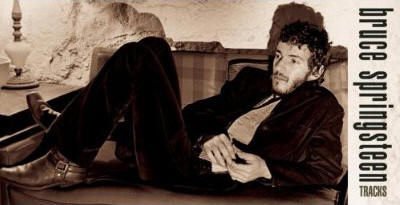 On May 2, 1972, Springsteen auditioned for Columbia’s John Hammond, who helped launch the careers of Billie Holiday, Count Basie, Aretha Franklin and Bob Dylan. Hammond also arranged a live audition by having Springsteen perform at the Gaslight, a Greenwich Village club, that night. The next day, Springsteen recorded a demo of 12 songs. Four of the recordings from that day — “Mary Queen of Arkansas,” “It’s Hard to Be a Saint in the City,” “Growin’ Up” and “Does This Bus Stop at 82nd Street?” — open Tracks, Springsteen’s 1998 compilation of unreleased tracks. On May 2, 1972, Springsteen auditioned for Columbia’s John Hammond, who helped launch the careers of Billie Holiday, Count Basie, Aretha Franklin and Bob Dylan. Hammond also arranged a live audition by having Springsteen perform at the Gaslight, a Greenwich Village club, that night. The next day, Springsteen recorded a demo of 12 songs. Four of the recordings from that day — “Mary Queen of Arkansas,” “It’s Hard to Be a Saint in the City,” “Growin’ Up” and “Does This Bus Stop at 82nd Street?” — open Tracks, Springsteen’s 1998 compilation of unreleased tracks.
Springsteen’s first album, Greetings from Asbury Park, N.J., was released on January 9, 1973. Five of the nine tracks were songs Springsteen played at the demo. One that was not became Springsteen’s only #1 single — only it wasn’t his version. The Manfred Mann’s Earth Band version of “Blinded By The Light” hit number one in 1977. On VH1 Storytellers, Springsteen said the fact most people thought Manfred Mann used the word “douche” instead of “deuce” was the reason the song hit the top of the charts.
Despite being hailed as the next Bob Dylan and Greetings receiving critical praise, the album got no higher than 60 on the charts. Springsteen followed it in September 1973 with what, in my opinion, may be the greatest rock record ever made — The Wild, the Innocent & the E Street Shuffle. Despite high quality song writing and performance from end to end, no singles were released although it surpassed its predecessor by reaching 59th on the charts. Questions began being raised about whether Springsteen’s career was at an early end. But 1974 and 1975 would change that.
On May 9, 1974, Springsteen and the E Street Band performed at the Harvard Square Theater in Cambridge, opening for Bonnie Raitt. In the audience was Jon Landau, a music critic who wrote for Rolling Stone and the Real Paper. His review of the concert in the May 22 edition of the Real Paper has become legendary. “I saw rock and roll’s future and its name is Bruce Springsteen.” he wrote. “And on a night when I needed to feel young, he made me feel like I was hearing music for the very first time.” Not only did that buzz catch, before the year was out Landau became Springsteen’s agent.
Landau helped produce Born to Run and just two weeks before its release, Springsteen and the E Street Band performed 10 shows, two a night for five nights, at the Bottom Line in Greenwich Village. Those shows would be Springsteen’s breakthrough, being heavily attended by media and industry reps. In fact, Rolling Stone considers it one of the 50 moments that changed the history of rock music. Within two months, not only had Born to Run reached the top 10 on the Billboard album charts (peaking at number three), Springsteen was on the cover of both Time and Newsweek.
The rest, as they say, is history. Fittingly, this weekend the Rock and Roll Hall of Fame and Museum is going to host a Springsteen fanfest. A couple months ago, it also opened an exhibit called From Asbury Park to the Promised Land: The Life and Music of Bruce Springsteen. And 37 years after signing with Columbia, Springsteen remains with that record label.
I just told Michelle backstage that the reason I’m running for president is because I can’t be Bruce Springsteen.
Barack Obama, Oct. 16, 2008
Not a hat tip, but a full bow to Cory at Madville Times for speaking up and saying what many of us progressive/liberal/any stripe bloggers thought: what in the hell is it with “Today’s Babe” at Todd Epp’s blog? I know that, at least historically, Buddhism has been viewed as sexist but I wasn’t aware it factored in to those who claim to tweet dharma.
As I told Cory in a quantity v. quality comment to his post, I fully agree with his observation that “‘success’ as a blogger may be better measured in terms not of hits but of influence.” Cory also notes why, if this is influence, it’s the wrong kind. “Pictures of pretty women we don’t even know probably don’t create change. Drawing more random Google hits from horny guys probably doesn’t build much community… at least not the kind of community we’re hoping for.”
My ears blistered when I imagined what my three daughters would say (with a small hope they would be so vociferous in part because of how their mother and I raised them). That’s why I was very happy to see some of South Dakota’s female bloggers give their perspective. Here’s some excerpts:
Rebecca: “I’d rather be in the ‘Not-Babe’ category–thanks, even if it means not so many hits. Because another problem with this category is its name: ‘Babe.’ While Epp claims he is celebrating, not diminishing women, the diminutive he uses to describe the women he’s ‘celebrating’ tells a different story.”
Angie: “Yes, objectifying pretty women drive[s] traffic/sell magazines. But that doesn’t make it less damaging. Is anything that makes money (no matter who it harms) permissible now?”
Anna: “It’s not enough that I’m headed toward a Ph.D. in my chosen field, or that another contributor just received a law degree. It’s not important that we’re lobbyists, strategists, educators, canvassers, envelope stuffers, ticket sellers, or board members. What’s really important to liberal guys is that we look like Esquire models while we’re doing it.”
Now I’m not trying to pile on. After all, I complained about the use of “babe” more than five years ago. But not only do things like “Today’s Babe” objectify women, it undermines the fact that some men are, or at least try to be, gender-blind. Check the last sentence from Anna. I know she’s using some editorial hyperbole but “babe” pictures suggest an inherent sexism in all males, regardless of political views.
Yes, Todd, I voted immediately in your poll that this is BS. But as Angie asked, “If the poll shows a positive response from readers, does that really justify continuing the objectification of women in South Dakota?” So, thanks to Cory for speaking up when we all should have. In fact, this father may owe his three intelligent and accomplished daughters — and all women — an apology for weighing in so late.
… it’s important to remember that feminism is no longer a group of organizations or leaders. It’s the expectations that parents have for their daughters, and their sons, too. It’s the way we talk about and treat one another.
Anna Quindlen, NY Times, Jan. 19, 1994
Inherent in any book about current events or current affairs is the problem of lag time, the time from experiencing the events to writing about them to the book actually ending up in stores. Some of that can be alleviated by selling stories of the events to magazines or newspaper as or shortly after they occur. That was an approach Nicholas Schmidle, author of To Live or to Perish Forever: Two Tumultuous Years in Pakistan, used but it showed another hazard when you’re writing about current foreign affairs. It may cause you to be forced from the country.
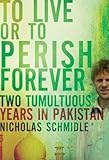 That’s actually where Schmidle starts his tale of the two years he spent immersing himself in Pakistan. Beginning in February 2006, Schmidle traveled throughout the country, learning Urdu and working to meet and interview radical Islamists and Taliban members and supporters. In January 2008, though, the police came to his home three times one day, the last time telling him his and his wife’s visas were revoked and they were to be taken to the airport immediately. A telephone call to a relatively well-placed acquaintance bought a brief delay but he also learned the government was upset about where he’d traveled, who he’d visited and some of his reporting. Schmidle bought the first two available seats on the next flight out. That’s actually where Schmidle starts his tale of the two years he spent immersing himself in Pakistan. Beginning in February 2006, Schmidle traveled throughout the country, learning Urdu and working to meet and interview radical Islamists and Taliban members and supporters. In January 2008, though, the police came to his home three times one day, the last time telling him his and his wife’s visas were revoked and they were to be taken to the airport immediately. A telephone call to a relatively well-placed acquaintance bought a brief delay but he also learned the government was upset about where he’d traveled, who he’d visited and some of his reporting. Schmidle bought the first two available seats on the next flight out.
To Live or to Perish Forever not only takes us with Schmidle into areas of internal strife and to meet the Taliban and its supporters, it gives a first hand recounting of the events that led to President Pervez Musharraf ‘s declaration of emergency rule in November 2007 and the protests and street battles that ultimately led to his impeachment and resignation in August 2008. (By coincidence, Schmidle briefly returned to Pakistan and was there when Musharraf resigned.) He became friends with Abdul Rashid Ghazi, the radical cleric who controlled the Red Mosque in Islamabad, and gives a firsthand account of the events leading to that and the military eventually storming the mosque. His efforts also pay some dividends in defeating the time lag element. Among the places he explored was the Swat area in northwestern Pakistan, the site of the Pakistani’s government’s recent offensive against Taliban control.
Taking its title from a famous 1933 pamphlet that first suggested the name “Pakistan,” the book illustrates much of the contrast in modern Pakistan today. In fact, even Schmidle being in Pakistan seems somewhat incongruous. While Schmidle was visiting northwestern Pakistan and other areas with a strong radical presence, his father was a Marine Corps general and his brother, a Marine lieutenant, was serving in Anbar Province in Iraq. But as To Live or to Perish Forever demonstrates, Pakistan itself is a world of contrasts.
One of the anomalies may just be the alliance between the U.S. and Pakistan. Schmidle notes that the Taliban operated freely in Pakistan because “everyone, everywhere in Pakistan, seemed to be offering [them] some help.” As one Pakistani journalist told him, “Ninety-nine point ninety-nine percent of Pakistanis, from their heart of hearts, are happy to see the Taliban creating problems for the Americans in Afghanistan and for Musharraf” in northwest Pakistan. But it is “the idea of the Taliban,” not the men with turbans and guns that infatuates them. “One hundred percent of the people don’t want the Taliban in Islamabad, Rawalpindi of even Karachi,” the country’s capital, military center and largest city, respectively, said the same journalist.
Schmidle, in fact, often encounters this type of antithesis firsthand. Perhaps the prime example is when he asked the leader of one of the two major pro-Taliban factions seeking to implement sharia law in the Swat Valley if he wanted to accompany Schmidle to see the leader of the other faction. “No way,” the faction leader said. “Those people are extremists.”
Schmidle’s efforts to visit and even attempt to understand the extremists as well as more unaligned and common Pakistanis helps make To Live or to Perish Forever useful for a Western reader. Yet there is an another aspect that makes it even more valuable. Despite being an American and offering articles to Western publications, Schmidle wanted to learn about all of Pakistan. That desire results in the reader also getting a broader and more accurate picture of the country and all its contrasts. To Live or to Perish Forever is not a Western-centric look but a reflection of actual immersion in Pakistani culture and politics. As a result, we see other fault lines in Pakistani society, as well as efforts to remedy those problems. We learn of different cultural and historical circumstances that have given rise to conflicts between regional and ethnic groups. These conflicts have not only led to struggles between the government and the regions for the exercise of authority but can also be reflected in how the country’s economic resources and development funds are allocated and spent.
As a result, while U.S. readers may be interested in Pakistan because of recent events, Schmidle helps give them a more authentic and discriminating look inside the country as a whole. The value of such an approach far outweighs any inherent problems in current affairs books, making To Live or to Perish Forever both timely and timeless.
It seemed more likely that Pakistan would continue to exist in a perpetual state of frenzied dysfunction: alive, but always appearing to be on the verge of perishing.
Nicholas Schmidle, To Live or to Perish Forever
Bulletin Board
Although it’s appropriately being mentioned everywhere, it still would be wrong to have a post today without acknowledging the 65th anniversary of D-Day.
Blogosphere Notes
Commander Other has departed the Otherwhirled and his alter ego has embarked on a new mission at un:enslaved.
Sincere congrats to and continuing appreciation of The Big Picture, one of the best sites out there, for celebrating its first anniversary this week. Doubt my praise? Check out how it kicked off its second year and observed Tienanmen Square 20 years later.
Original writing by Afghan women is being posted at the Afghan Women’s Writing Project. The project “is aimed at allowing Afghan women to have a direct voice in the world, not filtered through male relatives or members of the media.”
Blog Headline of the Week: I Haven’t Quit, I Just Don’t Have Anything To Say.
Bookish Linkage
Best Idea for Readers in a Long Time: As the number of forthcoming books exceeds our ability to keep up, maybe “we should be asking some of these these authors to stop writing for six months so that some of us may catch up on our reading and be fair to all the books. Or perhaps we should ask the federal government to bail out readers so that literary culture can thrive.” (Although I still like my wife’s idea that I should take the summer off from work because I have too many books to read at home.)
Here’s a handy downloadable spreadsheet of Arukiyomi’s 1001 Books You Must Read Before You Die. Not only does it calculate your percentages for you (I’m barely over three percent), it also has Wikipedia and Google Books links. (Via.)
Speaking of book lists, I don’t know if I necessarily agree with all the selections but The Anti-Oprah Book Club is something I can certainly wrap my head around. (Via.)
Marilynne Robinson’s Home was the unanimous selection for the 2009 Orange Prize for Fiction.
Nonbookish Linkage
If you haven’t read it yet, it’s worth checking out Michael Moore’s “Goodbye, GM,” particularly his nine suggestions on what we should do.
Journals for those who can’t write.
Check out Scott Ehrisman’s winning t-shirt design for volunteers at JazzFest 2009.
Warren Zevon’s family has allowed unreleased live recordings to be put online at the Internet Archive. (Via.)
One of my unanswered questions answered: what happens to hat trick hats.
If you try and take a cat apart to see how it works, the first thing you have in your hands is a non-working cat.
Douglas Adams, September 1988“
What do you do if you’re called the most litigious person in history? Sue, of course.
Or if you’re among the most arrested, you tell the judge after your 152nd arrest (now 153), “I don’t need a lawyer. I’ve been in this court more than you have.” (Via.)
In the “we need a law for this?” category, Yakima bans “cleavage of the buttocks.” (Via.)
Love you, too, ma: Man gets $115,000 verdict against his mother “in a lawsuit he filed against his mother for tapping him on the shoulder as he used a power saw, which caused him to flinch and cut off his pinky finger.” (Via.)
An earlier Follies noted a Texas man had been arrested for disorderly conduct after he complained to his neighbors, including their 13-year-old daughter, that “I’m tired of your cats shitting in my flower beds.” It took a jury 15 minutes to acquit him, leading his neighbor to say, “A little piece of America died today when a jury of six says it’s OK to curse in front of a 13-year-old when asked not to.” (Via.)
It may be true that the law cannot make a man love me, but it can keep him from lynching me, and I think that’s pretty
important.
Martin Luther King, Jr., Oakwood College, March 2, 1962
|
Disclaimer 
Additionally, some links on this blog go to Amazon.com. As an Amazon Associate I earn from qualifying purchases. There is no additional cost to you. Contact me You can e-mail me at prairieprogressive at gmaildotcom.
|