|
|
For a number of weeks, I’ve been observing the coverage of a news story in which I was somewhat involved. While I’m proud of the years I spent as a journalist, my view of the profession — already damaged when I left it — wasn’t bolstered by what I saw.
I don’t think I’m breaking any rules now so, yes, I was on the “short list” (if 11 names is short) for the appointment to the South Dakota Supreme Court. I did not get it but the person who did, Circuit Judge Glen Severson, is eminently qualified and that’s what is most important. I also appreciated the way the Judicial Qualifications Commission (JQC) and the governor’s office handled the process and the interviews. In fact, rather than delegate it to a staff member, Gov. Rounds took the time to call me personally before the announcement was made so I didn’t hear it elsewhere first.
For those who don’t know, individuals interested in a judicial vacancy must file an application with the JQC. After investigations of and interviewing the applicants, it gives the governor a list of “two or more qualified persons.” The state Constitution requires the governor appoint someone from that list. The media coverage leading up to the appointment, though, left much to be desired. That is in part due due to the process being confidential (supposedly) but many of the stories were simply speculation, rumor and gossip and the media even ignored what was already reported.
Although the list was submitted in November, interest picked up — and started to go a bit awry — when Circuit Judge Mark Barnett withdrew his name from consideration. The press immediately tabbed Attorney General Larry Long the front runner. While I’ve never talked with Long, I’m told he did not apply. If so, his name could not have been on the list. Evidently, no one in the press thought to ask Long if he had applied before making him the front runner.
The closest official word about the list came in a February 8 front page article in the local daily about the lack of Native Americans in state judicial positions. Among other things, it reported that a Native American leader story, “said he received a letter back from the governor saying [Ron] Volesky’s name had not been forwarded by the Judicial Qualifications Commission, which is required by law to vet potential judicial candidates, and ‘therefore I cannot appoint him.'” I have no firsthand knowledge of whether Ron applied or if his name was on the list. But the specific quote attributed to the governor seemed rather definite.
A week ago, KSFY-TV led its evening news with a story by an individual identified on its website as “director of web development.” After announcing the “make-up of South Dakota’s Supreme Court is on the verge of changing tonight,” it said KSFY had obtained the list of the nine “finalists”.. Two strikes there. First, the “news” there was going to be a new Supreme Court justice and that Rounds had a list from JQC was about at least two months old. Second, the governor’s office said yesterday 11 names were submitted, not nine. Strike three came from KSFY evidently not reading the local daily. Despite the statement reported above, it identified Volesky as one of the finalists.
But even the local daily apparently doesn’t read the local daily. Three days after the KSFY story, the paper repeated the same nine names. It not only included Voelsky, it said “Rounds does deserve credit here for recognizing him.” Isn’t it a bit odd to give Gov. Rounds credit for doing something the paper had already reported he could not do? At least all the speculation ended yesterday with Judge Severson’s appointment.
Yes, the confidentiality of the process makes it difficult for the press but there are good reasons for it. I wasn’t the only one on the list who received an e-mail from a client who saw the KSFY story. Although it was congratulatory, you still wonder if it might cause them to start looking for someone else to handle their legal services. While not the best analogy, especially since my law partners were supportive, do you want your employer to know you’ve applied for a different job? The goal is to encourage qualified applicants, not create reasons not to apply. As I told Pat Powers when he asked me a month ago to confirm the rumor I was on the list, “I am still naive and corny enough to think the position and process are too important for all the speculation.”
Finally, some ask why a registered Democrat with a cynic’s view of politics would ask a Republican governor he’s publicly disagreed with on his blog for an appointment to the state’s highest court. That’s easy. I’ve know Gov. Rounds since college and while that didn’t give me any edge (after all, even I shudder at some of my college antics), I knew qualifications would be foremost to him. I also firmly believe I have the skills to be a damn good great Supreme Court justice. Finally, even if it was a long shot, I knew if I didn’t apply, I would forever ask, “What if?”
That would have been a miserable way to spend the rest of my life.
Dare to be naive.
R. Buckminster Fuller, Synergetics
David Newquist provides a very interesting perspective on my post about how proposals for a federal shield law might apply to bloggers. Here’s an excerpt with which I fully agree but which also is not only a small slice of David’s analysis:
However, most blogs are not written to provide reliable information. They are written to express opinions. Very few blogs develop those opinions from the careful gathering and verifying of information. Rather, information is generally fabricated and filtered to fit preheld opinions. Very few blogs rise to the level of contributing to fact-based discourse. However, many blog writers suffer delusions of competence and relevance, and proceed under the assumption that their expressions of inflated ego should somehow matter to anyone but themselves.
David’s post is definitely worth the time. I will also have a post in the not too distant future about firsthand thoughts on recent journalism in South Dakota.
To be sure, the blogosphere is subject to all of the same risks as the Internet itself. Many blogs are loaded with vanity posts, half-truths, rumors, and even intentional distortions.
SEC Chairman Christopher Cox, July 14, 2007
February 1971 may have been the commercial peak for Janis Joplin. Her LP, Pearl, hit the stores the first week of the month. By February 27, it was the number one record in the country. But Joplin wasn’t there to see the success. On October 4, 1970, she’d died of a heroin overdose.
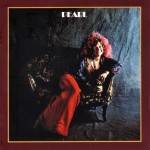 Joplin was working on Pearl at the time of her death. In fact, somewhat ironically, the tune “Buried Alive in the Blues” ended up on the album as an instrumental because she was supposedly going to record the vocals the day she died. Yet even though Joplin was not there to complete the album, it is clearly her most polished. Joplin was working on Pearl at the time of her death. In fact, somewhat ironically, the tune “Buried Alive in the Blues” ended up on the album as an instrumental because she was supposedly going to record the vocals the day she died. Yet even though Joplin was not there to complete the album, it is clearly her most polished.
Part of that is due to the fact it was produced by Paul Rothchild, who had produced The Doors (he gave up on the band in the midst of L.A. Woman while working on Pearl). Her voice and the arrangements seem more tailored for a wider audience, something which may have irritated her hard core fans. Additionally, the Full Tilt Boogie Band had a more traditional feel and provided great support for the songs.
Not only was Pearl Joplin’s best selling LP, it spun off a majority of the songs by her you’ll hear on radio today. Kris Kristofferson’s “Me and Bobby Magee” was the biggest hit but “Cry Baby” also achieved popularity. I’ve never been a huge Joplin fan but the last four cuts on Pearl are my favorite slice of her work — “Me and Bobby Magee,” the one off “Mercedes Benz,” and, especially, “Trust Me” and “Get It While You Can.”
Undoubtedly, the notoriety of Joplin’s death helped the sales of this posthumous release. That morbid attraction, though, doesn’t undercut the quality of the album. Fans and newcomers alike were treated to a display that showed her talents went far beyond simply belting out hard-edged, whiskey-tinged blues.
Don’t you know when you’re loving anybody, baby
You’re taking a gamble on a little sorrow
But then who cares, baby
‘Cause we may not be here tomorrow, no
“Get It While You Can,” Janis Joplin, Pearl
The question of whether bloggers are journalists is raised indirectly by differences in legislation introduced this month in the U.S. House and the U.S. Senate to provide certain legal protections to journalists.
Both bills call themselves the Free Flow of Information Act and seek to create a federal “shield law.” Broadly speaking, shield laws protect reporters from having to disclose confidential or unpublished information in response to subpoenas or court orders unless certain conditions are met. It has been an ongoing debate for several decades and the advent of blogs adds another layer to the debate.
The House bill applies to efforts to obtain testimony or documents from “a covered person” that is related to information that person obtained or created “as part of engaging in journalism.” The bill defines “journalism” as “the gathering, preparing, collecting, photographing, recording, writing, editing, reporting, or publishing of news or information that concerns local, national, or international events or other matters of public interest for dissemination to the public.” The definition of a covered person is similar but contains significant qualifiers: their journalism work must account “for a substantial portion of the person’s livelihood or for substantial financial gain[.]” Although the term “substantial” is not defined, it would seem to exclude the average blogger.
The Senate bill takes a broader view. Although it has a similar definition of journalism and defines a “covered person” as someone “who is engaged in journalism,” it contains no language about the income generated by those activities. While does require the activities be “regular,” implying they are engaged in more than infrequently, it would arguably allow anyone who routinely uses a blog to report or publish information about events and matters of public interest to invoke the law.
I have mixed feelings, part of which stem in part from semantics from having worked as a professional journalist. I don’t believe what I do here or what you see on most blogs is “journalism.” From that standpoint, I can understand the reasoning behind the House approach. At the same time, since I handled the case that recognized a “reporter’s privilege” in South Dakota, I understand the importance of the concept. Moreover, some bloggers are, in fact, gathering and publishing information on matters of public importance. The fact they do so for little or no recompense shouldn’t deprive them of protection.
To a certain extent, any debate created by the bills is relatively limited. Even if the Senate version passed, the law would apply only to federal authorities. It would not preclude state and local authorities from seeking such information if the state has no shield law or its shield law is drafted in such a way as to potentially exclude bloggers. Yet to the extent blogging has led to a debate over classification or the legislation would set a standard or example for the states, the ongoing discussion is important.
With mass communications concentrated in a few hands, the ancient faith in the competition of ideas in the free marketplace seems like a hollow echo of a much simpler day.
Kingman Brewster, Jr., Time magazine, Sept. 26, 1969
Aside from wishing everyone a happy Hockey Day in Canada, this edition consists entirely of Bookish Linkage:
Sure, another book I had to buy: Tranquility, by Hungarian author Attila Bartis, won the first ever Best Translated Book Award.
I’m guessing there’s a reason (or several) why Philip K. Dick’s widow couldn’t find a publisher.
Speaking of PKD, a fan site has a PDF of a lengthy 1975 Rolling Stone article on the author.
The Believer Book Awards short list is announced. I haven’t read any of them.
And speaking of awards, the short list for the Diagram Prize for Oddest Book Title of the Year has also been announced.
If you want to keep up on the items related to banning pre-1985 children’s books due to lead concerns, Overlawyered is keeping close tabs on the subject.
Giving me a new idea is like handing a cretin a loaded gun, but I do thank you anyhow, bang, bang.
Philip K. Dick, The Selected Letters of Philip K. Dick 1977-1979
|
Disclaimer 
Additionally, some links on this blog go to Amazon.com. As an Amazon Associate I earn from qualifying purchases. There is no additional cost to you. Contact me You can e-mail me at prairieprogressive at gmaildotcom.
|