|
|
Random Observations
I did it again. Even though I watched the halftime performance Sunday night, I forgot Springsteen tickets went on sale Monday morning. Making it worse, it didn’t sink in until the middle of the night Monday. Of course, perhaps that should be expected from someone who turned the Super Bowl off at the end of the third quarter.
Once again there are complaints about the ticket process, which some called a disaster. And I’m sure it was worse this time around given the millions who had an introduction to the E Street Band live on Sunday night. Even Springsteen’s web site had a letter to fans about the problems.
The “Ya think?!?!?” blog post summary sentence of the week (and a strong candidate for the entire year, if not the decade): “Allegations that the former C.I.A. station chief in Algiers may have filmed himself having sex with women he drugged and raped could impair efforts to improve relations between the United states and the Islamic world.”
Bookish Linkage
Locus has posted its 2008 recommended reading list. The SF category reflects how litte of the genre I read last year as I got to none of the books that made that list (although I have been waiting for the US release of Ken MacLeod’s The Night Sessions). In fact, the only thing on the entire list I read was Cory Doctorow’s YA novel, Little Brother.
An interesting new addition to the blogosphere: The Law and Science Fiction.
Would you pay $5 to jump the line for reserves on popular books and DVDs at the library?
I’ve been in four of the stores on this list of the 10 best independent bookstores in North America. Of those four, it would be tough to pick between Elliott Bay Books in Seattle or Tattered Cover in Denver for my favorite.
Nonbookish Linkage
One “expert’s” opinion of what constitutes the 100 most beautiful English words.
And for grammarians: a British city has banned apostrophes in street signs, evidently because its hard under the queens English to know if theyre supposed to be used in place names.
I figure the odds be fifty-fifty
I just might have something to say
“Fifty-Fifty,” Frank Zappa, Over-Nite Sensation
I’ve often posted about what I call my illiterati status. In other words, despite all the books I’ve read there’s a lot of canonical authors I haven’t read. Well, I’m pleased to announce that at least one British author, James Delingpole, has given us all permission not to worry about the so-called canon.
Writing in The Telegraph, Delingpole seeks to assuage those who may not have read any of John Updike’s works before his death. But he really warms my heart as he explores the subject further:
You can still count as a civilised person, with the right to comment as much as you wish on the key literary issues of our time, without having read all the books you are supposed to have read.
Partly you’re excused by the issue of time. In the early 19th century, it might just have been possible for a sprightly reader with bags of leisure time to whizz through all the great novels that had ever been written. In the early 21st century, it’s an impossibility.
Mainly though, you’re excused by the fact that there’s no novelist out there so essential that an unfamiliarity with his work represents a crime against taste and good judgment.
But don’t take this view as a stance that no literary familiarity is necessary. Delingpole believes “there are certain key authors — most of them Dead, White, European and Male — who jolly well ought to be studied at school by virtue of the quality and intelligence and depth of their writing.” At the same time, “once you’ve had a reasonable grounding in sufficient ‘proper’ literature to form your taste, you should never again read a book out of duty.”
While I jokingly refer to this as support for being an illiterati, the fact is that if we want our country — or any country — to be a nation of readers, saying someone has a duty or obligation to read this or that author isn’t going to help. There are far too many books published each year, with more than 270,000 new titles and editions in both 2006 and 2007. Few of us even have the time to read the books that make the dozens of year end “best of” lists.
Whether it’s school English classes or even programs like The Big Read, we need to provide a grounding in traditional or new literary canons. Once that’s done, if people want to explore more such literature, that’s wonderful. But if they don’t, what does it matter. I don’t care if people are reading the Twilight series as long as it’s encouraging them to read
Our grandparents used to say that we must eat a peck of dirt before we die, and they were right. And you must read a lot of rubbish before you die, as well, because an exclusive diet of masterpieces will give you spiritual dyspepsia.
Robertson Davies, The Merry Heart
To a certain extent, Traffic reflected the the interband traffic that went on in British rock music in the late ’60s and early ’70s. Formed in 1967 by guitarist Dave Mason, drummer Jim Capaldi, woodwind player Chris Wood and you-name-it-he-can-play-it Steve Winwood, the band would see Mason come and go over the next few years and totally disband in 1969 as Winwood joined up with Eric Clapton in Blind Faith. But the group reassembled and, sans Mason, in November 1971 released The Low Spark of High Heeled Boys. The album, my favorite by the band, went gold on February 7, 1972.
 Opinions are split on whether Traffic was better with or without Mason. Notably, though, he wasn’t part of Low Spark or John Barleycorn Must Die, the first Traffic LP to go gold. There’s also no doubt the title track to Low Spark is probably one of the most heard Traffic songs today. That it has become a signature tune may alone speak to its quality. Opinions are split on whether Traffic was better with or without Mason. Notably, though, he wasn’t part of Low Spark or John Barleycorn Must Die, the first Traffic LP to go gold. There’s also no doubt the title track to Low Spark is probably one of the most heard Traffic songs today. That it has become a signature tune may alone speak to its quality.
With Low Spark, Traffic moved into somewhat jazzier territory. That change is seen from the opening cut. “Hidden Treasure” is a mellow, laid back tune featuring Wood on flute. It’s a good transition from the sound on the band’s prior, largely acoustic album, John Barleycorn Must Die. The 12 minute long title cut follows, expanding on the band’s tendency to embark on lengthy jams. The song quietly fades in with a piano riff that forms the basis for a slow-building jazz-tinged feel. The song meanders through its changes (some say too much and in too unfocused a fashion) before slowly fading away just as it faded in. But the combination of Winwood’s keyboard work and Wood’s sax make this a highly worthy tune.
Most of Winwood’s songs have the feel of “Hidden Treasure.” Although his electric guitar solos and riffs create more of a rock feel, “Many a Mile to Freedom” also has that laid back sense, one reinforced again by Wood’s flute. Similarly, the closing track, “Rainmaker” is reminiscent of the opening cut, opening with the flute up front, quiet guitar work and folk-like vocals but ending with funky jazz feel and a Winwood guitar solo.
This doesn’t mean there’s no rock on the album. Two songs sung by Capaldi, “Light Up or Leave Me Alone” and “Rock and Roll Stew,” are the hardest rockers. For some reason, though, the CD issues change the order of the songs. On the LP, “Light Up or Leave Me Alone” closed the first side whereas on CD “Rock and Roll Stew” follows the title cut. Thus, “Light Up or Leave Me Alone,” which opens with a guitar riff by Winwood, has a harder edge to his guitar work and closes with a nice guitar solo, was originally the first introduction to the rock feel of Low Spark.
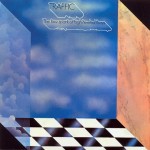
Low Spark, which actually reached number seven on the sales charts in the U.S., also highlights another of the things lost in the era of CDs. When the LP was released, the upper right hand corner and lower left hand corner of the album cover were gone, creating a rhombus and the look of a cube. That made it distinct from every other LP in your collection. The rhombus, though, disappeared on later LP reissues and CD inserts in favor of a standard square. Thus, the only thing that makes the CDs distinct from others in your collection is the content.
If you had just a minute to breathe
And they granted you one final wish
Would you ask for something, like another chance
Title Track, Traffic, The Low Spark of High Heeled Boys
It didn’t take long. Within hours of Gov. Mike Rounds announcing he was proposing cutting all funding for the South Dakota Arts Council, the e-mails started flying. One I received even contained a sample letter to cut and paste and send your legislator (or the entire Legislature) urging reinstatement of that funding. And arts organizations aren’t alone in seeking to keep their funds in the budget. But is that realistic?
Let me be clear about one thing. I wholeheartedly support government funding for the arts and agree with the Arts Council that “access to the arts by all South Dakotans is intrinsic to the well-being of our communities and the state.” In fact, if I had my druthers, the arts would have a greater share of the budget and increase each year. Yet I have the same wish for for all levels of education, health care, roads and so on. And if wishes were horses…..
The fact is the state has a budget problem. When times are tight you have to cut back on spending. We do it in our personal lives and the state is constitutionally required to have a balanced budget. I certainly don’t think wholly eliminating arts funding is necessary. But those of us who support the arts must recognize that cultural activities are not and should not be exempt (although, ironically, the Arts Council is within the Department of Tourism and Economic Development, whose funds for tourism advertising and economic development are not proposed to be reduced). Look at some of the other cuts: $20.9 million from education, $15.3 million from health and human services, $4 million from public safety. The fact the $668,509 for the Arts Council seems like a drop in the bucket comparatively doesn’t mean other programs don’t have equally strong arguments to keep all their funding. Nor does it mean the pain should not be spread around.
Unquestionably, the pain of loss of or reductions in arts funding would be felt statewide. Take a look at the Arts Council’s 2008 annual report and you’ll see just how much impact it has. Just through its “challenge grants,” money has gone to arts councils in Aberdeen, Brookings, Deadwood-Lead, Rapid City, Sioux Falls and Yankton; theatre companies from the Prairie Repertory Theatre to the Black Hills Playhouse to community theatres in Aberdeen, Mitchell, Pierre, Rapid City and Watertown; and entities such as the South Dakota Art Museum, the Black Hills and South Dakota symphony orchestras, the Sioux Falls Jazz & Blues Society and the National Music Museum. Anyone who thinks these groups don’t, in the words of the Art Council, “contribute to vibrant, progressive communities [and] enhance the state’s quality of life” is oblivious to the real world.
That isn’t the only reason a total cut is ill advised? Not only does the money help generate federal funds, the economic stimulus package passed last week by the House includes $50 million for the National Endowment for the Arts. And if you claim arts funding isn’t important to economic development, you’re not using common sense.
There’s no easy answer but it strikes me the arts shouldn’t try to be untouchable given the other services and programs facing the axe. Patrons of the arts and artists need to recognize the necessity of state government living within its means but advocate that a proportional approach, not complete elimination, is the only sensible solution. For example, the education, health and human services and public safety cuts range from 3 to 3.7 percent of their total budgets.
Documenting how the arts impact sales tax or other revenues is important but the effort also needs to be ready to show where the money should come from. Is it reallocation of funds within the Department of Tourism? Should budget reserves be tapped for other essential items or for discretionary spending like the arts? Should changes in the licensing of or the state’s share in video lottery go for, say, artists in the schools? Should there be a quarter or half percent increase in the sales tax on “spectator events” for arts funding?
I don’t know if any of those is all or even part of the solution. What I do know is that in our current economic situation, the arts community cannot be or be perceived to be insular. If the arts are an essential part of our communities and culture, we must also recognize there’s a concomitant obligation to share the burden created when economic issues confront us all.
And the nation which disdains the mission of art invites the fate of Robert Frost’s hired man, the fate of having “nothing to look backward to with pride, and nothing to look forward to with hope.”
John F. Kennedy, Amherst College, Oct. 26, 1963
How do you choose what to buy from your local bookstore? Do you have a list, or just browse? What is the selection in your book store like? Do you find what you’re looking for? Do you feel pressured to buy the kind of books the store makes prominent?
I do both, although I have a tendency to forget the list. Although I often recall the names and authors of some books on my list, it is usually long enough and my memory bad enough to make me wish I had the list. As a result, I always make sure to have a list in my billfold whenever I’m traveling somewhere I might have the opportunity to visit a bookstore.
Even if I have the list with me, I will invariably browse. In fact, when I visit a bookstore in another city, I always browse for a while before I pull out the list. I do that because I may well come across something that yells out at me, “Take me home! Take me home!” At times, that cry is loud enough to drown out the books on my list.
While I admit I frequent the chain bookstore in town rather than an independent, it does have the advantage of a good selection. As might be expected, it tends toward the mass market but you can usually fine one or two copies of books that might otherwise fly under the mass consumption radar. I never feel pressured to buy the books on prominent display. I might learn of a book through a display but only its subject and content will lead me to buy it, not the fact the bookstore is pushing it.
If a book is worth reading, it is worth buying.
John Ruskin, Sesame and Lilies
|
Disclaimer 
Additionally, some links on this blog go to Amazon.com. As an Amazon Associate I earn from qualifying purchases. There is no additional cost to you. Contact me You can e-mail me at prairieprogressive at gmaildotcom.
|