|
|
An abbreviated edition this three-day weekend, so I’m kicking it off with a:
Valentine’s Day Pitch
 Although perhaps out of the ordinary, here’s one of the things I did for Valentine’s Day: made a contribution in memory of my dad, a World War II infantry lieutenant, to Honor Flight South Dakota. It’s a new organization hoping to provide WWII vets a free trip to the National World War II Memorial in Washington, DC. As the organization’s web site notes, “Most WWII veterans are in their 80’s and beyond and many no longer have the where-with-all to travel on their own.” So Honor Flight South Dakota wants to raise funds for at least four flights, with the first tentatively planned for May 1 and 2. Not only is the group fundraising, it is accepting applications from veterans and “guardians,” individuals who will travel at their own expense to accompany and provide assistance for veterans on the trip. You can donate right on the organization’s web site and obtain more information there. I know times are tight but for many of these vets time is even shorter. Although perhaps out of the ordinary, here’s one of the things I did for Valentine’s Day: made a contribution in memory of my dad, a World War II infantry lieutenant, to Honor Flight South Dakota. It’s a new organization hoping to provide WWII vets a free trip to the National World War II Memorial in Washington, DC. As the organization’s web site notes, “Most WWII veterans are in their 80’s and beyond and many no longer have the where-with-all to travel on their own.” So Honor Flight South Dakota wants to raise funds for at least four flights, with the first tentatively planned for May 1 and 2. Not only is the group fundraising, it is accepting applications from veterans and “guardians,” individuals who will travel at their own expense to accompany and provide assistance for veterans on the trip. You can donate right on the organization’s web site and obtain more information there. I know times are tight but for many of these vets time is even shorter.
Bookish Linkage
An interesting exploration of the significant difference between a book by a bilingual writer writing in English and a work written in a writer’s native language and then translated by someone else into English.
I posted To Kindle or Not to Kindle over at the KELO blogs.
Nonbookish Linkage
Want to know part of the reason Springsteen is so great? Read his account of the Super Bowl performance.
The Electronic Frontier Foundation has updated its Legal Guide for Bloggers.
They are just guys from Broadway and Main Street, but you wouldn’t remember them. They are too far away now. They are too tired. Their world can never be known to you[.]
“The God-Damned Infantry,” Ernie Pyle, May 2, 1943
Many people believe the U.S. is in a mess. But the history David Hajdu recounts in his latest book might provide a handy scapegoat: comic books. Stop and think about it. For nearly two decades, the men in the Oval Office — and even longer for Congress — have been of the generation that grew up reading comic books, a communication form claimed to amount to little more than “cultural slaughter of the innocents.”
The latter phrase is just one of many epithets — and laws — thrown at comic books from the 1940s through the mid-1950s, as Hajdu details in The Ten-Cent Plague: The Great Comic-Book Scare and How It Changed America. Recently released in a paperback edition, the book traces a popular culture battle between two generations, a battle of mores in which rhetoric outweighed fact and that often reflected societal change.
Here’s how bad comic books were, according to those who campaigned against them: “I think Hitler was a beginner compared to the comic-book industry.” “The old dime novels in which an occasional redskin bit the dust were classic literature compared to the sadistic drivel pouring from the presses today.” Comic books are “the greatest intellectual narcotic on the market…. Every hour spent in reading comics an hour in which all inner growth is stopped.”
Relying upon extensive interviews with those in the comic book industry and historical records, Hajdu shows the evolution of the war, its ebb and flow and its combatants and victims. The Ten-Cent Plague takes us from the earliest comics, such as the Katzenjammer Kids in the Sunday papers, through the evolution of not only comic books but how they spawned publications like Mad magazine. Once they graduated from booklet reprints of the Sunday funnies, comics relied heavily on crime stories, whether it was a detective, Superman or some other character. But adults began to view these comics not as cautionary tales but ones that undermined the morals of youth.
As early as 1940, one newspaper series accused “these lurid publications” of depending upon “mayhem, murder, torture and abduction.” In the years immediately following World War II, these claims found a wider audience among a populous no longer focused on a war (one in which comic book crime fighters helped battle the Axis). With no evidentiary basis, juvenile delinquency was laid at the feet of the crime comics. Communities throughout the country took steps to ban comics containing “objectionable material.” The city of Cleveland even assigned two police officers to a permanent comic book detail.
Government wasn’t alone. The Catholic Church and other organizations took stands against comics. They encouraged the public to boycott stores that sold comics and encouraged children to bring in comic books perceived as objectionable. The latter frequently led to public burnings of comic books. That, however, provoked a bit of a backlash, with the bonfires perhaps too closely resembling the all too recent book burnings by the Nazis.
Hajdu also shows how the comics industry wised up. In addition to creating a largely ineffective code, “romance” became the new focus. And like much of popular culture, imitation was the standard. At the end of 1947, only one romance comic was being published; three more were added in 1948. With the increasing criticism of crime comics during those years, though, there were 148 romance comics in 1950, issued by 26 different publishers. That didn’t necessarily make them any less subversive. At a time when domestic bliss was the mainstream story line, the comics rarely focused on happy couples. Rather, the stories often tended to suggest that domestic life in the suburbs was the equivalent of the “levels of Hell.”
But the romance fad, too, began to wane. The new focus became horror and the macabre. By the end of 1952, nearly one-third of all comics were of the horror genre, with more than a dozen publishers churning out 150 horror-oriented titles. And as the blood and gore increased, things got hot again, so hot that Congressional hearings were held across the country in 1953 and 1954, some of which were televised.
This is where The Ten-Cent Plague may be at its best. Hajdu compares and contrasts McCarthyism and the renewed attacks on comics as a cause of juvenile delinquency. “It was a bad time to be weird,” one comic book artist told Hajdu. “You were either a Communist or a juvenile delinquent.” He examines the lack of foundation for the “scientific” studies of the leading critic of the effect of comic books on youth. The book vividly details the televised hearings in April 1954, particularly the events leading to and the testimony of Bill Gaines, the owner of EC Comics. With one impromptu answer to a question, Gaines unwittingly helped seal the fate of comic books, the enactment of laws throughout the country regulating comic books and the adoption of a comic book code with provisions that, among other things, forbid “disrespect for established authority.”
The impact was dramatic. Some 18 months after Gaines’ testimony, EC Comics, once one of the major players in the industry, issued its last comic book. The only survivor was Mad, which EC moved to the magazine section of the newsstands. EC wasn’t alone. Between 1954 and 1956, more than half the comic books sold on newsstands disappeared and the number of titles dropped by nearly two-thirds. One of the more sobering aspects of the book is an appendix listing more than 800 individuals who were among the “artists, writers, and others who never again worked in comics after the purge of the 1950s.”
While The Ten-Cent Plague can tend to drag a bit at times, it seems to gain momentum as it moves toward this climactic moment. Moreover, Hajdu doesn’t focus just on the events but gives a feel for the people involved in the profession. And without coming right out and saying so, he leaves us with the conviction that if the country is messed up today, it certainly isn’t due to comic books.
The sentiment against comics was … kind of an anti-anti-elitism, a campaign by protectors of rarefied ideals of literacy, sophistication and virtue to rein in the practitioners of a wild, homegrown form of vernacular American expression.
David Hajdu, The Ten-Cent Plague

Do you read any author’s blogs? If so, are you looking for information on their next project? On the author personally? Something else?
I currently subscribe to the blogs of four authors in my RSS reader, three of them science fiction writers. While it is intriguing to hear what the authors are working on, I subscribe to these blogs because they go beyond that. The posts, ideas and concepts in each blog cover a huge range. The blogs are:
- John Scalzi’s Whatever (and I consider his post Being Poor, quoted below, to be one of my favorite blog posts of all time).
- The Scott Adams Blog by — you guessed it — Scott Adams. Even though “General Nonsense” is the most used tag, Adams goes far beyond the material that inspires the Dilbert comic strip (although Wally is one of my heroes) and delves into some fascinating stuff. Adams also has written far more than just comic strips.
- Charlie’s Diary by Charles Stross. As I’ve said before, Stross writes SF that can “make your brain hurt — but in a good sort of way.” His blog ranges from what he’s doing to what he’s working on to his opinions on all sorts of things.
- Ken MacLeod’s The Early Days of a Better Nation. MacLeod doesn’t post a lot but, like his books, it tends to be a mix of SF related material with the views of a Scottish leftist.
Being poor is thinking $8 an hour is a really good deal.
John Scalzi, Being Poor
He hadn’t toured since the spring of 1966. And when he did it was with The Hawks, who would become The Band. So when Bob Dylan and The Band joined forces for a short North American tour in January and February 1974, it was big news. More than 650,000 tickets were sold for the 40 shows they put on in 21 different cities in the course of six weeks. The last three shows on Feb. 13 and 14 in Los Angeles provided all but one of the songs on the double LP Before The Flood, released in June 1974.
 How much demand was there? Tickets were sold by mail only and it’s estimated more than twelve million were requested. While the tour would be the most successful in rock history to that time, the performers and promoters weren’t the only ones getting a cut. As one writer put it, “Ticket scalpers were as plentiful as suckerfish on a shark in some cities.” Although the most expensive tickets were supposed to be $9.50 (still a bargain considering that is the equivalent of roughly $40-$50 today), they were selling for $15 to $75 on the street and garnering an average price of $25-$30. How much demand was there? Tickets were sold by mail only and it’s estimated more than twelve million were requested. While the tour would be the most successful in rock history to that time, the performers and promoters weren’t the only ones getting a cut. As one writer put it, “Ticket scalpers were as plentiful as suckerfish on a shark in some cities.” Although the most expensive tickets were supposed to be $9.50 (still a bargain considering that is the equivalent of roughly $40-$50 today), they were selling for $15 to $75 on the street and garnering an average price of $25-$30.
Still, it was not only a unique opportunity, the shows — and the eventual LPs — presented a Dylan putting a kick-ass spin on many of his songs. Perhaps only Hard Rain, released two years later, presents more ferocious and biting live reworkings of Dylan’s songs. The album follows the format of most of the concerts, which generally consisted of 18-19 songs in two sets and one or two encores. Six songs with Dylan and The Band would open the show, followed by four or five songs by The Band and another three with Dylan before intermission. The second set opened with five or six acoustic songs by Dylan, the Band would then perform four songs before they joined to wrap up the set with three songs. The encores usually consisted of one or two songs by Dylan and The Band. In comparison, the first side of the first album in the Before the Flood, set is Dylan and The Band while side two is exclusively The Band. The first side of album two opens with three Dylan acoustic numbers, followed by three tunes by the Band. The final side is four tunes by Dylan and The Band, with “Blowin’ in the Wind” closing the album, which was the final encore song for about a quarter of the shows on the tour. Each LP is on one disc is the CD editions.
The attitude of Before the Flood is there from the start, as Dylan and The Band kick off with a highly up tempo “Most Likely You Go Your Way (And I’ll Go Mine).” The same feel carries over to songs that were originally softer, such as “Lay Lady Lay,” from 1969’s Nashville Skyline, and “Knockin’ on Heaven’s Door,” from the 1972 soundtrack to Pat Garrett & Billy the Kid. This is also a Dylan Dylan with a fuller, more mature voice. And with The Band, he puts different structures on many tunes, including “All Along the Watchtower” and “Highway 61 Revisited.” There is also a ferocious rendition of “Like a Rolling Stone” as the penultimate song on the LP.
It is important not to overlook The Band’s contribution to this record. From one standpoint, Before the Flood could serve as a live greatest hits production for it, particularly the way the two-LP set was packaged. More important, the sound and feel The Band provides now seem a precursor to the type of musicians Dylan has used throughout most his so-called Never Ending Tour. It is their style that helps add new layers to Dylan tunes that are classics. As such, this is a “must have” for fans of Dylan and The Band alike.
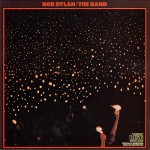
There is one final note perhaps worth mentioning. There are some claims the album cover started the tradition of saluting songs with lighters at concerts. But to me, that kind of begs the question. If it started the trend, then why are all the people on the cover holding lighters or matches in the air?
And if my thought-dreams could be seen
They’d probably put my head in a guillotine
But it’s alright, Ma, it’s life, and life only
“It’s Alright, Ma (I’m Only Bleeding),” Bob Dylan
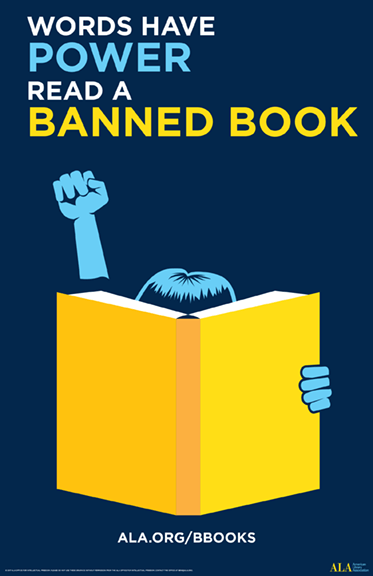
When thousands of children’s products, largely from China, were removed from shelves because of lead content, Congress decided it had to take action. That action, however, may lead to children’s books printed before 1985 being removed from the shelves of used bookstores and libraries.
The Consumer Product Safety Improvement Act (CPSIA), signed into law last August, was intended to address lead content in products intended for children. In a guide issued this week, even the Consumer Product Safety Commission recognizes it is “a sweeping new law.” Among other things, beginning February 10, children’s products cannot be sold if they contain more than 600 parts per million total lead. According to the guide, sellers of used children’s products aren’t required to test their inventory before selling items but (and there’s always a but)… resellers can’t sell products that exceed the limit and “unless they have testing or other information to indicate the products being sold have less than the new limit [they] could face civil and/or criminal penalties.”
So what does this have to do with books? Under the CPSIA, a children’s product is one designed or intended primarily for children 12 years of age or younger. The guide includes books in its list of such products, although it says children’s books “printed after 1985 that are conventionally printed and intended to be read, as opposed to used for play” can be sold. Plainly, the CPSC believes the law applies to children’s books printed before 1985.
What, then, is a used book store to do if it has such a book? Here are the “practical” options, according to the CPSC:
— Test the book;
— Refuse to sell it, which means disposing of it if already in inventory;
— Use “your best judgment” based on knowledge of the product; or,
— Contact the manufacturer.
I can summarize it more easily: test or toss. Of course, there is one other option not in the CPSC’s list. According to the guide, used “vintage children’s books … sold as collector’s items” are exempt because they are not primarily intended for children. I’m guessing, though, that renaming the children’s book section “Collectibles” probably won’t cut it.
But the law may even reach into the shelves of our public and school libraries. In a February 3 letter to four U.S. Senators and Representatives who expressed concern about requiring third party testing of books, CPSC Commissioner Thomas Moore wrote:
Libraries are extremely concerned about the impact of the lead provision on the children’s books on their shelves. I believe that our staff has come up with a supportable “bright line” [the 1985 cutoff date] to guide libraries as to what books we will deem not to pose a problem and which ones should be sequestered until we get more information from the publishing and ink manufacturing industries. The book publishers have asserted that children’s books pose no problems, but we know that the ink used in children’s books prior to the 1980’s did contain lead.
We haven’t gotten the kind of information we need about all the components of children’s books to be able to issue them a blanket exemption. The industry has made assertions and done very limited testing, but the Act requires more, as it should, before we can exempt a children’s product from the lead content requirements of the law. We cannot act on the “everyone knows children’s books don’t contain lead” and “historically there has never been a problem with lead in children’s books” assertions, particularly when we now know that children’s books have indeed contained lead in the past.
(Emphasis in original.)
This all seems totally mind boggling. Assuming the ink in books published prior to 1985 did contain some lead, what is the method of exposure? Is it taking too deep a whiff of that book smell? Is it truly being a bookworm and eating the pages of the book? Is it the ink rubbing off on the hands? How many pages must be consumed or touched before it poses a health hazard? From a common sense standpoint, if these books are so dangerous, why aren’t baby boomers like me who grew with a book always in hand dying from lead poisoning? If it’s the ink that is the problem, then I’ve been absorbing lead for about five decades with no ill effects (although some may claim they see a mental impact).
I’ll admit I am not familiar with any evidence submitted regarding the presence of lead in children’s books or books as a whole. But it strikes me that to ban a product (and, yes, this is essentially banning books), the burden of proof must rest with the agency, not a library or used book store. No one wants to downplay the danger lead poses to children but the lead risk associated with books doesn’t seem at all comparable to eating lead paint chips off walls or sucking on toys made or coated with lead. It certainly seems that in a desire to show it was responding to lead in products imported from China, Congress again failed to grasp the ramifications of its legislation and an administrative agency isn’t willing to yield any power it’s been granted.
Oh, by the way, if you want to raise a stink with your U.S. Senator or Representative, good luck. Not only did the bill pass the House 424-1, Rep. Stephanie Herseth Sandlin was a co-sponsor of the legislation. The bill also sailed through the Senate 89-3 and both Sen. Tim Johnson and Sen. John Thune voted for it.
Any one of the strange laws we suffer is a compromise between a fad and a vested interest.
G.K. Chesterton, Fancies Versus Fads
|
Disclaimer 
Additionally, some links on this blog go to Amazon.com. As an Amazon Associate I earn from qualifying purchases. There is no additional cost to you. Contact me You can e-mail me at prairieprogressive at gmaildotcom.
|