|
|
There’s some great news in the latest reading study by the National Endowment for the Arts. “For the first time in the history of the survey — conducted five times since 1982 — the overall adult literary reading rate has risen (from 46.7 percent in 2002 to 50.2 percent in 2008).” It isn’t all necessarily good news, though. Among other things, the U.S. adult population now breaks into two almost equally sized groups — readers and non-readers — and while those adults who read a book not required for work or school have grown in absolute numbers, they have declined slightly as a percentage of the population.
Rather than looking at the divisions, though, it’s probably best to celebrate the goods news. What’s especially exciting is that literary reading (defined as any novels, short stories, poems, or plays) increased most rapidly among the youngest adults. The percentage of adults age 18-24 who read literature grew nearly nine points whereas from 1982 to 2002 their literary reading rate fell by 24.2 percent, the steepest rate of decline among all adult age groups. The only age group that showed a small decline in its reading rate is my own, ages 45-54. Their rate dropped 1.3 percent but the survey says that is not “statistically significant.”
Other items of interest:
- Nearly half (47 percent) of all adults read a novel or short story in 2008.
- The absolute number of literary readers is now the highest in the history of the NEA survey whereas in 2002 the number of adult literary readers fell by more than four million.
- After declining between 1982 and 2002, men increased their reading of literature at an 11 percent rate between 2002 and 2008. While the rate for women reading literature only grew at a five percent rate from 2002 to 2008, they still read more literature than men.
- For adults who read online articles, essays, or blogs, the book-reading rate is 77 percent and nearly 15 percent of all U.S. adults read literature online in 2008.
- Of those who read literature online, 46.3 percent said they enjoy reading mysteries compared to 32.2 percent for thrillers, 29.4 percent for science fiction, 23.3 percent for romance and 40.1 percent for “other fiction.” That’s not much different from those who read a novel or short story, where 53 percent said they enjoy reading mysteries, 40.8 percent “other fiction,” 32.6 percent thrillers, 28.5 percent romance and 25.4 percent science fiction.
The NEA says it has no statistical answer to why literary reading rates increased but believes it “is not a school-based trend but a broader, community-wide phenomenon” spurred on by families, schools, and communities making reading a higher priority.
Cultural decline is not inevitable.
Preface, Reading on the Rise
Random Observations
Kudos to Esquire magazine for picking Gerard Baker as the “headliner” from South Dakota when it sought “wisdom and advice” from someone in each state. Who is Gerard Baker? He is the first Native American superintendent of Mt. Rushmore National Memorial.
Further displaying my ignorance in economics, why is reduction in consumer debt a bad thing? Or are we just so locked into being a debt-based economy there’s no way to escape?
The Britannica Blog is starting a series on the 10 worst decisions by U.S. presidents. (Or if that’s not your style, there’s always the 10 worst popes of all time.)
Bookish Linkage
The fine folks at three percent now have a microsite devoted to the Best Translated Book 2008. I’ve actually read five of the 25 works on the longlist.
I guess this is one way to get your book published, although not one I would necessarily recommend.
The February Indie Next list is out.
Nonbookish Linkage
For some reason I don’t find this shocking: legal writing could be suffering because many law students “who use computers in the classroom do so to e-mail each other, surf the Web or play video games.”
I don’t want to brag (although I am) but I amazed myself by scoring 100% on this logical thinking test.
Space monsters?
Space porn.
Torturous advances won over generations can be lost by a single stroke of a myopic president’s pen or a vainglorious general’s sword.
David Mitchell, Cloud Atlas

It’s a week or two later than you’d expect, and it may be almost a trite question, but … what were your favorite books from 2008?
I’ve already posted my “best of” list but I’m going to interpret this to be the favorite books I read during 2008, regardless of when published or “best” this or that. Therefore, by genre and in alphabetical order, I offer:
Fiction
Guantanamo: A Novel, Dorothea Dieckmann
Home, Marilynne Robinson
Out Stealing Horses, Per Petterson
The Secret Scripture, Sebastian Barry
War and Peace, Leo Tolstoy
Nonfiction
The Forsaken: An American Tragedy in Stalin’s Russia, Tim Tzouliadis
The Geography of Bliss: One Grump’s Search for the Happiest Places in the World, Eric Weiner
The Great Derangement: A Terrifying True Story of War, Politics, and Religion at the Twilight of the American Empire, Matt Taibbi
The Travel Book: A Journey Through Every Country in the World, Lonely Planet (although not a book you just sit and read)
Young Stalin, Simon Sebag Montefiore
All we can know is that we know nothing. And that’s the height of human wisdom.
Leo Tolstoy, War and Peace
One thing that drives me nuts is hearing someone say a person avoided criminal charges or a conviction because of a “technicality.” That concept ignores the fact that, in most cases, the “technicality” is a legal right, usually found in something called the Constitution. So it really drives me nuts when people who should know better buy into this mentality. And it looks like that’s the case locally.
The local daily today had a front page story about how local prosecutors want the Legislature to “simplify drunken driving cases.” The solution? “As long as blood was drawn within two hours of driving and a chemical analysis came back over the legal limit of 0.08, a suspect would be presumed guilty.” That have an odd ring to anyone else’s ears?
The idea stems from the fact mathematical formulas are necessary to extrapolate from the blood alcohol test how drunk a person was when they were actually driving. Defendants can attack that with testimony or evidence that, for example, they took a couple drinks just before getting in the car so they weren’t legally intoxicated when driving but were by the time of the blood test. As a result, prosecutors want to create a presumption of guilt in the hopes it will produce more guilty pleas and fewer trials. To top it off, Joni Cutler, a local legislator and a lawyer who chairs the House Judiciary Committee, indicated she might sponsor the legislation and called the current situation a “technical loophole.”
Granted, I don’t practice criminal law and have never prosecuted or defended a DUI case. But comments like that essentially call the foundational concept of presumption of innocence a “technicality.” And I know the story asserts 27 states have such laws. So what? Didn’t our parents teach us you don’t jump off the cliff jut because everyone else is? While I certainly oppose drunk driving, creating such a presumption seems the functional equivalent of saying that any DUI defendant who testifies they drove before the alcohol got into their blood is committing perjury. It also seems to say South Dakota juries are incapable of judging the credibility of a DUI defendant who so testifies.
Yes, such a law would likely produce more guilty pleas and fewer trials because the odds are now stacked against the defendant. But since when is expedience more important than fundamental principles of justice?
The principle that there is a presumption of innocence in favor of the accused is the undoubted law, axiomatic and elementary, and its enforcement lies at the foundation of the administration of our criminal law.
Coffin v. U.S., 156 U.S. 432 (1895)
I’d wager a significant amount of money you’ve never heard of Holland, a Beach Boys album released on January 8, 1973. Various critics and longtime fans weren’t overly impressed. But it’s the only Beach Boys album I ever bought.
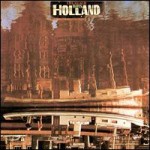 While there were a few Beach Boys tunes I liked, I wasn’t big into their sound. I never understood — and still don’t — the fervor and praise for Pet Sounds. And while Holland, named for the country in which it was recorded, is the only Beach Boys album I had, I really bought it only for side one. In fact, it is almost exclusively for the three-part song “California Saga,” an ode to the California coast between Monterey and Morro Bay. While there were a few Beach Boys tunes I liked, I wasn’t big into their sound. I never understood — and still don’t — the fervor and praise for Pet Sounds. And while Holland, named for the country in which it was recorded, is the only Beach Boys album I had, I really bought it only for side one. In fact, it is almost exclusively for the three-part song “California Saga,” an ode to the California coast between Monterey and Morro Bay.
Some have panned “California Saga” as tree-hugging hippie twaddle. In fact, when the band brought the LP to their label, it was rejected because it didn’t have any hit material. That sent Brian Wilson to finalize and the band to record in California “Sail On, Sailor,” a song Wilson had hanging around for a few years. Even then, the recod company supplemented the release with an EP of a Wilson musical fairy tale, “Mount Vernon and Fairway.” The label’s views led to “Sail On, Sailor” opening the album and it is an inviting and enjoyable introduction. The momentum is quickly lost, though, by a sluggish Dennis Wilson tune, “Steamboat.” But then “California Saga” closes the first side and you can forget “Steamboat.”
“Big Sur,” written and sun by Mike Love, opens the “saga.” It is a fun and not overly serious ode to the Big Sur area. The middle of the trilogy admittedly is a bit pretentious with the very serious intonation of the 1936 Robinson Jeffers poem “The Beaks of Eagles,” which also serves as the name of the song. Yet the pretentiousness is interrupted and eased by a song with poppy, upbeat and wholly enjoyable lyrics by Al Jardine between the poem’s stanzas. The trilogy closes out with the Jardine-written and Love-sung “California,” a tune which illustrates the best of the band’s California sound and details an upbeat enjoyment of the Monterey/Big Sur/Salinas area.
How much impact did “California Saga’ have on me? I’d never been to that part of California so I don’t know why the song grabbed me. It took another 15 or so years after the LP was released for me to finally get there. Perhaps fueled in part by the song, it was love at first sight. The area became one of my favorite places on the planet, so much so that during the ’90s my family and I spent six weeks or more traveling up and down the Pacific Cost Highway (Highway 1) between Monterey and Morro Bay. And there is absolutely nothing like approaching the Bixby Creek Bridge with “California Saga” blasting from the speakers. It is an incomparable experience.
While my personal experiences now make me enjoy Holland that much more, the album still doesn’t seem to get a lot of love. You can’t buy just Holland on CD. Instead, it comes bundled with the 1972 release, Carl and the Passions – “So Tough” and without the Holland cover art. I don’t care really because whenever I listen to “California Saga” now, I’m immediately taken to one of my happy places.
Big Sur I’ve got plans for you
Me and mine are going to
Add ourselves to your lengthy list of lovers
“California Saga: Big Sur,” The Beach Boys, Holland
|
Disclaimer 
Additionally, some links on this blog go to Amazon.com. As an Amazon Associate I earn from qualifying purchases. There is no additional cost to you. Contact me You can e-mail me at prairieprogressive at gmaildotcom.
|