|
|

I receive a lot of review books, but I have never once told lies about the book just because I got a free copy of it. However, some authors seem to feel that if they send you a copy of their book for free, you should give it a positive review.
Do you think reviewers are obligated to put up a good review of a book, even if they don’t like it? Have we come to a point where reviewers *need* to put up disclaimers to (hopefully) save themselves from being harassed by unhappy authors who get negative reviews?
I addressed this somewhat indirectly before, including a lengthy quotation from an e-mail I received from one author very unhappy with what I said about his book. As that prior post would indicate, I don’t believe reviewers are “obligated” to authors, regardless of how they got the book. The only obligations reviewers have are to their own sense of integrity and to the people who may read the review.
I can imagine a situation where I dislike a book so much that rather than post a review I would tell the author or PR person that I’ve decided not to review it. Fortunately, that hasn’t happened yet, at least on books that have been provided to me for review.
As for disclaimers, I don’t think I need to give one to “save” myself if an author is unhappy. The review is simply my opinion and nothing more. Whether others agree or not doesn’t really matter; they are entitled to their own opinion. And just as I have the right to express my opinion, authors certainly have an equal right to express their opinions about what I write — even if some authors think reviewers are “unjustifiably enthusiastic.”
As indicated, I do feel an obligation to those who may read this blog. I think they need to know that some of the material I review comes gratis and that I might get a spiff from Amazon if they buy something after clicking on an Amazon link here. The latter has amounted to a whopping $8.09 this year. The amount is irrelevant. The fact I may get something is relevant. That’s why this site addresses both those topics, and others, in my Reader Pledge.
A critic is a bundle of biases held loosely together by a sense of taste.
Whitney Balliet, Dinosaurs in the Morning
So is it the quality of the songs or the fact John Lennon was murdered three weeks after Double Fantasy was released that makes it special?
 There’s a lot of good things to say about Double Fantasy. But there’s an equal amount of bad, with bad spelled Y-o-k-o O-n-o. While you don’t criticize a friend for their choice of spouse, it doesn’t mean you have to like what the spouse does. With hindsight, it’s a shame Lennon’s last LP — and his first in five years — contained an equal number of his songs and Ono tunes (using that word loosely). There’s a lot of good things to say about Double Fantasy. But there’s an equal amount of bad, with bad spelled Y-o-k-o O-n-o. While you don’t criticize a friend for their choice of spouse, it doesn’t mean you have to like what the spouse does. With hindsight, it’s a shame Lennon’s last LP — and his first in five years — contained an equal number of his songs and Ono tunes (using that word loosely).
Released on Nov. 17, 1980, Double Fantasy shows a different John Lennon. His songs are about domestic life (“Cleanup Time”) or son Sean (“Beautiful Boy (Darling Boy)”) but mostly about Yoko (“Dear Yoko,” “(Just Like) Starting Over,” “Woman”). They reflect his recent life as a stay-at-home dad. There’s no political message or “bagism.” For the most part, it is a mild and mellow Lennon showing. among other things, that he can write “silly love songs” as well as, if not better than, anyone.
While evidently seeking to paint a sonic portrait of a couple making a complete whole, alternating virtually every Lennon track with one of Ono’s songs is grating. Had there just been Lennon tunes or fewer Ono songs, Double Fantasy would have been vastly improved. I think it’s more than a safe bet that the album hit number one and won a Grammy for Album of the Year solely on the strength of Lennon’s contribution.
Fortunately, somone who recorded their own cassettes (or CDs today) could create a version with only the Lennon songs — and have room to work in earlier personal favorites. Still, question exists whether the Double Fantasy material would have held up to scrutiny had there been subsequent new Lennon albums. Some could — and do — view it as almost too domesticated and nice.
Regardless of our views of Ono or her songs on this release, there is some measure of satisfaction knowing Lennon’s last recordings were good songs and that he was happy. What else would you wish for a musician?
Life is what happens to you
While you’re busy making other plans
“Watching the Wheels,” John Lennon, Double Fantasy

WHAT ARE YOU READING RIGHT NOW?
Hunger by Norwegian writer Knut Hamsun. A book I recently read on the siege of Leningrad during World War II mentioned this book containing among the most powerful descriptions of the stages of hunger. The novel, written in 1890, stuck in my head and I decided to pick it up on a recent online order.
WHAT DID YOU RECENTLY FINISH READING, and WHAT DID YOU THINK OF IT?
This weekend, I completed Biografi: A Traveler’s Tale by Lloyd Jones. It documents Jones’ travels through Albania in 1991 in search of the man reputed to be the body double for Albanian dictator Enver Hoxha. Only after the book was published in 1993 did Jones reveal the body double he found and traveled with in the story was fictional. Biografi remains a very interesting look into life in Albania following the collapse of communism and the made-up biography of the body double perhaps serves as the ultimate biografi, the files compiled on virtually every Albanian citizen, often containing as many, if not more, falsehoods than truth. Still, knowing the character at the center of the story was made up, I wondered about virtually every other character and conversation in the book.
WHAT DO YOU THINK YOU WILL READ NEXT?
Either Mikhail Bulgakov’s White Guard or Ferenc Karinthy’s Metropole, both of which I have at home and are on recent Bibliolust lists.
WILL YOU READ ANY HOLIDAY-THEMED BOOKS SOON?
Extremely unlikely unless a new and worthwhile Festivus book is released. To date, though, I have not been impressed with the Festivus titles.
Books are like imprisoned souls until some one takes them down from a shelf and reads them.
Samuel Butler, The Note-Books of Samuel Butler
Bruce Springsteen has confirmed that a new album, Working on a Dream, is set for released on January 27, one week after Barack Obama’s inauguration. As I noted before, Springsteen debuted the title song at a Nov. 2 Obama rally in Cleveland and dedicated it to Obama. It also comes just five days before Bruce and the E Street Band play the Super Bowl halftime show. (Ninety seconds of the song aired during the halftime highlights on last night’s Sunday Night Football on NBC.)
The album, recorded with the E Street Band, will have 12 new Springsteen compositions plus two bonus tracks. According to Springsteen’s web site, the songs are:
1. Outlaw Pete
2. My Lucky Day
3. Working on a Dream
4. Queen of the Supermarket
5. What Love Can Do
6. This Life
7. Good Eye
8. Tomorrow Never Knows
9. Life Itself
10. Kingdom of Days
11. Surprise, Surprise
12. The Last Carnival
Bonus tracks:
The Wrestler
A Night with the Jersey Devil
Now that’s hope I can deal with.
The sun rise up, I climb the ladder
The new day breaks and I’m working on a dream
“Working on a Dream,” Bruce Springsteen
Oxford University, evidently having a wide range of things to study, came up with a list of the ten most irritating phrases. I thought I’d check and see just how irritating I have been on this blog, so here’s how often those phrases have been used here.
10 — “It’s not rocket science.” Never used.
9 — “24/7” Used twice. The first time it was a direct quote from a press release announcing Sirius was going to launch a Bruce Springsteen channel. A subsequent post about that channel mentioned that even for fans like me all Bruce all the time could could get repetitive.
8 — “Shouldn’t of” Never used. Why is this irritating? The correct phrase is “shouldn’t have.”
7 — “It’s a nightmare.” Never used.
6 — “Absolutely.” Although I have used the word as an adjective many times, I have never used it in the context Oxford dislikes. It is annoyed by the word being used as an equivalent to yes, such as when you ask someone if they enjoyed something and the response is, “Absolutely!”
5 — “With all due respect” Never used, at least on the blog. I admit using it as an introductory phrase when I am going to disagree with a judge on a particular point.
4 — “At this moment in time” Never used.
3 — “I personally” Ooops, used this one nine times. But I still consider that relatively minor given the number of words I’ve used in nearly 1,300 posts over the course of more than five years.
2 — “Fairly unique” Never used, which somewhat surprised me.
1 — “At the end of the day” Never used.
Given my track record to date, I feel somewhat compelled to say: With all due respect, at the end of the day I personally think it’s not rocket science or fairly unique to know I shouldn’t of used these phrases at this moment in time, let alone 24/7. Absolutely!
Rocket science has been mythologized all out of proportion to its true difficulty.
John Carmack, October 2002
|
Disclaimer 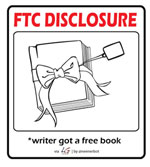
Additionally, some links on this blog go to Amazon.com. As an Amazon Associate I earn from qualifying purchases. There is no additional cost to you. Contact me You can e-mail me at prairieprogressive at gmaildotcom.
|