|
|
Rotus at I’ll Never Forget the Day I Read a Book tagged me with the Bookworm Awards meme. His rational? He was targeting people “who regularly read ACTUAL BOOKS and sometimes review them.” As I do resemble that remark, I guess I’m it. The rules:
Open the book closest to you, not your favorite or most intellectual book, but the book closest to you at the moment, to page 56. Write out the fifth sentence, as well as two to five sentences following there.
Technically, the book closest to me is the telephone book but I’m guessing that isn’t the type of book that is appropriate for the meme. And while my bookshelves are behind me, the closest one in the “to shelve or donate?” container is The Taker And Other Stories, a collection of short stories by Brazilian writer Rubem Fonseca.
The fifth sentence on page 56 is from the story, “The Enemy,” one of the longer stories in the book. It picks up in the midst of a conversation between the narrator and a stranger at a party the narrator believes is at a house owned by Mangonga, who he went to school with 20 years before:
“What do you mean he’s not called Mangonga?”
The conversation continues for the balance of the page, but the next several sentences are:
“He invited me, opened the door for me, a guy with a big belly”
“Big belly? Almost everybody here has a big belly, even the women.”
“Mangonga, the owner of the house,” I insisted.
“The owner of the house is that guy over there. He’s got a thing for the national anthem; he gets turned on by listening to it, can’t go to bed with a woman unless he hears the national anthem. Weird guy.”
The passage is just slightly indicative of Fonseca’s work. His stories and characters are a little (or more) off center and focus on the dark side of life in Rio de Janeiro. In fact, the back cover blurb described the stories as portray lives and situations “where only overwhelming force can maintain order, and violence and deception are essential tools of survival” is highly accurate.
I am a man made of failure.
“The Enemy,” Rubem Fonseca, The Taker And Other Stories
Bulletin Board
I’m in the process of trying to decide what reading challenges to do next year. I’ve already decided to join Notable Books, kind of a reading challenge blog where you read and post reviews of books from notable lists as I figure I often use those lists. I’m also giving consideration to the Lost in Translation challenge given my continuing appetite for foreign lit.
Bookish Linkage
With the National Book Awards scheduled to be announced next week, an NYT columnist asks the question that came to my mind regarding Peter Matthiessen’s Shadow Country.
A new study indicates that fiction can be a significant help in understanding the problems of the real world.
Wish I’d said it: “But the pleasure of second-hand bookshops is not only in finding what you want: it is in leafing through many volumes and alighting upon something that you never knew existed, that fascinates you and therefore widens your horizons in a completely unanticipated way, helping you to make the most unexpected connections.”
Science Fiction Awards Watch is running its 2009 “Poll of Polls,” where you can pick your favorite of the novels that won this year’s major SF awards. My problem is, I only read one of them.
I didn’t mention Michael Crichton’s death last week because, for me, he had gone from author to advocate, one who also used his talent to besmirch critics.
Oh, oh. If the Literary Saloon says it is “in awe,” I may have to add 2666 to my list. But I share the feelings of Edward Champion, who is thinking of making it his Thanksgiving book.
Two days after its release, 2666 also made a list of must-have daunting doorstoppers.
Nonbookish Linkage
Mmmmm, lots of space porn.
What does Obama’s election mean for The Daily Show?
Just as Hunter Thompson was my “gonzo journalism” hero, Seymour Hersh was my investigative journalism hero. Coincidently, my first fulltime post-college journalism job was one once held by Hersh.
It’s easier to criticize somebody else
Than to see yourself
“See Yourself,” George Harrison, Thirty Three & 1/3
The latest issue of New Scientist contains a special section on SF. Among other things, it contains the picks of staff for various awards for SF books. Here’s a smattering:
Staff:
Best SF Book: The Hitchhiker’s Guide to the Galaxy by Douglas Adams
Runners-up: Frank Herbert’s Dune and Iain M. Banks’ Use of Weapons
Worst SF Book: “no clear winner” although the nominees included L. Ron Hubbard’s Dianetics“>Dianetics and Arthur C. Clarke’s 3001
Most recommendable to your mother: The Time Traveler’s Wife by Audrey Niffenegger
Most difficult to understand: Stanislaw Lem’s Imaginary Magnitude
Although Dianetics made its first appearance in a 1950 issue of Astounding Science Fiction magazine, the book has become the “first book” for Scientology. I’m sure the “Church” of Scientology would frown upon it still being considered a work of science fiction.
As for readers, this is how their votes came out for favorite SF book:
1. Dune
2. Foundation series
3. The Hitchhiker’s Guide to the Galaxy
4. Ender’s Game
5. Hyperion series
Of course, the special section also contains the obligatory article: Is science fiction dying?
The ships hung in the sky in much the same way that bricks don’t.
Douglas Adams, The Hitchhiker’s Guide to the Galaxy
There’s a fine, some might say invisible, line between a deep passion with an agitative edge and simply knowing that anyone with half a brain would realize you are right if they just opened their eyes or ears. Whether that line exists is also probably dependent on perspective, particularly in the case of Dave Thompson’s I Hate New Music: The Classic Rock Manifesto.
Those who grew up the era of classic rock likely will find Thompson’s manifesto reasonable, rational and, for the most part, right. Younger people might just consider him a curmudgeon putting down the music of younger generations.
Thompson’s thesis is straightforward. Good, let alone great, rock music is long dead, the victim of an an abundance of technology and a dearth of imagination. Thompson believes death occurred during a 10-month period in 1978 when eight particular records were released. Identifying the specific LPs may be too much a spoiler so suffice it to say the bands releasing the LPs were not only popular, those records would sell more than 30 million units before the century was out and all went platinum or multi-platinum.
I Hate New Music posits that technology made things too easy technologically and reliance on it moved music from innovation to simulation. The Beatles, the Rolling Stones and Jimi Hendrix recorded with analog equipment and tape and, depending on the year, a very limited number of tracks. Today’s digital age means only a keyboard or mouse is necessary to edit, change or even create layers and layers of notes, tones, sounds or vocals at will. The same is true with instruments. No one would mistake the sounds emanating from a mid-1970s Moog synthesizer for a guitar or saxophone. Today, computer software or a compact synth can replicate virtually any instrument.
The ability to simply press a button to achieve a particular result impacts not just production but essence. Thompson believes that although the highly engineered, multi-multi-multi-tracked and overdubbed releases of the recent past may sound impressive, there’s “something not there. It’s called humanity. The sense that the song was written by a human and performed by flesh and blood.” It isn’t just age causes Thompson to note in his prologue that you use to give a store clerk some money and, in return, receive “a piece of plastic in a cardboard sleeve, with lyrics and liner notes and a real neat picture. Not a microscopic computer file that you can only play through your tinny laptop speakers, and it still sounds like shit that’s been run over with a forklift truck.”
Comparison to the LP reveals other effects of technology. The songs on vinyl LPs are fixed in place and, absent actual physical intervention by the listener, their order remains that determined by the artist. Today, a listener can create their own or totally disregard song order. While more modern musicians may take that into account (and thereby perhaps eliminate or reduce any overarching theme or structure), it can truly be a sin mucking with the playing order of classic albums. As Thompson notes, “there are occasions when an album needs to be played in the order in which it was first envisioned, because to do anything else isn’t simply to distort the artist’s vision, it’s to demolish the very premise of the record itself.”
For example, what does selecting “shuffle” on an iPod do to side 2 of Abbey Road? Or, like Thompson, consider Emerson, Lake and Palmer’s 1973 release, Brain Salad Surgery. The composition “Karn Evil 9” takes up nearly 30 minutes and roughly two-thirds of the album. Even in three parts called impressions, it was too long to fit on one side of an LP. As a result, the band broke “First Impression” into two parts, part one appearing at the end of side one and part two opening side two. Thus, just seconds into side two you hear, “Welcome back my friends to the show that never ends.” While that means something if you’ve just flipped over the LP on the turntable, it means nothing in the midst of one long track on CD.
Some of Thompson’s opinions will irritate, or even anger, hardcore classic rock fans. It’s also likely many readers may wonder if or just how far Thompson’s tongue is in his cheek. Is his paean to the 8-track tape or his choice for the greatest post-70s band — a band that was a put-on from the outset — serious, irony or ironically serious? Regardless of the blend any reader may think he uses, the ultimate message is the same: rock music has lost something crucial and we’re worse off for it.
I Hate New Music doesn’t claim every rock album before 1979 was sterling and everything from then on was crap. Likewise, Thompson freely admits that even great classic rock bands, such as the Stones or the Who, succumbed and their music suffered. As always, exceptions can be found to the general rule. Those exceptions aside, though, Thompson sees no real heart in the rock music of the last 30 years, merely imitation, “the last, and sometimes the only, resort of the terminally unimaginative.”
You want to know why so many musicians in the ’80s had big hair? It was to deaden the remorseless repetitiveness of their own music.
Dave Thompson, I Hate New Music: The Classic Rock Manifesto

I’ve asked, in the past, about whether you more often buy your books, or get them from libraries. What I want to know today, is, WHY BUY?
Even if you are a die-hard fan of the public library system, I’m betting you have at least ONE permanent resident of your bookshelves in your house. I’m betting that no real book-lover can go through life without owning at least one book. So … why that one? What made you buy the books that you actually own, even though your usual preference is to borrow and return them?
If you usually buy your books, tell me why. Why buy instead of borrow? Why shell out your hard-earned dollars for something you could get for free?
I’ve already explained my library love but just as some people buy shoes or clothes or cars, I buy books. Look, I quit smoking some 16 years ago and it doesn’t take all 10 fingers to count the number of beers or alcoholic beverages I drink each year. A guy’s gotta have at least one vice and my wife says buying books is one she can not only tolerate, she’ll help. (That means she merely tolerates the hockey addiction.)
Besides, no public or university library has an unlimited budget. Given my somewhat eclectic (or odd) tastes, a number of books I’m interested in just aren’t available at the local library, such as the one I’m currently reading. I also lack the patience to hope that in a couple weeks or months a book I’m interested in might end up at the local used bookstore.
Finally, there’s something to be said for calling a book your own. All but two of my Desert Island Books are at the public library. But knowing I have them at home, part of my daily environment, has great albeit intangible importance to me.
Your library is your portrait.
Holbrook Jackson, Maxims on Books and Reading
|
Disclaimer 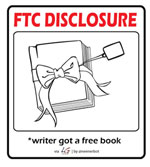
Additionally, some links on this blog go to Amazon.com. As an Amazon Associate I earn from qualifying purchases. There is no additional cost to you. Contact me You can e-mail me at prairieprogressive at gmaildotcom.
|