|
|
Just as the Christmas season now seems to begins right after Halloween (if not before), it also appears it is the kick-off time for “best of the year” lists. Both Amazon and Publisher’s Weekly have chimed in with their lists of the best books of the year. Interestingly, both list Roberto Bolaño’s 2666, even though it won’t be released until next week.
Here’s how my year’s reading stacked up with some of their selections:
Publishers Weekly
Fiction: 1 of 25
SF/Fantasy/Horror: 0 of 7
Mass Market: 0 of 5
Nonfiction: 1.5 of 27 (a .5 because I didn’t complete one but another is on my library “hold” list)
Amazon Editor’s Top 10
Literature and Fiction: 2
Science Fiction & Fantasy: 0
Biographies & Memoirs: 1 (not counting the one I quit reading about one-third in)
Current Events: 1
History: 0 (although one is in the to be read stack at home)
Amazon Top 10 by sales
Literature and Fiction: 0
Science Fiction & Fantasy: 0
Biographies & Memoirs: 1 (not the same in the editor’s list)
Current Events: 0
History: 1
So, it appears that regardless of whether it’s those who claim some expertise or the average consumer, I just don’t read the best books. That doesn’t mean I’ll spare you my personal best of 2008 list — only that I actually wait until the end of the year to compile it.
Popularity is the one insult I have never suffered.
Oscar Wilde, The Duchess of Padua
Recently, I’ve found myself listening almost incessantly to certain albums from the late ’60s and early ’70s. The “rediscovery” of this music leads to what I hope will become a weekly installment on the blog.
The focus largely will be on older albums for which the dates of the current week were important in the past. I might even touch on musicians or band and it may be something, like today, that I love or even something that sends me on a rant. Either way, the post will discuss the subject and my recollections and thoughts about it.
 I think having Abbey Road as the first album is appropriate. After all, no other band sits as high in the rock pantheon and, to the extent it is possible to single out one LP over another, it is probably my favorite Beatles album. It is the focus this week because it reached the top of the Billboard charts for the first time in the magazine’s November 1, 1969, issue. I think having Abbey Road as the first album is appropriate. After all, no other band sits as high in the rock pantheon and, to the extent it is possible to single out one LP over another, it is probably my favorite Beatles album. It is the focus this week because it reached the top of the Billboard charts for the first time in the magazine’s November 1, 1969, issue.
I still remember where I was the first time I heard the album. My then best friend and I snuck into his older brother’s room and listened to it on a turntable in there. Both the albums and turntable were off limits to us 13-year-olds. I can’t say I fell in love with it right away. I think the disjointed nature of the medley making up much of side two was a bit beyond my music comprehension at the time, particularly as side one kicked things off with “Come Together” and “Something” and side two itself opened with “Here Comes The Sun.” As the years went by and I honed my musical palate, though, it was actually the medley that pushed this up my list of favorite Beatles recordings.
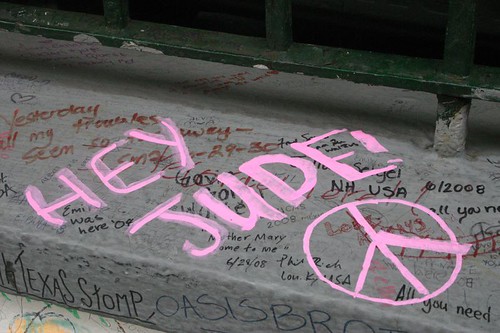
Of course, Abbey Road also became significant because even though Let It Be was released the following year, the music on Abbey Road was the last recorded before the Beatles split. The album also played a role in the the couple days my wife and I were in London in mid-July. As part of a Beatles walking tour in London, we saw and walked across the crosswalk the album cover made made famous (although it isn’t quite in its original location), as well as the graffiti-filled wall outside Abbey Road Studios.
Once there was a way to get back homeward
“Golden Slumbers,” Beatles, Abbey Road
Do you own multiple copies of any books? Which ones? Why?
I have several and for a variety of reasons. In alphabetical order, they include:
Ball Four — Jim Bouton’s diary-style look inside major league baseball was one of my favorite sports books in my teens, as evidenced by how beat up my papereback copy is. So, when I saw a hardbound 20th anniversary edition in a half-price book store, I had to have it.
A Canticle for Leibowitz — I still have my years old copy of this Hugo Award-winning postapocalyptic novel but when Eos reissued it a year or so ago, one of its reps was kind enough to send me a copy.
How to Talk Dirty and Influence People — I have long been a big fan of Lenny Bruce and my paper copy of his autobiography is virtually in tatters. When I saw an edition as one of the books I could get for re-enlisting with a particular book club I’d quit a few years before, I figured it didn’t hurt to have a copy that wouldn’t fall apart when I picked it up.
In the Spirit of Crazy Horse — I bought this book when it was first released in 1983, before I started law school later that year. Little did I know that after my graduation from law school I would work on the team representing Peter Mathiessen and Viking Press when former Gov. Bill Janklow sued them for libel. At the conclusion of the litigation, one of the other attorneys involved gave me a virtually pristine first edition of the book.
The Last Days of Hitler — I picked up a paperback edition of this sometime around high school or college. It turned out my parents had a first edition hardback that is now part of my collection.
The Man Who Turned Into Himself — I bought and read this book when it first came out in 1994. I was offered a review copy when it was reissued earlier this year and thought, why not?
The Sparrow — I love this book so much that when I came across a first edition hardback in the local used book store I figured it couldn’t hurt to have two first editions.
The Wanderer — Although I already had a copy of this Hugo-winning novel, I couldn’t resist it when I came across an what I believe to be the first paperback edition in very good condition in a second hand store. It now sits in protective material next to the copy I already had.
I am influenced by every second of my waking hour.
Lenny Bruce, How to Talk Dirty and Influence People
Another book list surfaces, this time USA Today‘s list of the top 150 best-selling books between Oct. 28, 1993 and Oct. 23, 2008. (The start date coincides with beginning of McPaper starting its own best-selling list.) Rather than bore you with what I’ve read and what I haven’t, I was intrigued by some of the items that appear on the list.
Not surprisingly, the Harry Potter series dominates the top 10. But the following books kind of caught me by surprise, considering we’re talking best-sellers after October 1993. They’re listed by their rank in the 150 with the original publication date in parentheses:
While the presence of a number of these is probably due to literature courses and reading groups, it’s interesting nearly 10 percent of the total are books nearly 50 years old or older. I strikes me as somewhat a consensus on works that might make up part of a 20th Century literary canon. (I don’t know if I’d accept a canon that didn’t have Green Eggs and Ham and Goodnight Moon in it.)
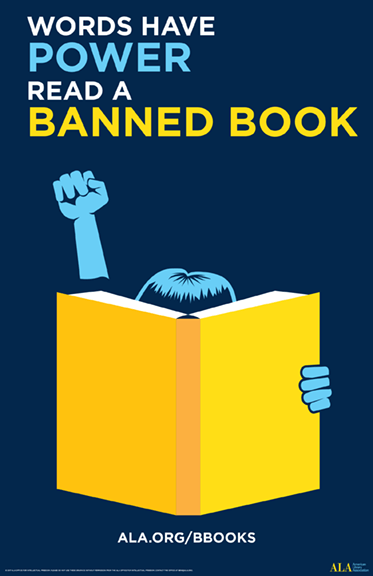
But there’s something else. I’ve placed asterisks after more than half the books listed above. They indicate the book has been challenged or banned in various schools and libraries. While that is frightening, maybe their presence on a best-selling list shows most Americans reject the concept of banning books.
The great drawback in new books is that they prevent our reading older ones.
Joseph Joubert, Pensées of Joubert
A (relatively) reasonable list of books for which I’ve developed a lust since last month’s installment. Methinks it has something to do with all the books I really want to get to that are already at home.
The Best Game Ever: Giants vs. Colts, 1958, and the Birth of the Modern NFL, Mark Bowden — I don’t think I’ve watched five minutes of an NFL football game this year. But considering the Baltimore Colts (there is and never will be any other Colts NFL team) and Johnny Unitas were among my sports favorites growing up, I couldn’t resist putting a hold on this at the library.
Death with Interruptions, Jose Saramago — I run hot and cold on Saramago’s work but the fact the local library just got this helped put Saramago’s take on “death takes a holiday” on the list.
Metropole, Ferenc Karinthy — I’m curious what it says about my tastes when I lust after a book whose plot is described as “a hell with no exit, the experience of the everyday when the normal has become monstrous.”
Prescription for a Superior Existence, Josh Emmons — When a review says a book “resembles something Philip K. Dick might have written,” I’m in.
Society without God: What the Least Religious Nations Can Tell Us About Contentment, Phil Zuckerman — A sociologist goes to Scandinavia to explore the worldviews of people who live their lives without religious orientation.
I managed to read three of the books on last month’s list: The Forever War, The Wasted Vigil, and Scattershot: My Bipolar Family. Meanwhile, I’m moving up the library “hold” list for Nothing to Be Frightened Of and am awaiting a review copy of I Hate New Music: The Classic Rock Manifesto. I also managed to start The Angel of Grozny: Orphans of a Forgotten War but other commitments kept me from completing it before I had to return it to the library.
Of the two books remaining unread from September’s Bibliolust, I read and enjoyed Per Petterson’s To Siberia while Mikhail Bulgakov’s White Guard remains in the TBR stack.
I require books as I require air.
Sholem Asch, NYT Book Review, April 28, 1940
|
Disclaimer 
Additionally, some links on this blog go to Amazon.com. As an Amazon Associate I earn from qualifying purchases. There is no additional cost to you. Contact me You can e-mail me at prairieprogressive at gmaildotcom.
|