|
|

What, in your opinion, is the best book that you haven’t liked? Mind you, I don’t mean your most-hated book–oh, no. I mean the most accomplished, skilled, well-written, impressive book that you just simply didn’t like.
With the standard being books I “just simply didn’t like,” there’s so many, largely due to my illiterati status. This year alone I could name Paul Auster’s Man in the Dark (an admirable premise that Auster lets slide into banality), Peter Carey’s His Illegal Self (another interesting premise that bored me by the end) and Roberto Bolaño’s Nazi Literature in the Americas (as I admitted at the time, I just don’t get it.
Going back a year or two I could add: The Reluctant Fundamentalist by Mohsin Hamid (way overhyped), The Mysterious Flame of Queen Loana by Umberto Eco (many of its references and allusions are obscure to an American reader) and Never Let Me Go by Kazuo Ishiguro (bad science fiction is still bad science fiction even when we’re told it is “literature”).
But the all-time champ is Solzhenitsyn’s The Gulag Archipelago. It likely has that fate because it was required reading for my freshman English composition class in college. Because I was enjoying college life so much, I considered it long, boring and pointless. I probably owe it to myself to read it again and see what 34 years does to one’s perspective.
…the line separating good and evil passes not through states, nor between classes, nor between political parties either — but right through every human heart — and through all human hearts. This line shifts. Inside us it oscillates with the years.
Aleksandr Solzhenitsyn, The Gulag Archipelago
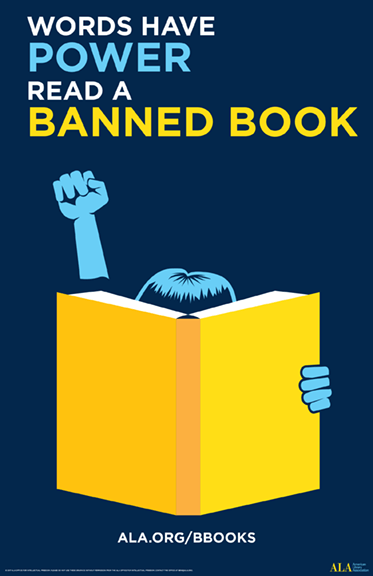
In the midst of Banned Books Week, President John F. Kennedy’s statement that “a nation that is afraid to let its people judge the truth and falsehood in an open market is a nation that is afraid of its people” is particularly pertinent. And is it just coincidence that the Kennedy presidency seems to be the last one most Americans seemed to trust? After all, Kennedy’s “Camelot” was followed by the “credibility gap” of Vietnam, Watergate, Iran-Contra and the run-up to the Iraq War. Distrust of Washington and the government is widespread.
That distrust undoubtedly motivates Mike Palecek’s Guests of the Nation, a short work that advocates that the attacks of September 11, 2001, were planned by the Bush Administration. The free speech principle summarized so well by Kennedy leads me to countenance Palecek’s book even though I don’t buy the arguments of the so-called 9/11 Truth Movement. But that admitted predisposition isn’t why I don’t like it.
Guests of the Nation details the detention and questioning of a man we know only as John by three FBI agents at New York’s JFK Airport. John is returning home from “9/11 Truth anniversary events.” During the interrogation, John dominates the discussion. He explains to the agents that, among other things, the WTC towers that collapsed did so because explosives were planted in them, the government actually arranged for the hijacked planes to land elsewhere and the passengers killed, that President Bush and others in the administration were fully aware of the plan, and that drones and replicas struck the towers and the Pentagon and crashed in Pennsylvania. These are just some of the elements of the various conspiracy theories advanced by the truth movement.
A novel is undeniably a legitimate vehicle to advocate these theories or any other political viewpoint. From a literary standpoint, though, Palecek falls short.
The biggest problem is a lack of character development. Granted, the story unfolds during a small part of one day but John is never really fleshed out. Although it is plain he is a vocal and dedicated “9/11 truth” advocate, we don’t know how he got there. Instead, he is largely a one-dimensional evangelist. Likewise, the FBI agents are little better than hollow stereotypes from central casting even though Palecek hints that some are actually open-minded to John’s contentions. There is a side story of an individual who worked for the Bush campaign in Florida that tends to leave more questions than it adds to the story. And while a novel need not document the analysis that underpins it, the various assertions are made without much reference to what leads John to believe them.
I’m not sure whether these failings are a reflection of or the reason for the length of the book. At 72 pages, it is far closer to a short story than a novel. In fact, the title comes from a short story by the Frank O’Connor. In addition, significant space on those pages present illustrations for the story and a variety of quotes from real individuals who question the 9/11 orthodoxy. When the illustrations are combined with the book’s 8 1/2 by 11-inch format, Guests of the Nation has the feel of, and perhaps would be better suited to, a graphic novel.
I commend Palecek for putting these ideas and beliefs into the marketplace for examination and discussion. Unfortunately, though, the flaws in the presentation may reduce the effectiveness of its advocacy.
They will stand for whatever you want — believe anything you want — as long as it only last a short time and there is promise of sex or beer or comfort or warm fuzzies somewhere in the distance that they can focus on — that is all they want.
Mike Palecek, Guests of the Nation
Here’s the books I’m lusting after currently:
The Angel of Grozny: Orphans of a Forgotten War, Asne Seierstad — I’ve always had an interest in those parts of the world that grab headlines and we then forget. Given it is written by the author of The Bookseller of Kabul, I have high hopes for this, which I’ve already picked up from the library.
The Forever War, Dexter Filkins — Since I’ve already started reading this perhaps it doesn’t qualify for the October list but I’m trying to avoid a twice-a-month lists. Whenever someone someone compares a book by a war correspondent to Michael Herr’s Dispatches, I’m going to take notice.
I Hate New Music: The Classic Rock Manifesto, David Thompson. I heard a brief debate between the author and another music critic on whether the 1970s represented the end of real rock music. While I don’t think I enjoy the same ’70s playlist as the author, I’m intrigued by the potential.
Nothing to Be Frightened Of, Julian Barnes. Okay, I admit a review in this coming weekend’s NYT Book Review put this one on the list. But I gotta lust after it when someone (Garrison Keillor actually) describes it as “a book that keeps rumbling and grumbling in the mind for weeks.”
Scattershot: My Bipolar Family, David Lovelace — Perhaps it’s like slowing at a horrible car accident, but I am drawn to memoirs of persons and families struck by mental illness. (Which reminds me, if you haven’t you should read Eden Express, Mark Vonnegut’s account of suffering from schizophrenia.)
The Wasted Vigil, Nadeem Aslam. This novel exploring the lives of five people in post-9/11 Afghanistan has been on my Amazon wishlist for two months.
As for the status of of September’s Bibliolust items:
Child 44, Tom Rob Smith — I just completed this and my perception is the setting and role of the setting — Stalinist Russia — is what has brought it positive attention. I found it perhaps an above average thriller/mystery but am somewhat surprised it made the Man Booker Prize longlist.
Home, Marilynne Robinson — Couldn’t resist. Had to go buy it. It’s not Gilead but still worthy because if you liked Gilead you’ll enjoy Home.
The Thing About Life Is That One Day You’ll Be Dead, David Shields — I don’t give up on a lot of books. This was a rare exception. It couldn’t decide it if wanted to be a collection of facts and figures, a look at aging ala Mary Roach or a memoir. It just seemed too muddled and directionless so I gave up about one-third of the way in.
The World in Six Songs: How the Musical Brain Created Human Nature, Daniel Levitin — Started to read this and while there wasn’t anything wrong with it I got swamped by other things. I returned it to the library so others would have an opportunity but may very well check it out again in the near future.
To Siberia, Per Petterson — Just came out yesterday. Still lusting but I’m number one on the “hold” list at the library. That may be good because, as noted, I’ve already got a couple books from there I need to read.
White Guard, Mikhail Bulgakov — I got this as a birthday present from my kids so it is also in the “to be read” stack.
I was born with a reading list I would never finish.
Maud Casey, Genealogy
As we hit the middle of Banned Books Week, here’s a round-up of various items related to it:
- Take the Banned Books Quiz. I scored 8 out of 13, which prompted the following response: “Rather ignorant, I’m afraid. You’re clearly reading in slavish obedience to the censors. Are you going to be voting for Sarah Palin?”
- Read why Philip Pullman says when he heard his The Golden Compass made the top five list of the most challwenged books of 2007, “my immediate and ignoble response was glee.”
- Pullman’s work appears on a list of banned SF and fantasy.
- Here’s one opinion on why Banned Books Week matters.
- John Okerbloom, who wrote the just mentioned piece, is also to be credited for his Banned Books Online exhibit.
- Here’s the ALA’s suggestions on ways to support Banned Books Week.
- Finally, this is what we really need to learning from talking about banned books: “What happens when our ideals require us to defend a piece of writing that is reprehensible, that stands against everything we stand for?” My view is freedom to read means just that. Freedom to read.
The books that the world calls immoral are books that show the world its own shame.
Oscar Wilde, The Picture of Dorian Gray
For this week’s Tuesday Thingers, I’ve copied the list of the most-challenged books of the 1990s straight from the ALA website. Highlight what you’ve read, and italicize what you have in your [Library Thing] library.
Because many of the books are aimed at school-age children, I haven’t read and don’t own a lot of them. Because my kids were growing up in the 1990s, though, I’ve added asterisks to those I am fairly certain they read or are in their individual “libraries” at home.
- Scary Stories (Series) by Alvin Schwartz
- Daddy’s Roommate by Michael Willhoite
- I Know Why the Caged Bird Sings by Maya Angelou ***
- The Chocolate War by Robert Cormier ***
- The Adventures of Huckleberry Finn by Mark Twain
- Of Mice and Men by John Steinbeck ***
- Harry Potter (Series) by J.K. Rowling ***
- Forever by Judy Blume
- Bridge to Terabithia by Katherine Paterson ***
- Alice (Series) by Phyllis Reynolds Naylor
- Heather Has Two Mommies by Leslea Newman
- My Brother Sam is Dead by James Lincoln Collier and Christopher Collier
- The Catcher in the Rye by J.D. Salinger
- The Giver by Lois Lowry ***
- It’s Perfectly Normal by Robie Harris
- Goosebumps (Series) by R.L. Stine ***
- A Day No Pigs Would Die by Robert Newton Peck ***
- The Color Purple by Alice Walker
- Sex by Madonna
- Earth’s Children (Series) by Jean M. Auel
- The Great Gilly Hopkins by Katherine Paterson
- A Wrinkle in Time by Madeleine L’Engle ***
- Go Ask Alice by Anonymous ***
- Fallen Angels by Walter Dean Myers
- In the Night Kitchen by Maurice Sendak
- The Stupids (Series) by Harry Allard
- The Witches by Roald Dahl
- The New Joy of Gay Sex by Charles Silverstein
- Anastasia Krupnik (Series) by Lois Lowry
- The Goats by Brock Cole
- Kaffir Boy by Mark Mathabane
- Blubber by Judy Blume
- Killing Mr. Griffin by Lois Duncan
- Halloween ABC by Eve Merriam
- We All Fall Down by Robert Cormier
- Final Exit by Derek Humphry
- The Handmaid’s Tale by Margaret Atwood
- Julie of the Wolves by Jean Craighead George
- The Bluest Eye by Toni Morrison
- What’s Happening to my Body? Book for Girls: A Growing-Up Guide for Parents & Daughters by Lynda Madaras
- To Kill a Mockingbird by Harper Lee ***
- Beloved by Toni Morrison
- The Outsiders by S.E. Hinton ***
- The Pigman by Paul Zindel
- Bumps in the Night by Harry Allard
- Deenie by Judy Blume
- Flowers for Algernon by Daniel Keyes
- Annie on my Mind by Nancy Garden
- The Boy Who Lost His Face by Louis Sachar
- Cross Your Fingers, Spit in Your Hat by Alvin Schwartz
- A Light in the Attic by Shel Silverstein ***
- Brave New World by Aldous Huxley
- Sleeping Beauty Trilogy by A.N. Roquelaure (Anne Rice)
- Asking About Sex and Growing Up by Joanna Cole
- Cujo by Stephen King
- James and the Giant Peach by Roald Dahl ***
- The Anarchist Cookbook by William Powell
- Boys and Sex by Wardell Pomeroy
- Ordinary People by Judith Guest
- American Psycho by Bret Easton Ellis ***
- What’s Happening to my Body? Book for Boys: A Growing-Up Guide for Parents & Sons by Lynda Madaras
- Are You There, God? It’s Me, Margaret by Judy Blume ***
- Crazy Lady by Jane Conly
- Athletic Shorts by Chris Crutcher
- Fade by Robert Cormier
- Guess What? by Mem Fox
- The House of Spirits by Isabel Allende
- The Face on the Milk Carton by Caroline Cooney ***
- Slaughterhouse-Five by Kurt Vonnegut
- Lord of the Flies by William Golding ***
- Native Son by Richard Wright
- Women on Top: How Real Life Has Changed Women’s Fantasies by Nancy Friday
- Curses, Hexes and Spells by Daniel Cohen
- Jack by A.M. Homes
- Bless Me, Ultima by Rudolfo A. Anaya
- Where Did I Come From? by Peter Mayle
- Carrie by Stephen King
- Tiger Eyes by Judy Blume
- On My Honor by Marion Dane Bauer
- Arizona Kid by Ron Koertge
- Family Secrets by Norma Klein
- Mommy Laid An Egg by Babette Cole
- The Dead Zone by Stephen King
- The Adventures of Tom Sawyer by Mark Twain
- Song of Solomon by Toni Morrison
- Always Running by Luis Rodriguez
- Private Parts by Howard Stern
- Where’s Waldo? by Martin Hanford ***
- Summer of My German Soldier by Bette Greene
- Little Black Sambo by Helen Bannerman
- Pillars of the Earth by Ken Follett
- Running Loose by Chris Crutcher
- Sex Education by Jenny Davis
- The Drowning of Stephen Jones by Bette Greene
- Girls and Sex by Wardell Pomeroy
- How to Eat Fried Worms by Thomas Rockwell
- View from the Cherry Tree by Willo Davis Roberts
- The Headless Cupid by Zilpha Keatley Snyder
- The Terrorist by Caroline Cooney
- Jump Ship to Freedom by James Lincoln Collier and Christopher Collier
As you can see, my children (now 17, 19 and 22) have read far more of these books than I have. And I have little doubt I’ve missed others on the list that they’ve read. At least they have had access to and been able to judge these books on their merits.
Better never means better for everyone, he says. It always means worse, for some.
Margaret Atwood, The Handmaid’s Tale
|
Disclaimer 
Additionally, some links on this blog go to Amazon.com. As an Amazon Associate I earn from qualifying purchases. There is no additional cost to you. Contact me You can e-mail me at prairieprogressive at gmaildotcom.
|