|
|
Brief reviews of a variety of books which, for whatever reason, I haven’t had the time or desire to write full reviews:
The Black Hills Yesterday & Today, Paul Horsted — A wonderful coffee table book about the Black Hills region in which photographer Paul Horsted found locations from which photos were taken from 1875 to 1935 and “re-photographed” them. The pictures alone are worth looking at but when you add in the changes shown in Horsted’s photos, they are almost priceless. Equally fascinating is Horsted’s story of how he attempted to locate the sites from which the original photograph was taken and the difficulties he encountered in doing so. If you want a glimpse of the content, Horsted has also made two galleries of photos from the book available online.
The Ghost Brigades, John Scalzi — Scalzi’s follow-up to his Hugo-nominated Old Man’s War is workmanlike SF with a military edge. From my perspective, however, it doesn’t quite live up to its predecessor. Old Man’s War was told by a 75-year-old man who left Earth to join the Colonial Defense Forces. Here, the story is told from the perspective of a Special Forces soldier, those born, bred and genetically modified exclusively for fighting in the never-ending wars with alien societies. While Scalzi raises ethical and philosophical questions about freedom, choice and free will, I was not as drawn in, perhaps because of an inability to identify as closely with the narrator’s perspective. That said, it is also only fair for me to point out that I read the book in less than 24 hours. (Scalzi continues to mine the future in which these stories are set with the recently released novella The Sagan Diary and the forthcoming novel The Last Colony, scheduled for release in April.)
Surveillance, Jonathan Raban — Intended to be an exploration of and commentary on post-9/11 life in the U.S. and the increasing invasion of our privacy rights, this novel has its moments. But the value of those moments is ultimately lost when none of the subplots are resolved. Instead, a cataclysmic event in the closing pages apparently serves to leave the reader hanging about its impact on the characters, as well as the subplots to that point. It seems as if the purpose is a sequel but the things I liked about the book were nowhere strong enough to make me want to come back for any sequel.
Voices from Chernobyl, Svetlana Alexievich — Although the style is somewhat offputting at first, this oral history of the nuclear plant disaster at Chernobyl ultimately becomes compelling. It takes a while to get used to the oral recountings of various people affected by or involved in the event with no accompanying narrative. That said, the stories journalist Alexievich allows these people to recount are tales of bravery, institutional incompetence, almost unbelievable environmental impact and heart wrenching personal tragedy. It is that aspect of the work that has earned it a variety of awards, including last year’s National Book Critics Circle Award for nonfiction.
We, Yevgeny Zamyatin — This reissue of a science fiction classic shows why it is considered a classic and how it may have influenced dystopian literature that followed, particularly Orwell’s 1984. Written in Russian in the early 1920s, We is the diary of a scientist in a future totalitarian society who is charge of efforts to build the first rocket to explore space. He meets a woman who causes him not only to question the society to which he has always been loyal but the society’s success in repressing and destroying the concept of individuality. To some extent, the book is somewhat prescient given what was to come in the Soviet Union.
There are ten million Belarussians, and two million of us live on poisoned land. It’s a huge devil’s laboratory.
Chernobyl teacher Mickolai Zharkov in
Svetlana Alexievich, Voices from Chernobyl
A three day weekend combined with some early spring-like weather leads to a collection of links accumulated over a number of days:
- A British blogger who is into flow sheets has graphically summarized the essence of the Victor Stenger book I just reviewed. (Via Boing Boing.)
- Speaking of reviews, it appears The New Republic disliked Norman Mailer’s latest more than I did. One excerpt: “How could a writer as intelligent and original as Norman Mailer have digested this library of books [about Hitler and Nazism] and returned with the superficial, twisted, and finally just plain stupid vision of Hitler in this novel?” (Via Conversational Reading.)
- I will never cease to be amazed at how neurotic our society is, such that one word in an award-winning children’s book (“scrotum” for those of you who don’t go to the link) can lead to it being banned in schools and libraries.
- Another reason to not watch TV? I speculate also that it liquefies the brain.
- Online magazine The Morning News has announced the finalists for its annual Tournament of Books, sponsored by Powell’s Books. I’ve read two of the finalists, one of which I think should win and the other I think should lose in early rounds but likely will not on the strength of the author’s reputation. Of course, this comes from someone who didn’t read either of last year’s two finalists. (Via Blog of a Bookslut.)
- Here’s an interesting government policy: “Sci-Fi writing is now supported by Chinese government as it is considered to be a genre that can inspire the whole nation’s ability to think imaginatively and popularizes science nationwide.” (Via SFBC Blog.)
- Increasing SF reading might be well served by John Scalzi’s two-step approach, now dubbed by some as the New Comprehensible movement. As he points out though, any such movement has and shall have no manifestos.
The proper study of mankind is books.
Aldous Huxley, Crome Yellow
We Americans tend to pride ourselves on having — or at least perceiving ourselves to have — an independent or maverick streak. Regardless of whether it actually exists, it also seems to contribute to America seeming to have a perhaps disproportionate share of kooks. And whether you consider them part of a counterculture, a subculture or the margins of American society, they attract the attention of London-based documentary filmmakers.
Beginning in 1994, Louis Theroux, who holds dual U.S./British citizenship, started a series of documentaries in which he explored a variety of American subcultures, ranging from skinheads to UFO cults to the porn industry. Many ended up in a BBC television series called Weird Weekends. Theroux later decided to catch up with some of the people portrayed in that series, an effort that resulted in The Call of the Weird: Travels in American Subcultures. The book, originally published in the U.K. last year, has now been released in the U.S. While it allows us to look at some, shall we say, unique Americans, it is not a wholly satisfying examination.
Theroux is at least the second London filmmaker to examine the American fringe. Jon Ronson took a somewhat narrower look in Them: Adventures with Extremists, released in the U.S. five years ago. Ronson’s book went beyond just the U.S. but, in fairness to Theroux, his BBC series was not limited to the U.S. Also, while Ronson tended to focus more on those on the extreme political fringe, Theroux goes beyond that. In The Call of the Weird, he takes readers with him on his journeys to and visits to neo-Nazis, prostitutes and even Ike Turner and a rap artists, devoting a chapter to each subculture he is exploring.
Ultimately, The Call of the Weird is undermined by a variety of problems. Of the two most apparent failings, one may may be particular to Theroux using the written word for his follow up while the other is perhaps inherent to the subject.
Because Theroux’s first examination of “weird” people was in the years prior to 2000 and the millennialism that existed, he wants to see if and how things have changed, particularly in a post-9/11 America. In order to reflect those changes, Theroux must summarize what was portrayed in documentary series. As a result, some chapters consist of as much recapping as exploring the current lives, status and beliefs of the individuals portrayed. This is perhaps more irksome to the American reader, who is unlikely to have seen the BBC series, which appeared here on the Bravo cable television network and has yet to be released on DVD in the U.S. Even some of Theroux’s subjects seem dismayed that he doesn’t show up with a film crew and they realize he is writing a book rather than putting them on television.
The perhaps inherent problem is that these are basically sketches of the individuals and we never really get much past the surface. That is not surprising in and of itself because it is difficult, if not impossible, to fully portray an individual, let alone a subculture, simply by spending several days or weeks with them. As a result, it at times feels like being a dilettante, flitting from UFO enthusiasts to racists to pornographers to rappers without getting much more than a slight flavor for each.
That is not to say the book is wholly unsuccessful. First off, Theroux writes in an enjoyable, well-paced fashion. Many of his vignettes are as effective as the balance of the chapters in which they appear. For example, it opens with Theroux going to the International UFO Congress in search of Thor Templar, the “Lord Commander of the Earth Protectorate” and founder of a business he called the “Alien Resistance Movement. When Theroux first met him in 1997, Thor claimed to have killed 10 extraterrestrial aliens. When Theroux is initially unable to find him, he follows up with Bob Short, who “channels” the wisdom of the alien, Korton. Theroux’s recounting of his session with Korton is perhaps as enlightening than a deeper profile. And when Theroux finally locates Thor, the nature of their exchanges says perhaps as much as anything about Earthmen who claim to kill extraterrestrials.
Theroux also visits Jerry Gruidl, a member of the Aryan Nations organization and community in Idaho. Over the intervening years, Gruidl left the Aryan Nations compound due to a falling out with founder Pastor Richard Butler and the compound itself was bankrupted by a court judgment against the organization. Theroux’s portrayal of Gruidl and his life has a feel of true affection for the man, something which provides an almost touching counterpoint to Gruidl’s views and the balance of Theroux’s experience in examining a deeply racist element of American society. Theroux’s look at 12-year-old twin girls who are a singing sensation in the neo-Nazi movement is chilling and his interviews with members of Heaven’s Gate, the UFO cult that had a mass suicide in 1997, reveals an aspect of the cult perhaps lost in standard coverage of it.
Yet one has to wonder just how UFO cultists and racist groups fit in with aging musician Turner, a rap artist/pimp who goes by the name Mello T, and a man prosecuted for fraud for his seminars purporting to teach people how to become millionaires. While the first two might arguably reflect how what at one time may have been considered fringe (rock and rap music) can achieve success and prominence in America, they ultimately weaken the premise that this is an exploration of “the weird.”
It is also perhaps worth mentioning in passing that Theroux is the son of Paul Theroux, the American novelist and travel writer. Why? Because that, too, may have an impact on how well the book does in America. On my last visit to the local chain bookstore, I looked for and found The Call of the Weird — in the “Travel Essays” section next to his father’s travel books.
It’s a pretty wacky gathering when a skinhead with a swastika tatoo on his head is one of the more presentable attendees.
Louis Theroux, The Call of the Weird
It has to be their reputation that makes me hesitate to say publicly that I registered for my first sci-fi convention this past week. It’s Readercon 18, held each July near Boston.
Now I haven’t gone off the deep end. I am told this isn’t one of those conventions where people show up dressed as their favorite Star Wars or Star Trek character. It’s named Readercon for good reason. What the site says about the convention is backed up by the research I’ve done on it: “Readercon is, depending on your point of view, either an annual literary conference (except it’s infinitely more fun than that) or an annual science fiction convention (except we’ve stripped away virtually everything except talking about and buying books).”
I figure something that has an “Bookaholics Anonymous” on Friday night each year speaks to me. I actually got hotel reservations a few months ago but only registered this week before an early registration discount expired. The junket won’t be final until I commit to airline tickets and I’m going to hold off on those for a bit.
My wife is a tad bit concerned about that “buying books” phrase at the end of the Readercon description. In addition to panels and the like, the con features a “Bookshop” of 25-30 book dealers. I have assured her that airline luggage weight restrictions will provide some restraint.
Speaking of SF books, The SF Site has its 2006 top 10 list selected by its editors. While there’s actually 12 on the list due to a three-way tie for the 10th position, its top selection is actually a nonfiction work. I’ve only read two of its selections, Cormac McCarthy’s The Road and Vernor Vinge’s Rainbows End, which were two of the books that tied for 10th. Votes by SF Site readers also produce a best of list. Neither McCarthy’s nor Vinge’s book made the list although the editors’ top pick finished No. 2 on the readers list. The only item on the readers list I read was Glasshouse by Charles Stross, which, surprisingly, didn’t make either the editors’ top 10 list or their honorable mention list.
Finally, SF Signal uses the Locus magazine annual issue to take a look at the number of SF books over the last decade. It looks like the genre produces right around 2,500 books a year. Interestingly, less than two-thirds of them are new books.
Isn’t it interesting that the same people who laugh at science fiction listen to weather forecasts and economists?
Kelvin R. Throop
Google keeps sending the penis searches this way but I gotta say the first one in this month’s list is my favorite so far. In addition, people searching the clue to an online crossword puzzle celebrating Black History Month have lifted this site to a #2 Google rank for the second search listed below and a slight variation of it. The crossword puzzle itself is the #1 rank. Here’s this month’s winners:
dick is short for richard because of their penises
Interesting concept, although I speculate whether it is an accurate statement depends on which Richard, or Dick, you consider.
he was given the nickname count for his unique yet progressive piano playing
C’mon now searchers. That oughta be easy. The answer to your search, and, hence, 16 Across, can’t be anything other than Count Basie.
road rage sioux falls road rage
So nice (or pissed) you gotta say it twice.
tommy chong get clean shampoo
Tommy has been paroled from federal prison so I presume getting clean shampoo is no longer an issue for him.
poem vonnegut daily show liberal crap
I wonder if this is an either/or or an all of the above question from an unbiased observer.
pat metheny god delusion
Metheny is a guitar god but I don’t think he has deluded himself into thinking he actually is God. And my assessment of him as a person goes up if he’s a fan of the book, The God Delusion.
gannett real life real news
Is this one of those “which term doesn’t go with the others” quizzes?
If you play a tune and a person don’t tap their feet, don’t play the tune.
Count Basie
|
Disclaimer 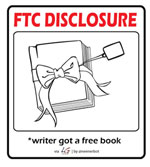
Additionally, some links on this blog go to Amazon.com. As an Amazon Associate I earn from qualifying purchases. There is no additional cost to you. Contact me You can e-mail me at prairieprogressive at gmaildotcom.
|