|
|
A self-published novel about a good-natured stoner is a phrase that is not necessarily a good omen. When the story takes place in large part in Lithuania, a country appearing in a novel that won the National Book Award a few years back, you might wonder what you’re in for. Yet while Gint Aras self-published Finding the Moon in Sugar, this tale of a Chicago-area stoner who heads off to Lithuania in search of a gorgeous woman he met in a laundromat rises above the level of many so-called vanity press print-on-demand novels.
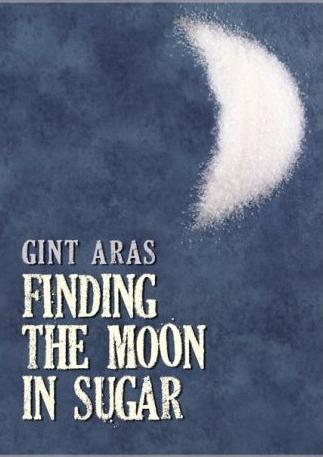 Andrew Nowak tells his story in the first person using a vernacular that reflects his upbringing and education. Andy doesn’t quite have a dark cloud continually over his head but his life also isn’t one scripted by Horatio Alger. Living in Berwyn, Ill., (“If you lost your beer gut, probably someone in Berwyn picked it up and never even noticed”), Andy’s father ran off, his mother is overbearing and a bit of an alcoholic, his sister’s become a meth addict and his grandmother spends her time sitting in a chair in the home she shares with Andy’s mother watching TV and sipping hot tea with a thimble of Scotch. Andrew Nowak tells his story in the first person using a vernacular that reflects his upbringing and education. Andy doesn’t quite have a dark cloud continually over his head but his life also isn’t one scripted by Horatio Alger. Living in Berwyn, Ill., (“If you lost your beer gut, probably someone in Berwyn picked it up and never even noticed”), Andy’s father ran off, his mother is overbearing and a bit of an alcoholic, his sister’s become a meth addict and his grandmother spends her time sitting in a chair in the home she shares with Andy’s mother watching TV and sipping hot tea with a thimble of Scotch.
Twenty-year-old Andy has escaped to his own apartment but, to make ends meet, he sells some pot here and there. When he goes to meet a customer at an area laundromat, he runs into Audra, a beautiful older blonde who offers him $1,000 to do her a favor — which turns out to be going to her home and having sex. She’s a Lithuanian married to an American man, who Andy discovers just happens to be the customer Andy was supposed to meet.
Audra later looks Andy up and they begin spending time together. Andy becomes infatuated with her but, with no forewarning, she suddenly heads back to Lithuania. Andy can’t get his mind off Audra and it doesn’t take him long to sell everything he owns and buy a one way ticket to Vilnius, Lithuania. Without realizing it, Andy has embarked on a journey of self-discovery. Within days of arrival, Andy is basically homeless and realizes that “Vilnius ain’t no Lord of the Rings no more…now it’s nasty gray and crumbled.” Yet he meets and makes friends with Lithuanians his own age in a bar, eventually meets up with Audra, slowly picks up a smidgen of Lithuanian and spends much of his time drinking and using pot or harder drugs, basically dependent on the kindness of strangers who have become his friends.
At times, Finding the Moon in Sugar tends to wander a bit and there is explicit sexuality that may put off some readers. Generally, though, Aras, the pen name of Karolis Gintaras Žukauskas, has created a affable, undereducated character adrift in the world but who is rapidly discovering an entirely new and different one. Andy’s vernacular and humorous observations of even seemingly routine things makes for an enjoyable read. Yet the comic aspect balances an ultimately sad, if not tragic, tale.
Audra’s return to her home seems to accelerate a spiraling psychological deterioration. And about the time Andy realizes he must return home he falls in love again. When he does depart, his girlfriend ultimately follows him and they settle in Indiana, where Andy strives hard to take up a more normal life. At least one of the novel’s dénouements, involving Andy’s grandfather and his death in the Vietnam War, seems a bit strained and almost an unnecessary digression. The ultimate resolution to one of the core emotional conflicts is not surprising but is handled quite well.
Like many self-published books, Finding the Moon in Sugar does not rise to the level of those handled by larger publishing houses and their editors. Still, Aras exceeds the expectations the story outline might create, providing a readable and enjoyable look at a search for meaning in life but someone who doesn’t quite realize he’s searching.
Cauze what do you do when your in a new country that’s totally far away and frickin’ nobody even knows your there? The first thing is your too tired to freak out from all the weird shit.
Gint Aras, Finding the Moon in Sugar
Bulletin Board
Tonight is the Third Annual Downtown Jazz Crawl in Sioux Falls. And remember, the local B&N bookfair tomorrow for the Jazz & Blues Society
Bookish Linkage
The thought that this book is actually going to be published is wrong on so many levels.
Is this the future of the e-book? Book applications are the fastest-growing category in the iTunes App Store, accounting for 11 percent of all applications in the U.S. store>
Indirectly related is Wired‘s recent roundup of e-book readers.
Author L.E. Modesitt, Jr., has some interesting insight into the impact of technology on reader civility, including an increased tendency toward “violently negative opinions.” (Via.)
Once again, I have read none of the year’s Pulitzer Prize winners. In fact, the only finalist I read was in the history category, Drew Gilpin Faust’s This Republic of Suffering.
I did a bit better with the LA Times Book Prize, whose winners were announced last night. I’ve read two of the nine winners, both in fiction categories: Marilynne Robinson’s Home and Finding Nouf by Zoe Ferraris.
Nonbookish Linkage
No doubt my friend Michael Sanborn and I start at the same writing point: Everyone can benefit from editing.
Reporter covering recession loses job due to recession.
“It is axiomatic that ‘Judge’ and ‘Stripper’ showing up in a headline is never a good thing, especially if you happen to be the ‘Judge.'” (Via.)
The Big Picture covers all the bases: space porn and Earth porn.
I cannot say what I think is right about this music; I only know the “rightness” of it.
Keith Jarrett, liner notes,Spirits

My husband is not an avid reader, and he used to get very frustrated in college when teachers would insist discussing symbolism in a literary work when there didn’t seem to him to be any. He felt that writers often just wrote the story for the story’s sake and other people read symbolism into it.
It does seem like modern fiction just “tells the story” without much symbolism. Is symbolism an older literary device, like excessive description, that is not used much any more? Do you think there was as much symbolism as English teachers seemed to think? What are some examples of symbolism from your reading?
This is one of my favorite pet peeves — and one I evidently imparted to my children.
I tend to think English teachers/professors, literary critics and others often find symbolism in fiction just because they feel an obligation. Maybe this is just a story like one you might tell a friend? Maybe this or that character looks, talks or acts like that because he or she is simply a composite of people the author knows or saw somewhere? Why must particular actions, settings, etc., be symbolic? Maybe the fact balloons blew out of a child’s hand simply indicates it was a windy day or a poor grasp on the string, not that it represents a loss of innocence or some such muck.
Granted, there are situations where symbolism is intended. But sometimes, if not most frequently, I’m not looking for and may not even want deeper meaning; I’m just looking to enjoy a good read.
My now 20-year-old daughter wrote something to this effect in a column she did for the high school newspaper several years ago. She said it in the context of the focus of what is taught in English classes. The result? Her teacher threw her out of the accelerated English class she was in at the time. That situation was relatively promptly remedied when we met with the high school’s principal and assistant principal and asked them to point out any school rule or regulation she violated by exercising her right to express an opinion. Still, I evidently haven’t forever ruined my children. My 23-year-old daughter has a joint B.A., with part of it being English. (Add in the political science half of the degree and she is eminently employable!)
Although the foregoing is nonfiction, look for all the symbolism you want. I’m just relating a story.
There isn’t any symbolysm [sic]. The sea is the sea. The old man is an old man. The boy is a boy and the fish is a fish. The shark are all sharks no better and no worse. All the symbolism that people say is shit.
Ernest Hemingway, Ernest Hemingway Selected Letters 1917-1961
It borders on heresy, I know. But I’m not a huge Rolling Stones fan. Probably because of the band’s more blusey sound and roots, I never became wholly enthralled with it. Still, Sticky Fingers, released 38 years ago this week, was the second of four consecutive studio albums that are my favorites in the Stones catalog.
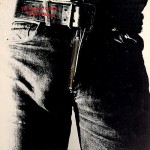 For me, Sticky Fingers represents a transitional album for the Stones. It is a sign post between the excellent Let It Bleed, released in 1969, and the best Stones album of all time, Exile on Main St., released in May 1972. There’s good reason. One track from Sticky Fingers, “Sister Morphine,” was actually recorded during the sessions for Let It Bleed while a number of the tracks that would appear on Exile had their origination in the Sticky Fingers sessions. For me, Sticky Fingers represents a transitional album for the Stones. It is a sign post between the excellent Let It Bleed, released in 1969, and the best Stones album of all time, Exile on Main St., released in May 1972. There’s good reason. One track from Sticky Fingers, “Sister Morphine,” was actually recorded during the sessions for Let It Bleed while a number of the tracks that would appear on Exile had their origination in the Sticky Fingers sessions.
Sticky Fingers, like Exile, grabs you from the outset with a wicked guitar riff. Yet the opening licks on “Brown Sugar” at the beginning of Sticky Fingers have become almost iconic. The song remains one of the band’s best known hits and both it and the album reached No. 1 in the U.S. within a month of the LP’s release. But there were other popular tunes, the acoustic ballad “Wild Horses” also hit the singles charts. My personal favorite of the radio cuts is “Bitch,” the flip side to the “Brown Sugar” single. Built almost entirely on a single chord progression that opens with guitar and then is bolstered by the incomparable Bobby Keys and Jim Price on horns. Yet perhaps my favorite cut on the entire album is “Can’t You Hear Me Knocking.” Opening like so many other Stones tunes with a blues-based riff, about half way through the band breaks into a Traffic-like jam featuring an excellent sax solo by Keys and one of my favorite solos by Mick Taylor, who joined the group on guitar during its 1969 tour.
It is somewhat of a surprise commercial radio made “Brown Sugar” a staple. After all, it deals with racial exploitation, slavery and oral sex. Yet the original album cover (which my LP came in) also made a statement, one that left just as little room for speculation. Thanks to an idea from Andy Warhol, it featured an actual working zipper, one which opened to reveal a man’s underwear. While the cover was seen as somewhat problematic for some uptight store owners, it had other problems. According to one account:
…it turned out that during shipment the zipper would press into the album stacked on top of it (invariably damaging “Sister Morphine”); Atlantic Records threatened to sue [cover designer Craig] Braun for all the damage. After getting “very depressed and very high,” Braun came up with the solution; pull down the zipper before the album was shipped — then it would dent only the label. Braun never did figure out how to keep Sticky Fingers from scratching other album covers.
Fortunately, my LP wasn’t damaged by the zipper so I presume mine was shipped with the zipper down. The zipper did, though, cause some damage to other LP covers when pulling it out and reshelving it.
Between the music and the album cover, Sticky Fingers became iconic. Yet it also produced another indelible item. This was the first LP on the band’s own label, so one side of the album sleeve and the label on the vinyl itself carried the Rolling Stones tongue, the first appearance of that logo. It quickly became one of the most widely recognized symbols in the world. How big a deal was the logo? The original was bought an an auction last fall for more than $90,000 — by a London museum.
I have my freedom but I don’t have much time
“Wild Horses,” Rolling Stones, Sticky Fingers
In what may be a commentary on the modern world, the state of the economy or both, a Wall Street Journal columnist believes more people make their living blogging than fighting fires.
Based on a review of a variety of sources, Mark Penn concluded that of more than 20 million bloggers, 1.7 million are “profiting from the work, and 452,000 of those us[e] blogging as their primary source of income.” In comparison, the Bureau of Labor Statistics reports that as of May 2007, there were 555,770 Americans employed as lawyers, 498,090 as bartenders, 394,710 as computer programmers, 343,320 as hairdressers, and 289,710 as firefighters.
Penn cites part of Technorati’s 2008 State of the Blogosphere report. It concluded the average annual blogger revenue is more than $6,000, the top 1 percent earn $200,000 a year or more and, among active bloggers it surveyed, ” the average income was $75,000 for those who had 100,000 or more unique visitors per month,” although the median annual income for that group was $22,000. Penn makes a point that may be behind recent regulatory proposals by the Federal Trade Commission. “It is hard to think of another job category that has grown so quickly and become such a force in society without having any tests, degrees, or regulation of virtually any kind,” he wrote.
Even if those numbers are right, I see a couple issues. First, barely two percent of bloggers make a living from it. Even counting all those who somehow “profit” from blogging, it isn’t like there are many other “jobs” where four percent of the workforce is “employed” and the remaining 96 percent do the job just for fun. Likewise, since when has America required anyone — even politicians — to take a test or have a degree to express opinions or write?
On second thought, maybe this should all give me pause to reconsider my pledge not to accept advertising or other revenue on or via this blog. After all, that retirement fund ain’t been looking too shiny lately.
Your blog is what you say when there is nobody standing over your shoulder telling you what to do.
Joshua Porter, bokardo.com, April 19, 2007
|
Disclaimer 
Additionally, some links on this blog go to Amazon.com. As an Amazon Associate I earn from qualifying purchases. There is no additional cost to you. Contact me You can e-mail me at prairieprogressive at gmaildotcom.
|