|
|
Mention Russian literature and most people think of two things. One is the pre-revolution authors whose names are familiar in the West, such as Pushkin, Tolstoy and Dostoevsky. The other is the Soviet era, where the government controlled what was published and writers like Boris Pasternak, Aleksandr Solzhenitsyn and Vasily Grossman struggled to have their work published or just to stay free.
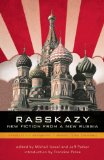 Both periods are over. In fact, Solzhenitsyn’s Gulag Archipelago is now required reading for Russian students. And while post-Soviet Russia is far from free of censorship, the literature created there today is coming from writers whose work was never subjected to the Soviet literary model. With Rasskazy: New Fiction from a New Russia, Tin House Books seeks to introduce Americans to some of that writing, presenting 22 stories which, with few exceptions, are translated into English for the first time. All are penned by writers whose adult life has been in post-Soviet Russia. Both periods are over. In fact, Solzhenitsyn’s Gulag Archipelago is now required reading for Russian students. And while post-Soviet Russia is far from free of censorship, the literature created there today is coming from writers whose work was never subjected to the Soviet literary model. With Rasskazy: New Fiction from a New Russia, Tin House Books seeks to introduce Americans to some of that writing, presenting 22 stories which, with few exceptions, are translated into English for the first time. All are penned by writers whose adult life has been in post-Soviet Russia.
Often post-Soviet Russian literature is called postmodernist when what is really meant is that it is post-Soviet. There are a few pieces that use devices and approaches some might call postmodern (a concept I not only cannot define but I can feel leaching brain cells whenever I try to figure it out). Rasskazy, though, has such variety of style and approach that something will likely appeal to — or annoy — a wide range of tastes. Thus, for example, the opening piece, “They Talk” by Linor Goralik, consists only of snippets of overheard or imagined conversations. Similarly, Ekaterina Taratuta’s “The Seventh Toast to Snails” is a numbered mélange of largely conversational excerpts dealing with seafaring and relationships. And if you’re a fan of resolution in a short story, there are a few here that will frustrate you.
One fairly common thread in Rasskazy (which translates as “stories”) firmly links it to the lengthy history of Russian literature. The classic Russian literature of writers like Tolstoy often was referred to as critical realism because it looked at the faults in society and human struggle. Under Stalin, the officially sanctioned style was “Socialist realism,” which portrayed a glorified “reality” of a proletarian struggle creating a shining Soviet future. In their introduction, Rasskazy editors Mikhail Iossel and Jeff Parker aptly refer to these stories as “New Russian Realism.” Much more akin to critical realism, the stories often describe modern life in Russia, including not only a sense of independence but also alcoholism, economic struggles and Moscow streets with “casinos with Mercedes-Benz parked outside them.” Even “They Talk” fits this category to some extent, because many of the bits of conversation comment on aspects of modern life.
Two of the strongest stories may also reflect one of the country’s ongoing emotional scars. Both Arkady Babchenko’s “Diesel Stop” and “Why the Sky Doesn’t Fall” by German Sadulaev are autobiographically-based stories dealing with the war in Chechnya. Much like Vietnam long dominated American consciousness, seems to continue to loom over much of the Russian psyche.
Babchenko, whose memoir of his military service in Chechnya was translated into English and released in the U.S. last year, looks at the conflict from the standpoint of a Russian soldier. Borrowing from his own experiences, the “Diesel Stop” tells of soldiers in punitive detention after having gone AWOL. Babchenko’s soldier, however, did not go AWOL but overstayed his leave. By far the longest work in the collection, the story focuses in part on how even though he was trying and wanted to return to fight in Chechnya, his detention lasted longer than the war itself. As such, it reveals both the frustration of the average soldier and the often absurd management of the war.
“Why the Sky Doesn’t Fall” could well be considered a touch of magical realism. Having grown up in in a Chechen village, he tells the story from the standpoint of a Chechen. Like Sadulaev, his narrator now lives in St. Petersburg, where he deals with memories of life in Chechnya during the war. But at the same time, the reality that confronts him in those memories can become fabulized, with dragons taking the place of enemy planes. And there is plenty of ordinary reality also.
“Once my memory was a strawberry field,” Sadulaev’s narrator says. “Now my memory is a minefield.” But this is not just figurative language suggesting bits, pieces and fragments of events explode in his memory. It is also literal. Strawberries grow wild in the forest glades around the narrator’s home village. But both sides mined those areas during the war and no one has maps of the minefields. The strawberries now go unpicked despite the fact even more are growing. “Strawberries grow well in fields watered with thick, rich human blood.”
Similarly, in another scene the bodies of betrayed young Chechen fighters killed by the Russians are simply dumped in the central square.
Mothers, howling, dug their children out from the heap of bodies and carried them home. How could they carry them, weighted down with death, in their thin, wrinkled arms? Well, that’s nothing. That’s another question. Empty, frantic eyes, hearts frozen with grief — how could they now carry their hearts, so large, heavy, useless?
No, life can’t get much more real than when it confronts death.
But if military conflict isn’t of interest, there’s a wide variety of glimpses into modern life. “History” by Roman Senchin takes us with a history professor who stumbles into an opposition rally in 2007, where he is mistaken for a protester and arrested. “Spit” by Kirill Ryabov looks at an individual who seeks to return home in a new and more modern society after being released from the mental institution in which he was incarcerated for a crime. Anna Starobinets gives us a glimpse of a young man struggling with obsessive compulsive disorder in “Rules.” Less than 10 pages long, it is a wonderful example of the power of a short story.
These writings apply traditional and nontraditional approaches in looking at modern Russia’s opportunities and woes and the personal and institutional struggles that arise when democratic principles seek root in a society long unaccustomed to them. Whether you like any one story isn’t the point of collections like this. Works in translation allows us to peer into other cultures and nations through the eyes of those who know them best. Equally as important, as many of the stories in Rasskazy prove, translated fiction can provide what all readers want — engaging, enjoyable reading.
Alya’s mother works in one of those many chain restaurants that objectively and honestly speaking are too expensive for undemanding eaters and have no gastronomical worth for everybody else, but nonetheless fail to suffer from a lack of customers.
Olga Zondberg, “Have Mercy, Your Majesty Fish,” Rasskazy
I just realized I started this blog six years ago today. In terms of the SD blogosphere that probably makes me an oldtimer, even though the focus has changed over the years and isn’t on South Dakota issues.
During those six years, there’s been 1,553 posts (not counting this one). Given the history of the blog, politics remains the category with the most posts. But if you combine general book-related posts with book reviews that subject is far ahead, which is as it should be and as I hoped.
The change of focus appears to be doing well. At least according to Google Analytics, comparing Jan. 1 to Aug. 31 of this year with the same period this year:
— the number of visits is up 11.5 percent.
— the number of pageviews is up 28.2 percent.
— the number of pages visited per visit is up 14.97 percent
— the bounce rate is down 8.35 percent.
— the average time spent on the blog is up 62.2 percent.
Since I’ve started using Google Analytics, the home page is, naturally, the most popular. But my review of Out Stealing Horses, posted in January 2008, remains the single most popular post. In fact, for at least one variation of Google searches for reviews of the book, it is the first result listed, above even the NYT review.
So, even though it is and remains mostly an amusing diversion and outlet, happy birthday to my blog.
Blogging is thinking in front of others.
Michel-Edouard Leclerc, quoted in Naked Conversations
My definition of “old soul” differs slightly from the more common usage. To me, an old soul is someone who, musically or otherwise, grasps and is able to express the ethos of those who are a decade or more older. Any number of the tunes on Rockin’ the Suburbs make it plain Ben Folds is an old soul in my book.
 Admittedly, since Folds is just 10 years younger than me, he likely better understands the retrospection that comes as we grow older. And that concept is one of the major reasons Rockin’ the Suburbs is the only release of this decade that is among my Desert Island Discs. Released on September 11, 2001, (unfortunate coincidence, that), it was his first solo release after the break up of the Ben Folds Five. Known for his piano skills — which someone I know once described as “heavy metal piano” — Folds actually also plays most of the instruments on Rockin’ the Suburbs. Admittedly, since Folds is just 10 years younger than me, he likely better understands the retrospection that comes as we grow older. And that concept is one of the major reasons Rockin’ the Suburbs is the only release of this decade that is among my Desert Island Discs. Released on September 11, 2001, (unfortunate coincidence, that), it was his first solo release after the break up of the Ben Folds Five. Known for his piano skills — which someone I know once described as “heavy metal piano” — Folds actually also plays most of the instruments on Rockin’ the Suburbs.
Yet while Folds is an excellent musician, he is an even better songwriter. This release combines his seemingly irrepressible streak of wiseass with both introspection and sentiment. And while I love his smart ass attitude, what really speaks to me here are the reflective pieces. To a great extent, they explore the trials and joys of growing up, of reaching and even growing past middle age. Thus, for example, “Fred Jones, Pt. 2”, about a newspaper employee on his last day at work after 25 years, would be an excellent precursor to the opening scenes of the film About Schmidt released in late 2002.
There’s also the role of family. In “Still Fighting It,” Folds reflects on the parent-child relationship. He mentions the near earth shattering truth of the day “I picked you up and everything changed.” There’s also the message of how it “hurts” and “sucks” to grow up but everybody somehow manages to survive to some extent. Yet the lyric that finds the most resonance with me is in the chorus and that closes the song; “And you’re so much like me/I’m sorry.”
While Folds also covers the emotions of breakup, he balances it with an absolutely beautiful song that closes the CD (although there are editions that have a bonus track). “The Luckiest” touches on how coincidence or fate brings two people together. And, to some extent, it is an unusual love song. After all, how many love songs use the death of a man in his 90s and how his wife died to express that emotion? The song itself admits this is a “Strange way to tell you/That I know we belong.” But the first time I played the song for my wife, it had the same impact on her as it had on me.
In fact, “The Luckiest” competes with “The Ascent of Stan” for my favorite cut on the album. The latter tells of a “textbook hippie man” confronting the reality of where he is today compared to what he and his contemporaries dreamed of. “Once you wanted revolution/Now you’re the institution/How’s it feel to be the man?,” Folds asks as Stan wonders where the years went. Among the sobering realizations is “you wonder why your father was so resigned/Now you don’t wonder any more.” For me and many my age and a bit older, this in many ways encapsulates realities that sink in as we age.
Folds has long been extremely popular on college campuses. And when a guy with that kind of audience can still speak to old farts like me with his music, you’re fairly certain you’re dealing with an old soul.
And life barrels on like a runaway train
Where the passengers change
They don’t change anything
You get off; someone else can get on
“Fred Jones Pt. 2,” Ben Folds, Rockin’ the Suburbs
Every time period has its trappings. And while it may be impacted by its recency, it’s hard to imagine a historical period that carries more baggage than the 1960s. In her reflective quasi-memoir The Sixties, British author Jenny Diski sifts through some of the baggage but ultimately comes away dismayed and discouraged.
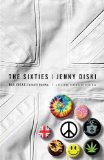 At the outset, Diski seeks to dispose of a far too prevalent misconception. “The Sixties, of course, were not the decade of the same name,” she notes in her introduction. Rather, the era actually began in the mid-1960s with the ascendancy of popular culture. She believes it ended in the mid-1970s “when all the open-ended possibilities we saw began to narrow, as disillusion, right-wing politicians, and the rest of our lives started to loom unexpectedly large.” As such, the period mirrors much of the coming of age of Baby Boomers. Yet even if their alienation and resistance to conformity was greater in degree, neither was the exclusive province of that generation. At the outset, Diski seeks to dispose of a far too prevalent misconception. “The Sixties, of course, were not the decade of the same name,” she notes in her introduction. Rather, the era actually began in the mid-1960s with the ascendancy of popular culture. She believes it ended in the mid-1970s “when all the open-ended possibilities we saw began to narrow, as disillusion, right-wing politicians, and the rest of our lives started to loom unexpectedly large.” As such, the period mirrors much of the coming of age of Baby Boomers. Yet even if their alienation and resistance to conformity was greater in degree, neither was the exclusive province of that generation.
Diski explores the time period through both some of the main vehicles of popular culture at the time — drugs, the sexual revolution and fashion — as well as education and psychiatry. If there’s a common theme among them, it’s a sense of an unbounded freedom to explore. This arose in significant part because of the advantages afforded the generation. They did not struggle with bad economic times, the lack of a social safety net or fighting a world war. Granted, there was the Cold War and Vietnam but Diski and her contemporaries were raised in a time of comparative affluence. They had more opportunity to investigate and experiment than their parents, even iif it came in the form of drugs, sex or how they approached education. Even sex, she notes, “was an important part of the project of undoing the constraints we perceived our elders to have been immobilised by.”
Living in London during this time, Diski’s perspective undoubtedly is distinct from her American contemporaries. While she took part in at least one demonstration, the Vietnam War and the draft did not have the same impact on British youth of that generation. Still, the difference is one of degree, not character. Most of what she considers and experienced, whether personal or political, was also part of the American experience. Yet The Sixties seems to recognize what can only perceived after the coming of age and once adulthood overtakes youthfulness.
The compromises that adults make cause much of the suffering in the world, or, at best, fail to deal with the suffering. Acceptance of one’s lot — maintaining a silence about what can’t be said, lowering your expectations for your own life and for others, and understanding that nothing about the way the world works will ever change — is the very marrow of maturity, and no wonder the newly fledged children look at it with horror and know that it won’t happen to them — or turn their backs on it for fear it will.
But it did happen to the ’60s generation. That “very marrow of maturity” displaced the core of many of the aspirations of the time, leaving a “disappointed remnant.” And while there was talk of freedom and being free, “the majority of the activists in my generation were never as interested in individual liberty as we were in finding ways to implement our own ideas of how the world should be.” This “single focus on our inner selves,” she concludes, produced “[n]o new ideas, no great books or paintings or poetry,” only “an album cover or two.” The flaw, according to Diski, was confusing liberation and libertarianism.
How the “do your own thing” approach laid the groundwork for the yuppies, financial excess and conservative governments to come can be endlessly debated. Diski’s rumination, though, suggests part of the reason the dogma of The Sixties ultimately turned out to be almost hallucinatory and certainly not reality.
In truth, the only thing that is absolutely certain is that the music then was better.
Jenny Diski, The Sixties
Bulletin Board
Col. Andrea Thompson, a Harrisburg native, is now senior intelligence officer to Gen. Stanley McChrystal, commander of U.S. forces in Afghanistan, and is blogging about her experience. (HT Joel.)
Interweb Stuff I Liked This Week
Why Gen-Y Johnny Can’t Read Nonverbal Cues (Via.)
Bookish Linkage
I love the message to book banners in the manifesto written by Ellen Hopkins in connection with this year’s Banned Books Week (Sept. 26-Oct. 3), particularly the last two lines: “Ideas are incombustible. And therein lies your real fear.”
Speaking of, here a list of some of the books challenged and banned in 2008-2009.
How to find a book without knowing the title or author. (Via.)
With the exception of the Obama book (which I haven’t read), I think I would do the same with the top 10 books abandoned in UK Travelodge rooms last year.
Along those same lines, I note that only one book — the da Vinci note-books — would be of interest to me of the 10 most pirated e-books of the year.
Daniel Kalder begins a series on dictator-lit, in which he will “subject himself to as much tyrant prose as he can bear, reporting back on his findings … until the will to live deserts him.”
Defining science fiction. (Via.)
Nonbookish Linkage
Check out the stunning collection of pre-revolution photos of Russia at the Library of Congress web site.
College journalism course on Twitter is Exhibit who knows what in the death of real journalism.
South Dakota makes an appearance on People of Walmart.
Another belief of mine: that everyone else my age is an adult, whereas I am merely in disguise.
Margaret Atwood, Cat’s Eye
|
Disclaimer 
Additionally, some links on this blog go to Amazon.com. As an Amazon Associate I earn from qualifying purchases. There is no additional cost to you. Contact me You can e-mail me at prairieprogressive at gmaildotcom.
|