|
|
Today my wife and I officially become “empty nesters.” And one of the things that comes to mind as my youngest flies off this morning to UMass is The Beatles. That may strike some as a bit odd but, truly, it isn’t.
 My youngest daughter is the biggest Beatles fan I know. She got hooked on their music a few years ago and the band remains one of her favorites. She’s got the Abbey Road poster and a variety of other Beatles memorabilia on her bedroom walls. The back window of her car is adorned with a Beatles decal. She was fascinated by the Beatles LPs I have, particularly their album covers. The Beatles helped create a common bond between us and, in fact, her musical tastes are much more in line with mine than either of her sisters. Not only have we seen Ben Folds and O.A.R. together, she bought the tickets to O.A.R. and invited me to go with her. My youngest daughter is the biggest Beatles fan I know. She got hooked on their music a few years ago and the band remains one of her favorites. She’s got the Abbey Road poster and a variety of other Beatles memorabilia on her bedroom walls. The back window of her car is adorned with a Beatles decal. She was fascinated by the Beatles LPs I have, particularly their album covers. The Beatles helped create a common bond between us and, in fact, her musical tastes are much more in line with mine than either of her sisters. Not only have we seen Ben Folds and O.A.R. together, she bought the tickets to O.A.R. and invited me to go with her.
The shared appreciation of The Beatles may not be wholly unique. A recent Pew Research Center survey showed, not surprisingly, that The Beatles are the most popular musical performers for people in my age group. But it also showed the band was the second most popular performers among people ages 16-29. The group trailed Michael Jackson by just one percent, which is not statistically significant (especially considering the survey was conducted after Jackson’s death). In addition, the Beatles were third in the 30-49 age group and fourth in the 65+ group.
Given that my daughter is 18, the breadth of the age groups might skew the figures for her group. Still, it is fascinating to see that parents and their kids today can and do share a common musical language, especially since my parents were appalled by The Beatles and their music. It also adds another flavor to my Beatles collection. Now, I’ll be reminded of my daughter whenever I hear a Beatles tune.
There’s nowhere you can be that isn’t where you’re meant to be
“All You Need Is Love,” The Beatles, Magical Mystery Tour
Writing an adroit novel is a challenge any time, but especially if you’re going to throw in ninjas and mime troupes. Setting the story in a post-Apocalyptic world also requires more than a bit of imagination. Throwing in a twist readers don’t see coming but find entirely acceptable is a Chinese puzzle in and of itself. But to do these things while maintaining a witty tone that doesn’t begin to grate over the course of several hundred pages rises to the level of absolutely daunting. Although first time novelist Nick Harkaway stumbles at times, he manages to adeptly handle all these obstacles with his The Gone-Away World.
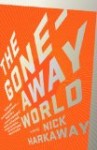 Distilled to its essence, the novel is the story of life on a near-future Earth suffering the effects of the Go Away War. The events leading to the war — a small nation refusing to pay interest on a loan from an international banking group it neither asked for nor ever used — are a excellent example of Harkaway’s incisive turns at satire. The war gains its name because it debuted the Go Away Bomb which, in turn, takes its name from what it does — make people, places and things “go away.” You know, disappear — completely. But if too much of the world goes away, you end up with a reduced “Livable Zone.” Distilled to its essence, the novel is the story of life on a near-future Earth suffering the effects of the Go Away War. The events leading to the war — a small nation refusing to pay interest on a loan from an international banking group it neither asked for nor ever used — are a excellent example of Harkaway’s incisive turns at satire. The war gains its name because it debuted the Go Away Bomb which, in turn, takes its name from what it does — make people, places and things “go away.” You know, disappear — completely. But if too much of the world goes away, you end up with a reduced “Livable Zone.”
The Gone-Away World, now available in paperback, opens in a a remote portion of that Livable Zone with a group of war veterans being retained by the powers that be. They are needed to put out a large fire in a production center and pipeline for a substance that keeps the zone livable and the “unreal world” from encroaching upon it. Yet after that first chapter, Harkaway doesn’t return to that point in the story for more than 300 pages. Instead, he traces the life story of our narrator, the lifelong best friend of Gonzo Lubitsch, the almost Rambo-like special ops soldier everyone tends to look to when things get tough. As the detour lengthens, you wonder about its purpose or the reason Harkaway started where he did. It all becomes clear, though, with a twist that should catch almost all readers off guard but, in retrospect, makes sense.
The twist is one reflection of the novel’s shrewd pacing. When the surprise comes, it doesn’t hit you upside the head. Instead, it is almost casually disclosed as the narrator puzzles over recent stupefying changes in his life. This approach leaves you thinking the revelation is no more than a random thought until it actually sinks in within the next few pages and drastically changes your perspective. Leaving the initial chapter to engage in the lengthy look at the past also helps Harkaway draw a distinction between the at least quasi-real pre-war world and the totally surreal nature of the post-war world and all it implies. And regardless of which world we’re in, there is a persistent touch of wit that creates a refreshing overtone in this realm of myth.
As this all suggests, for the most part Harkaway’s writing borders on marvelous. If there’s a problem, it is a tendency to overwrite, not in the sense of pretentious language but perhaps spending too much time detailing a scene, a character, a conversation or a discourse. In addition, there’s another surprise near the end of The Gone-Away World that isn’t quite as smooth as the earlier bombshell. Yet to expect an author to not stumble over the course of more than 500 pages is unrealistic.
Anytime you can combine ninjas, mime troupes, military and political satire, an apocalypse and a love story and still hold on to and please the reader, you’ve accomplished quite a feat. To do so with your first novel is an even greater accomplishment.
You have to worry about someone even mimes find creepy.
Nick Harkaway, The Gone-Away World
Last week, I mentioned that following Led Zeppelin’s 1973 album, my musical interests were changing. I wrote that wholly unaware of the subject of this week’s Midweek Music Moment. By chance, it reveals just how much those interests changed over the course of a couple years.
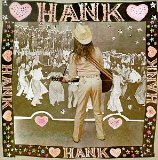 On August 31, 1973, Leon Russell released Hank Wilson’s Back, containing cover versions of 13 standards (the CD release has 15) that cover the waterfront of country music. Now I didn’t hear the album or become a fan of it for a couple years but it is one of those albums to which I often return. On August 31, 1973, Leon Russell released Hank Wilson’s Back, containing cover versions of 13 standards (the CD release has 15) that cover the waterfront of country music. Now I didn’t hear the album or become a fan of it for a couple years but it is one of those albums to which I often return.
Some people thought Russell was either giving up his career as a rock musician or throwing it away with his Hank Wilson alter ego. After all, he not only had excellent selling blues/gospel/rock solo albums, he was the chief mad dog for Joe Cocker’s “Mad Dogs & Englishmen” tour in 1970 and the next year was performing with George Harrison at The Concert for Bangla Desh. Wilson may just have been looking for a change of pace but his timing was excellent. Hank Wilson’s Back hit the record stores during the time longhairs like me were seduced by country rock bands who kept pushing a bit more toward the country end. Although the brightest example may have been the Eagles, bands like Poco, the Ozark Mountain Daredevils, the Marshall Tucker Band and Pure Prairie League were all finding radio play, even at times on the top 40 charts.
Russell, though, ignored the rock part of country rock. This album hits various genres of country music — bluegrass, honky tonk and what I call “crying in my beer” songs — but there’s no doubt it is country music through and through. And it’s damn well performed. There’s a couple reasons for that. One is Russell, a fine musician himself, brought in lots of friends to play on various tunes, including Billy Byrd and J.J. Cale on guitar, Pete Drake on pedal steel, Johnny Gimble on fiddle, Charlie McCoy on harmonica, Carl Radle on bass and Hargus “Pig” Robbins on keyboards. Then there’s the way in which Russell handles the songs, not as a lark but with respect. Russell’s is distinctive, to say the least. Yet it seems to work perfectly with his selections, especially the inflections on “She Thinks I Still Care” and Hank Williams’ classic “I’m So Lonesome I Could Cry.” Russell can also deliver up tempo, such as bluegrass legend Lester Flatt’s “Rollin’ in My Sweet Baby’s Arms,” Hank Williams’ “Jambalaya” and Hank Thompson’s “Six Pack to Go.” In fact, about the only song that seems to miss with me is “The Battle of New Orleans” (and perhaps the closing track of “Good Night Irene”).
Not surprisingly, the album did well in the country world. It reached number 15 on Billboard’s country albums chart in 1973. And reflective of either the power of the country market or the crossover appeal that existed among those attracted to country rock, it also got as high as 28 on Billboard’s top 200 chart that year. It remains a favorite of mine today as one of a handful of albums I look to on those random occasions when I need a country music fix. Plus, it reminds me of a period in the history of my musical tastes that had me exploring and enjoying different roads than usual.
There’s one other thing Hank Wilson’s Back always reminds me of — how callous we can be as kids. Back in junior high, a classmate who could best be described as an outcast was brave enough to perform solo on his acoustic guitar at the annual talent show. I have no recall whether he was good or bad. What I remember is Richard C. played and sang “Jambalaya.” Given the era and our ages, he played to gales of laughter. So, when I hear “Jambalaya” today I wish I could hear his performance with more knowledgeable ears. Maybe it sucked but, if nothing else, I would probably at least be cognizant of the courage he had.
Jambalaya and a crawfish pie and file’ gumbo
‘Cause tonight I’m gonna see my ma cher amio
Pick guitar, fill fruit jar and be gay-o
Son of a gun, we’ll have big fun on the bayou
“Jambalaya,” Hank Williams
Blame it on fall and the library. First, not only do the leaves and temperatures change, we start getting the fall releases of books. That is fueling much of this month’s book lust. Then there’s the prime aider and abettor (for which I am highly grateful) — the library. As you’ll see, it is helping satiate my gluttony with 80 percent of the books on this month’s list.
Here’s what made the list so far — not counting the six books I’m already slated to review that will be coming out in the third quarter of the year. (And we won’t talk about the two reviews I need to write in the next week.)
Await Your Reply, Dan Chaon — Never having read anything by Chaon and not being overly impressed with the brief description of this novel, I wasn’t initially inclined to read it. But a couple glowing reviews puts it on the list following its release last week and puts me on the reserve list at the library.
Born to Run: A Hidden Tribe, Superathletes, and the Greatest Race the World Has Never Seen, Christopher McDougall — Although released in May, a interview with the author on The Daily Show led to this book on the life and running habits of the Tarahumara Indians of Mexico making the list (along with the fact the library has it so I could get on the reserve list).
Generosity: An Enhancement, Richard Powers — Favorable buzz about the latest novel from this National Book Award winner led me to check and the library had it on order. Thus, I am on the reserve list for this end of the month release.
Rasskazy: New Fiction from a New Russia, Jeff Parker and Mikhail Iossel (eds.) — Not surprisingly, this collection of stories set off both my translated fiction and Russian sensors. When I then had an opportunity to review the book, out today, I figured it was serendipity.
Where Men Win Glory: The Odyssey of Pat Tillman, Jon Krakauer — With publication already delayed once, I look forward to Krakauer’s exploration of the Tillman story. Once again, I’m looking to the library reserve list when the book is released in two weeks.
Where do I find the time for not reading so many books?
Karl Kraus, Aphorisms and More Aphorisms
Bulletin Board
The Progressive, a magazine I’ve subscribed to off and on for more than 20 years, is in dire need of funds. You can make a tax-deductibe donation here. While you’re at it, go ahead and subscribe.
Blog Headline of the Week
Man firing at dragonflies shoots buddy in the head.
Interweb Stuff I Liked This Week
Why Have a Library of Books in the Home?
Depression’s Evolutionary Roots (Via.)
Bookish Linkage
The Guardian has the shortlist for its Not the Booker Prize Prize. As with the Booker Prize, I haven’t read any of the finalists.
Marc Fitten’s tour of 100 indie bookstores reaches one of my favorites, Green Apple Books.
Perhaps a little specialized but if, like me, you like foreign fiction and SF, you might want to check out Croatian SF, which includes links to several online stories in English, as well as articles about Croatian speculative fiction.
Nonbookish Linkage
So what do people really think about the guy accused of kidnapping an 11-year-old girl for 18 years? Get an idea from the comments on his blog.
I’m sorry, but anyone who thinks “Stephen Colbert represents one of the most dangerous trends in America next to Islamic terrorism today!” really needs to get a grip, or put at least one toe into the waters of reality. (Via.)
Hey, America, the four-day workweek works!
Life is just a short period of time in which we are alive.
Philip Roth, American Pastoral
|
Disclaimer 
Additionally, some links on this blog go to Amazon.com. As an Amazon Associate I earn from qualifying purchases. There is no additional cost to you. Contact me You can e-mail me at prairieprogressive at gmaildotcom.
|