|
|
Ever since I’ve been a member of the National Book Critics Circle, I’ve observed that few of the books I nominate make the finalist round (two last year and one the year before). I kept up that trend with this year’s finalists.
I only submitted nominations in three categories because, as usual, I didn’t read any poetry and either wasn’t overwhelmed by any of the biographies or autobiographies I read of they weren’t published in 2008. None of my five criticism nominees made the cut. In fiction, Marilynne Robinson’s Home is the only finalist I voted for. While I read another finalist, Roberto Bolaño’s 2666, it didn’t make my short list.
In nonfiction, the only finalist I voted for is The Forever War by Dexter Filkins. By chance, I last week finished Drew Gilpin Faust’s This Republic of Suffering: Death and the American Civil War, another of the five finalists. I’ll be posting a review of it later this week.
Of course, I flatter myself thinking I actually am nominating or voting for any book, as is evidenced by the actual selection process: a work not on a long list established by committee makes the short list only if 20% of the voting membership names it on their ballots.
A book lying idle on a shelf is wasted ammunition.
Henry Miller, The Books in My Life
Random Observations
Two contributors to Open Democracy nail it when it comes to the politics of most political blogs. An excerpt:
The democratising possibilities of the internet are in the process of speeding the degeneration of the public sphere into a proliferation of insular nodes, each fighting a war that can never be won. Battles cannot be won on the net nor can they be lost. What remains is a solipsistic politics of ME, ME, ME: my views, my truths, my facts, my pain, my anger. Convincing others and changing the world is forgotten in favour of the perpetuation of one’s own perspective.
Bookish Linkage
Google and the future of books (Part ??????).
Remember and love the old Little Golden Books? Then check out Golden Gems.
SF Master Frederick Pohl has started a blog — at age 89.
Hmmm, a British list war? As the Telegraph comes up with a list of 100 novels everyone “should” read, the Guardian has a list of 1,000 novels everyone “must” read. The Guardian explains how and why 1,000.
Most concise and to the point blog post of the week: “For the love of god, make the six word story stop.”
Another entry in a class of books I despise.
Nonbookish Linkage
Something everyone can disagree with: a ranking of every Beatles song.
The Bush Years in The Onion headlines.
Then there’s this Facebook take.
A major hat tip to Corey V. for the link to Days with My Father. Having had a parent who suffered from Alzheimer’s, I understand each and every emotion expressed.
And if you don’t believe that Alzheimer’s is the equivalent of death, try living with it for a year and a half.
Eleanor Cooney, Death in Slow Motion
I’ve been hearing the line for months now. The Sioux Falls economy is such that we are relatively immune from the recession or, at worst, there will be limited impact. Whether it was optimism, hope or delusion, the last 24 hours or so demonstrates that head-in-the-sand feeling should be replaced by the consternation expereicned across the country.
I certainly can’t recall all of them, but there’s been plenty of smaller layoffs and furloughs at various places in the state. But today’s announcement that Hutchinson Technology is closing its plant here comes less than 24 hours after Gov. Rounds announced a budget that even he admits hurts. Hutchinson had already laid off a couple hundred but the closing means 300 more will lose their jobs. Not only does it make it highly unlikely that one of the city’s 25 largest employers will ever be back in operation here, it will be tough for those losing their jobs to find employment with similar pay and benefits.
That also creates a cycle with the state budget. Tax revenues go down during a time the need for government services is likely to increase. From education to the arts to health and human services, everyone in the state will be affected. We all have our own budgetary preferences and priorities but I don’t envy the burden the governor and every legislator has during the next several weeks in coming up with a budget.
Yet this news reinforces the thing that came to mind every time I heard about layoffs and furloughs. I am fortunate to be in a field that, at least in modern memory in our area, has generally not been hit to the point of shutting offices or laying off people. (It’s hard to type with your fingers crossed!) All of us with steady jobs and income need to be thankful of that and be even more mindful of those who don’t.
Foreman says these jobs are going boys and they ain’t coming back
“My Hometown,” Bruce Springsteen, Born in the U.S.A.
As part of an ongoing series, the U.K.’s Guardian has listed, by author’s last name, the 124 science fiction and fantasy novels everyone “must” read. I’ll admit there’s some I’ve never heard of (mostly published 80 or more years ago) and some that surprise me as coming within the category.
Anyway, John at SF Signal has turned it into a meme so, being a sucker for lists, here’s my take with the ones I’ve read (28 percent) in bold and ones I started but never finished marked with asterisks:
- Douglas Adams: The Hitchhiker’s Guide to the Galaxy (1979)
- Brian W Aldiss: Non-Stop (1958)
- Isaac Asimov: Foundation (1951)
- Margaret Atwood: The Blind Assassin (2000)
- Paul Auster: In the Country of Last Things (1987)
- Iain Banks: The Wasp Factory (1984)
- Iain M Banks: Consider Phlebas (1987)
- Clive Barker: Weaveworld (1987)
- Nicola Barker: Darkmans (2007)
- Stephen Baxter: The Time Ships (1995)
- Greg Bear: Darwin’s Radio (1999)
- Alfred Bester: The Stars My Destination (1956)
- Poppy Z Brite: Lost Souls (1992)
- Algis Budrys: Rogue Moon (1960)
- Mikhail Bulgakov: The Master and Margarita (1966)
- Edward Bulwer-Lytton: The Coming Race (1871)
- Anthony Burgess: A Clockwork Orange (1960)
- Anthony Burgess: The End of the World News (1982)
- Edgar Rice Burroughs: A Princess of Mars (1912)
- William Burroughs: Naked Lunch (1959)
- Octavia Butler: Kindred (1979)
- Samuel Butler: Erewhon (1872)
- Italo Calvino: The Baron in the Trees (1957)
- Ramsey Campbell: The Influence (1988)
- Lewis Carroll: Alice’s Adventures in Wonderland (1865)
- Lewis Carroll: Through the Looking-Glass, and What Alice Found There (1871)
- Angela Carter: Nights at the Circus (1984)
- Michael Chabon: The Amazing Adventures of Kavalier and Clay (2000)
- Arthur C Clarke: Childhood’s End (1953)
- GK Chesterton: The Man Who Was Thursday (1908)
- Susanna Clarke: Jonathan Strange and Mr Norrell (2004) **
- Michael G Coney: Hello Summer, Goodbye (1975)
- Douglas Coupland: Girlfriend in a Coma (1998)
- Mark Danielewski: House of Leaves (2000)
- Marie Darrieussecq: Pig Tales (1996)
- Samuel R Delaney: The Einstein Intersection (1967)
- Philip K Dick: Do Androids Dream of Electric Sheep? (1968)
- Philip K Dick: The Man in the High Castle (1962)
- Umberto Eco: Foucault’s Pendulum (1988)
- Michel Faber: Under the Skin (2000)
- John Fowles: The Magus (1966)
- Neil Gaiman: American Gods (2001)
- Alan Garner: Red Shift (1973)
- William Gibson: Neuromancer (1984)
- Charlotte Perkins Gilman: Herland (1915)
- William Golding: Lord of the Flies (1954) **
- Joe Haldeman: The Forever War (1974)
- M John Harrison: Light (2002)
- Robert A Heinlein: Stranger in a Strange Land (1961)
- Frank Herbert: Dune (1965)
- Hermann Hesse: The Glass Bead Game (1943)
- Russell Hoban: Riddley Walker (1980)
- James Hogg: The Private Memoirs and Confessions of a Justified Sinner (1824)
- Michel Houellebecq: Atomised (1998)
- Aldous Huxley: Brave New World (1932)
- Kazuo Ishiguro: The Unconsoled (1995)
- Shirley Jackson: The Haunting of Hill House (1959)
- Henry James: The Turn of the Screw (1898)
- PD James: The Children of Men (1992)
- Richard Jefferies: After London; Or, Wild England (1885)
- Gwyneth Jones: Bold as Love (2001)
- Franz Kafka: The Trial (1925)
- Daniel Keyes: Flowers for Algernon (1966)
- Stephen King: The Shining (1977)
- Marghanita Laski: The Victorian Chaise-longue (1953)
- Joseph Sheridan Le Fanu: Uncle Silas (1864)
- Stanislaw Lem: Solaris (1961)
- Doris Lessing: Memoirs of a Survivor (1974)
- David Lindsay: A Voyage to Arcturus (1920)
- Ken MacLeod: The Night Sessions (2008)
- Hilary Mantel: Beyond Black (2005)
- Michael Marshall Smith: Only Forward (1994)
- Richard Matheson: I Am Legend (1954)
- Charles Maturin: Melmoth the Wanderer (1820)
- Patrick McCabe: The Butcher Boy (1992)
- Cormac McCarthy: The Road (2006)
- Jed Mercurio: Ascent (2007)
- China Miéville: The Scar (2002)
- Andrew Miller: Ingenious Pain (1997)
- Walter M Miller Jr: A Canticle for Leibowitz (1960)
- David Mitchell: Cloud Atlas (2004)
- Michael Moorcock: Mother London (1988)
- William Morris: News From Nowhere (1890)
- Toni Morrison: Beloved (1987)
- Haruki Murakami: The Wind-up Bird Chronicle (1995)
- Vladimir Nabokov: Ada or Ardor (1969)
- Audrey Niffenegger: The Time Traveler’s Wife (2003)
- Larry Niven: Ringworld (1970)
- Jeff Noon: Vurt (1993)
- Flann O’Brien: The Third Policeman (1967)
- Ben Okri: The Famished Road (1991)
- Chuck Palahniuk: Fight Club (1996)
- Thomas Love Peacock: Nightmare Abbey (1818)
- Mervyn Peake: Titus Groan (1946)
- John Cowper Powys: A Glastonbury Romance (1932)
- Christopher Priest: The Prestige (1995)
- François Rabelais: Gargantua and Pantagruel (1532-34)
- Ann Radcliffe: The Mysteries of Udolpho (1794)
- Alastair Reynolds: Revelation Space (2000)
- Kim Stanley Robinson: The Years of Rice and Salt (2002)
- JK Rowling: Harry Potter and the Philosopher’s Stone (1997)
- Salman Rushdie: The Satanic Verses (1988)
- Antoine de Sainte-Exupéry: The Little Prince (1943)
- José Saramago: Blindness (1995)
- Will Self: How the Dead Live (2000)
- Mary Shelley: Frankenstein (1818)
- Dan Simmons: Hyperion (1989)
- Olaf Stapledon: Star Maker (1937)
- Neal Stephenson: Snow Crash (1992)
- Robert Louis Stevenson: The Strange Case of Doctor Jekyll and Mr Hyde (1886)
- Bram Stoker: Dracula (1897)
- Rupert Thomson: The Insult (1996)
- Mark Twain: A Connecticut Yankee at King Arthur’s Court (1889)
- Kurt Vonnegut: Sirens of Titan (1959)
- Robert Walser: Institute Benjamenta (1909)
- Sylvia Townsend Warner: Lolly Willowes (1926)
- Sarah Waters: Affinity (1999)
- HG Wells: The Time Machine (1895)
- HG Wells: The War of the Worlds (1898)
- TH White: The Sword in the Stone (1938)
- Gene Wolfe: The Book of the New Sun (1980-83)
- John Wyndham: Day of the Triffids (1951)
- John Wyndham: The Midwich Cuckoos (1957)
- Yevgeny Zamyatin: We (1924)
What I say is, a town isn’t a town without a bookstore. It may call itself a town, but unless it’s got a bookstore, it knows it’s not fooling a soul.
Neil Gaiman, American Gods

Since “Inspiration” is (or should) the theme this week … what is your reading inspired by?
To a certain extent, it’s that line: “So many books, so little time.” Reading has been one of my favorite pastimes for as long as I can remember and there’s just so many books I want to read that I am inspired to pick up a book and read whenever possible. (He says as he recalls the four books added to the “to be read” shelf just this week.)
That doesn’t, though, really answer the core question, which is what is it about reading that so captures me. I think it’s a multiple of things. One is simple escapism. It doesn’t even have to be escapist literature. Even nonfiction can put me in another zone, outside of time and space. Of course, the book must be readable for that to happen.
Then there are the benefits of that zone. For nonfiction and even a lot of fiction, particularly world lit, I am learning something, whether consciously or subconsciously. Hopefully, I am also experiencing something or gaining an understanding of what someone else has experienced. Somewhat related, I can go to a place or time I’ve never been or can never go. And maybe that’s the ultimate point: the possibilities are limitless and offered anew each time you open and begin reading a book.
Reading has always been life unwrapped to me, a way of understanding the world and understanding myself through both the unknown and the everyday.
Anna Quindlen, NYT, Aug, 7, 1991
|
Disclaimer 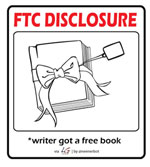
Additionally, some links on this blog go to Amazon.com. As an Amazon Associate I earn from qualifying purchases. There is no additional cost to you. Contact me You can e-mail me at prairieprogressive at gmaildotcom.
|