|
|
Bob Dylan took only six days to record Highway 61 Revisited, the last being August 4, 1965. What did he accomplish in those six days? Well, the album itself ranked fourth in Rolling Stone‘s list of the 500 Greatest Albums of All Time. The opening track, “Like A Rolling Stone,” tops the magazine’s list of the 500 Greatest Songs of All Time. Two other songs — “Desolation Row” and the title track — ranked 185 and 364, respectively on that same list.
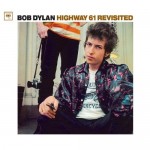 In March 1965, Bringing It All Back Home revealed Dylan was venturing into “electric music.” The first side of that LP was recorded with an electrically amplified rock band. By mid-June 1965 Dylan was back in the studio. And by the time Dylan Highway 61 Revisited was released in August, it was clear there was no going back. In March 1965, Bringing It All Back Home revealed Dylan was venturing into “electric music.” The first side of that LP was recorded with an electrically amplified rock band. By mid-June 1965 Dylan was back in the studio. And by the time Dylan Highway 61 Revisited was released in August, it was clear there was no going back.
During the June recording sessions, Dylan was accompanied by rock musicians. Among the songs they recorded was “Like A Rolling Stone,” which was actually released as a single on July 20, 1965, before Dylan returned to the studio to complete the LP. It also was one of three electric songs Dylan would play at the Newport Folk Festival on July 25, 1965, something Rolling Stone named as one of the 50 moments that changed rock history. The song, which one Dylanologist called Dylan’s “vomitific masterpiece,” would reach number 2 on the pop charts by August, the first song performed by Dylan to crack the top 10.
Following his historic reception/rejection at Newport, Dylan returned to the studio in late July and early August to complete the album. The tracks cut then included the socially biting title cut and “Ballad of a Thin Man,” both electric tunes. On August 2, 1965, Dylan recorded an electric version of “Desolation Row.” Two days later, though, it was cut in the last session with just Dylan and Charlie McCoy on acoustic guitars. Two of the day’s eight takes were spliced together to create what I consider to be a masterpiece. I still remember the first time I heard it. When it ended I sat there, awed by what I had just heard. It perhaps as much as anything made me a Dylan fan.
The tone of the song is set with the opening lyric: “They’re selling postcards of the hanging.” For the next 11 minutes Dylan takes us on a dizzying trip through a bizarre circus/carnival world full of literary allusion, with references ranging from Ezra Pound and T.S. Eliot to Opehlia, Robin Hood and the Hunchback of Notre Dame. In the course of one verse, Dylan can combine social commentary (“Now at midnight all the agents/And the superhuman crew/Come out and round up everyone/That knows more than they do”) and capitalism critique (“Then they bring them to the factory/Where the heart-attack machine/Is strapped across their shoulders”). While “Desolation Row” became a staple in Dylan’s live repertoire and the original electric version officially surfaced four years ago on No Direction Home: The Soundtrack (The Bootleg Series Vol. 7).
Some read a lot into the fact it is the only acoustic tune to make the album and that it closes it. “Desolation Row,” Rolling Stone said, was “a spellbinding new vision of folk music to close the album that, for the time being at least, destroyed folk music. The gesture was simultaneously touching and a devastating ‘Fuck you!'”
As accurate as that may be Rolling Stone made another comment with which I fully agree because of the impact “Desolation Row” had on me. Highway 61 Revisited, it said, “is one of those albums that, quite simply, changed everything.”
And the only sound that’s left
After the ambulances go
Is Cinderella sweeping up
On Desolation Row
Bob Dylan, “Desolation Row,” Highway 61 Revisited
Writing a book about a case that works its way to the U.S. Supreme Court poses inherent problems for an author. Perhaps the most difficult is putting the story in terms the average reader can understand while not bungling or giving too short shrift to legal complexities. This is especially so when the author is not law-trained and the case involves a variety of procedural machinations and areas of law with which most lawyers have little familiarity.
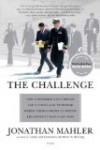 In what he calls “primarily a book of reporting,” Jonathan Mahler masters that fine line in The Challenge: How a Maverick Navy Officer and a Young Law Professor Risked Their Careers to Defend the Constitution–and Won. Mahler, a journalist, gives us an inside look at Hamdan v. Rumsfeld, the decision that found the military commissions established by the Bush Administration to try Guantanamo Bay detainees were illegal. Given that it explores a civil lawsuit from beginning to end, it isn’t the type of narrative that keeps readers on the edge of their seat. Yet Mahler creates a highly readable exploration of a landmark decision on presidential powers and the rule of law. In addition, the paperback edition released this week contains a new epilogue that brings readers up to date on what transpired after the Supreme Court’s ruling. In what he calls “primarily a book of reporting,” Jonathan Mahler masters that fine line in The Challenge: How a Maverick Navy Officer and a Young Law Professor Risked Their Careers to Defend the Constitution–and Won. Mahler, a journalist, gives us an inside look at Hamdan v. Rumsfeld, the decision that found the military commissions established by the Bush Administration to try Guantanamo Bay detainees were illegal. Given that it explores a civil lawsuit from beginning to end, it isn’t the type of narrative that keeps readers on the edge of their seat. Yet Mahler creates a highly readable exploration of a landmark decision on presidential powers and the rule of law. In addition, the paperback edition released this week contains a new epilogue that brings readers up to date on what transpired after the Supreme Court’s ruling.
The story begins, of course, with Salim Ahmed Hamdan, a Yemeni who was recruited to jihad. Mahler gives the impression that Hamdan saw being a jihadist more as steady employment than a political or religious mandate. He did, though, end up being Osama bin Laden’s driver in Pakistan, where he was captured by local militia after the U.S. invasion. After being turned over to the U.S. military, he was held at Bagram Air Field in Afghanistan and a prison in Pakistan before being transferred to Guantanamo Bay in 2002. Although we get glimpses of Hamdan’s life at Guantanamo and his claims of abuse, the story is told more from the legal perspective and the two lawyers who led the legal efforts on his behalf.
Charlie Swift, a member of the Navy Judge Advocate General’s Corp (JAG), was assigned to the Office of Military Commissions in 2003. His job was to assist and defend detainees who would be tried in front of military commissions created by the Bush Administration for that purpose. Shortly after being assigned and before Hamdan became his client, Swift questioned the wisdom and legality of the commissions. Yet any challenge to them presented its own problems. How likely are military commissions to declare themselves illegal? But could a JAG officer sue the nation’s commander in chief?
Shortly after the defense unit was set up, Neal Katyal, then a law professor at Georgetown University, emailed the head of the unit. Katyal, the son of Indian immigrants, had co-authored a law review article on the presidential order establishing the commissions. He urged they be challenged in federal court and volunteered his assistance. After they met, Swift realized Katyal had knowledge, skills and tools he lacked to adequately and fully pursue a court challenge on his own.
The Challenge details the twists and turns in and roadblocks to the litigation. To begin with, because Guantanamo was in Cuba, there was serious question whether Hamdan could sue in the U.S. Once that hurdle was surmounted, there were questions about whether the courts should abstain until the commissions had actually heard cases and the extent of their power to review what a president has done in a time of war. While Swift continued to protect Hamdan’s interests on the military commission end, he and Katyal, with assistance from the Seattle law firm of Perkins Coie, filed suit in federal court in April 2004. They won at the trial court level in a ruling that exceeded their hopes. But in July 2005, a three-judge federal court of appeals panel reversed the decision. One of those judges was John Roberts. Four days after the ruling, Roberts was nominated by President Bush to become chief justice of the Supreme Court.
Getting the Supreme Court to hear a case is difficult any time. But the Hamdan case had even more roadblocks put in its path as Congress enacted legislation that sought to abolish jurisdiction over the proceeding. That forced Katyal to also wage a battle on the Congressional front. And perhaps demonstrating the government’s attitude toward detainees like Hamdan, when the Supreme Court ruled in Hamdan’s favor and Katyal and Swift went to meet with him at Guantanamo, they were told they couldn’t bring in a copy of the decision because the rules forbid bringing in outside information. It took 30 minutes of argument and a request to see a superior officer before Hamdan could actually see the written opinion in his own court case.
Mahler’s recounting of the road from Pakistan to the Supreme Court relies on hundreds of hours of interviews with Swift and Katyal (he was not permitted to interview Hamdan). The reader is not only taken inside their strategy but the differences of opinion on strategy, their personality and their personal lives. Yet Mahler avoids a simple dry recounting. We learn that due to a lawsuit after Katyal’s father lost his job, his parents had “a visceral hatred of lawyers.” Although the front man in the media, Swift is not portrayed as a Navy officer in shining armor but a man with an ego as well as attention deficit disorder. The Challenge also often reflects the differences between not only trial and appellate lawyers but also between legal academia and the real world. Thus, after Katyal enlisted some law students to help him draft the initial filing, Perkins Coie wanted it drastically rewritten because “it read more like a law review article than a legal action.” This would be a common theme as the case proceeded.
While the Supreme court decision established that military commissions must apply appropriate constitutional and legal procedures, it did not mean Hamdan was free. And while the initial book closes with Swift leaving the service because he was passed over for promotion twice while representing Hamdan (Katyal was named deputy solicitor general by President Obama in January 2009), the epilogue brings us up to date on Hamdan’s case. It details his trial in July and August 2008 before a military commission created by Congress that applied rules and procedures the Bush commissions did not. Although convicted, the military jury gave him a sentence only five and a half months longer than he had already been detained. Thus, in November 2008, Hamdan was put on a military plane and flown back to Yemen, where he served the last month of his sentence.
Thus, some seven years after being detained, Hamdan returned home. None of us will probably ever know the nature and extent of his involvement in al-Qaeda. What we do know is that the case that bears his name confirms what Swift told the Senate Judiciary Committee before it even reached the Supreme Court, the way we search for accountability “says as much about the society that holds the trial, as it does about the individual before it.”
“The rule of law is what I fight for,” [the Marine colonel] told Swift. “Don’t stop.”
Jonathan Mahler, The Challenge
Library Habits meme:
1. If you don’t frequent your local library, why not?
2. If you do visit the library, how often do you go?
3. Do you have a favorite section that you always head to first, or do you just randomly peruse the shelves?
4. How many books are you allowed to check out at one time? Do you take advantage of this?
5. How long are you allowed to have the books checked out?
6. How many times are you allowed to renew your check-outs, if at all?
7. What do you love best about your particular library?
8. What is one thing you wish your library did differently?
9. Do you request your books via an online catalogue, or through the librarian at your branch?
10. Have you ever chosen a book on impulse (from the online catalogue OR the shelves) and had it turn out to be totally amazing? If so, what book was it, and why did you love it?
1. If you don’t frequent your local library, why not?
Oh, but I do.
2. If you do visit the library, how often do you go?
I have no set schedule but was at one of the branch libraries Saturday and probably stopped by the main library four times last month to pick up books I had on reserve.
3. Do you have a favorite section that you always head to first, or do you just randomly peruse the shelves?
If I’m not just running in to pick up a book, I head immediately for the new acquisitions shelves.
4. How many books are you allowed to check out at one time? Do you take advantage of this?
According to the library web site, 50 items. Can’t say I’ve ever had to worry about that limit.
5. How long are you allowed to have the books checked out?
Usually four weeks, although some newer books are 14 days and some “Rapid Reads” (usually highly popular mass market novels) are seven days.
6. How many times are you allowed to renew your check-outs, if at all?
Twice, unless someone has placed a hold on the book or it’s an interlibrary loan.
7. What do you love best about your particular library?
The ability to reserve books and renew them online (plus it’s building a branch less than a mile from my house).
8. What is one thing you wish your library did differently?
I wish it would start taking donations of books again. Even if they can’t be used in the library, that would certainly seem to be a good source for their occasional book sales and, hence, some fundraising.
9. Do you request your books via an online catalogue, or through the librarian at your branch?
Online and with great frequency.
10. Have you ever chosen a book on impulse (from the online catalogue OR the shelves) and had it turn out to be totally amazing? If so, what book was it, and why did you love it?
I undoubtedly have but can’t say that one in particular comes to mind.
In short, the library was a place where most of the things I came to value as an adult had their beginnings.
Pete Hamill, “D’Artagnan on Ninth Street“
At times, lust is a far stronger emotion than guilt. Thus, despite bemoaning the number of books in the “to be read” bookcase, I still lust after more. Foretunately, the local library and its reserve list can help satiate the lust, as it is doing with this month’s bibliolust list.
Armenian Golgotha, Grigoris Balakian — I’ve been intrigued with the Armenian genoicide since reading Skylark Farm a couple years ago. I don’t recall how this book came across my radar this past month, but I thought it would be interesting to read a firsthand account. First published in the U.S. some 80 years ago, it was reissued earlier this year.
The Family: The Secret Fundamentalism at the Heart of American Power, Jeff Sharlet — Althouhg published more than a year ago, an interview with the author broadcast recently on Fresh Air and reports that John Thune is a member brought it to my attention. I am patiently waiting my turn through the library.
The Girl Who Played with Fire, Stieg Larsson — I recently finished Larsson’s The Girl with the Dragon Tattoo and, to be honest, wasn’t all that impressed. But every review I’ve seen of this indicates it is better and focuses more on the background of Lisbeth Salander, to me the most interesting and compelling character in the first book. It is undoubtedly popular. Even though I got on the library reserve list nine days before the book came out, I am still number 16 in the pecking order.
The Maimed, Hermann Ungar — This makes the list thanks to a review on a world lit blog I just discovered. When the opening sentence of the review described it as a “wonderfully terrifying descent into paranoia, perversity and the power of abuse,” I was hooked.
Methland: The Death and Life of an American Small Town, Nick Reding — A favorable NYT review and the fact this story of the impact of meth on rural areas is set in Iowa brings it to the list. I’m currently in the number 5 position on the library’s reserve list.
Wave of Terror, Theodore Odrach — I learned of this book through a new Goodreads friend, who happens to be the daughter of the author and the translator of the novel. The novel deals with the Stalinist occupation of Belarus just prior to World War II and the foreign exchange student we hosted eight years ago was from Belarus. Given the Soviet annexation and the current government, it is hard to find novels about Belarus.
The Year of the Flood, Margaret Atwood — Margaret Atwood is one of those highly respected authors who isn’t afraid to venture into the scifi genre. Her forthcoming novel, which I have sitting in my review stack, is another of her visits to a dystopian society.
…we must read in order to live.
Edward Dowden, Transcripts and Studies
Bulletin Board
Through my biking friend (he bikes, not me), I learn of the Sioux Falls Green Project blog. It looks like it’s being done by the summer interns but let’s hope it doesn’t come to an end when they leave.
Check out MIT OpenCourseWare, where the Massachusetts Institute of Technology offers hundreds of previously taught classes for free. While the courses aren’t for credit, those of us who would love to go to college forever could care less as long as the course is of interest. The problem? Just in history, literature and foreign literature alone there is so much to choose from and so little time. (Major hat tip to Ex Libris.)
The presenters and schedule have been announced for this year’s South Dakota Festival of Books, to be held in Deadwood Oct. 1-4.
Blog Headline(s) of the Week
Difficult choice: B&N offers free thingy to people with one of those whatchamacallits or Associated Press claims to have discovered magic anti-news-copying beans. (Weekly top contender MobyLives is taking August off, to my dismay.)
Bookish Linkage
San Francisco’s Green Apple Books — perhaps my favorite book store ever — in the entire world — is engaged in a 10-day literary smackdown of the Book v. the Kindle.
I’m jealous of this woman’s library history.
If you’re still looking for “summer reads,” National Geographic Traveler has 50 Books of Summer selected from its Ultimate Travel Library.
As noted in an earlier post, the 13 titles on this year’s Man Booker Prize longlist have been announced. I have not read any but it does raise something that bothers me about a lot of prestigious book awards: a book that even isn’t published yet is on the list and, in fact, is currently seen as the favorite.
Meanwhile, The Guardian‘s book blog is taking nominations for the Not the Booker Prize Prize.
Fifty reasons to love your local library. (Via.)
As for “best of” lists, here’s Ursula K. Le Guin’s thoughts: “It seems to me that an award, a ‘best of,’ in literature, doesn’t serve literature at all. It serves to supply commercial booksellers with a readymade commodity, and lazy-minded readers and teachers with a readymade choice.” (Via.)
Nonbookish Linkage
A modern must-have: an internet crap detector. (Via.)
Proof again why you should always wear a bike helmet.
So that’s why we’re obese.
My house … is a library with living-rooms attached.
Bernard Berenson, Sketch For A Self Portrait
|
Disclaimer 
Additionally, some links on this blog go to Amazon.com. As an Amazon Associate I earn from qualifying purchases. There is no additional cost to you. Contact me You can e-mail me at prairieprogressive at gmaildotcom.
|